Shirmohammad Espandar, pioneering Iranian donli musician, dies
Shirmohammad Espandar, a pioneering Iranian player of the donli, a two-reed flute associated with Baluchistan regional music, has died. He was born in 1931 in Bampur and learned the instrument in Karachi, Pakistan.
Intelligence analysis by Llama
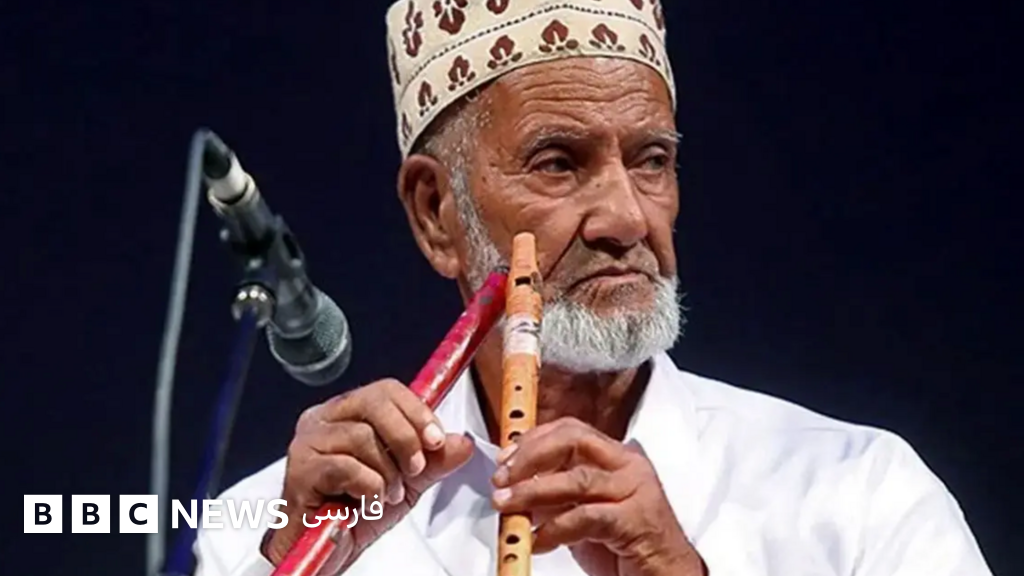
BBC Persian reports the death of Shirmohammad Espandar, a leading donli player from Iran's Baluchistan region. The article traces his life from his 1931 birth in Bampur, his training in Karachi, and his career as a custodian of a distinctive cross-border musical tradition.
A musician who played a special two-reed flute called the donli from the Baluchistan region of Iran has died. He learned the instrument just by watching someone else's fingers, the way someone might learn a magic trick by seeing it done. He kept playing for many years, even after he could no longer see.
Analysis
A Self-Taught Master of the Donli
Espandar's musical formation, as recounted in the BBC Persian obituary, is unusual. Born in 1310 in the Iranian solar calendar (1931) in Bampur, in the Sistan-Baluchestan region, he reportedly left Iran for Karachi, Pakistan, to study music, and there he encountered the donli. According to the article, he learned to play the instrument simply by watching the fingers of an existing donli player, an oral, almost silent pedagogy that left no room for written notation.
The donli itself is described in the piece as a two-reed instrument characteristic of Baluchistan regional music, an unusual construction that gives the instrument its distinctive sound. Espandar later also incorporated the ney, the more widely known Persian end-blown reed flute, into his performances of Baluchi music, suggesting a player comfortable moving between the regional and the broader Persian classical palette.
Baluchistan Music as a Cross-Border Inheritance
Espandar's life illustrates how musical traditions in Baluchistan move freely across the political border between Iran and Pakistan. A musician born in Iranian Baluchistan who learned his core repertoire in Karachi, and whose music was ultimately published by Mahoor Publications in Tehran, fits awkwardly into any single national frame. The Baluch homeland has been divided by the Iran-Pakistan border since 1947, and the donli tradition has survived precisely because the community on both sides has continued to share players, teachers, and listeners.
The very fact that the BBC Persian service treats Espandar as a national musical figure while his training happened abroad reflects how Iran's regional music scene is plural by definition. His career is a reminder that the cultural map of the country extends well beyond Tehran, Isfahan, and Shiraz, and that Baluchistan's contribution to that map is often articulated through individual artists rather than institutions.
An Honored Career in the Shadow of Blindness
The obituary notes that Espandar lost his sight several years before his death due to old age and cataracts, yet continued to be recognized for his musicianship. He received an honorary diploma in instrument performance from Iran and an honorary doctorate in regional music from France, an unusual combination of recognition from both his home country and a European cultural establishment that has long had an interest in documenting and archiving Iranian regional traditions.
An album of his performances, titled "Music of Baluchistan, Shirmohammad Espandar," was released by Mahoor Publications, one of Iran's most respected independent labels for traditional and regional music. The release, like the French honorary doctorate, speaks to the documentary rather than commercial value of his work. His death therefore leaves a hole not just in the Baluch music scene but in the recorded archive that scholars and future musicians will draw on.
Key points
- Shirmohammad Espandar, a pioneering donli player and prominent Iranian regional musician, has died, according to BBC Persian.
- Born in 1931 in Bampur in Iranian Baluchestan, he learned the donli, a two-reed Baluchistan instrument, while studying music in Karachi, Pakistan.
- He reportedly taught himself the donli by watching an existing player, without formal written instruction.
- He had been blind for several years due to age-related cataracts, yet continued to be recognized, holding an honorary performance diploma from Iran and an honorary doctorate in regional music from France.
- An album of his work, 'Music of Baluchistan, Shirmohammad Espandar,' was published by Mahoor Publications.