Shutter-down strike in several Balochistan cities over killing of police personnel in Ziarat, deadlock persists in negotiations
A shutter-down strike is underway in multiple Balochistan cities, including Quetta, following the killing of police personnel in Ziarat. Negotiations between the government and protestors have reached a deadlock.
Intelligence analysis by Gemini 2.5 Flash Lite
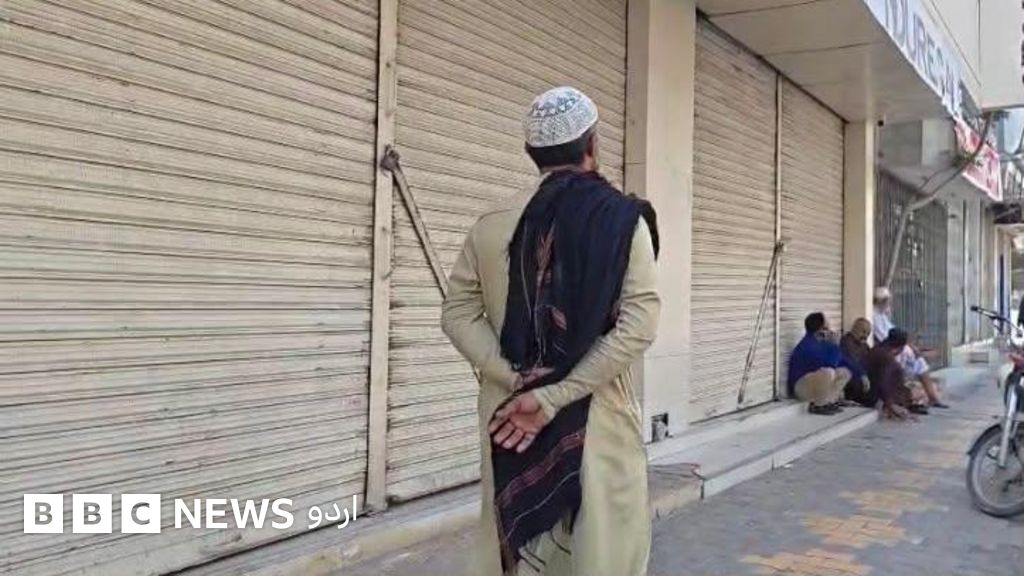
Protests and strikes have erupted across Balochistan after the killing of 30 police personnel in Ziarat. Families and an alliance of parties are demanding justice and improved security, but talks with the government have stalled over key demands.
Imagine some police officers were hurt and taken by bad guys in a town called Ziarat. Now, their families are sad and angry, and they've stopped working in many cities to ask the government to make things safe and find out who did it. But the government and the families can't agree on what to do next, so everyone is still upset.
Analysis
Ziarat Attack and its Aftermath
Last week, an armed group attacked a construction site for the Manghi Dam's Phase III in Ziarat district, resulting in the deaths of nine police personnel, including two SHOs, and the abduction of 21 others. Authorities reported that during a security forces operation to rescue the hostages, militants killed them and dumped their bodies in the Zargun Ghar area. The families of some of these slain officers are now staging a protest sit-in in Quetta, refusing to end their demonstration until their demands are met.
Demands and Deadlocked Negotiations
The protest, which began on July 9th, involves the families of the deceased police personnel and the 'All Parties' group. They have presented four core demands centered on restoring peace and security in the province. Key among these are the establishment of a judicial commission headed by two Balochistan High Court judges to investigate the Ziarat incident and take action against those found responsible. They also demand the reinstatement of the Levies Force, arguing that its merger with the police has worsened the security situation. Furthermore, they call for the complete eradication of armed groups from Quetta and surrounding districts, and the removal of the Frontier Corps (FC) from cities, suggesting their deployment only under specific orders from Deputy Commissioners for limited periods.
Government's Stance and Political Maneuvering
The Balochistan government, represented by a team led by the Home Minister, has engaged in multiple rounds of talks with the protestors' negotiation committee. While the government claims readiness to address legitimate demands, it accuses some political parties of using the situation for political gain by raising 'unjustified demands.' The protestors, however, hold the government responsible for the stalemate, citing changes made to an agreed-upon draft agreement. The government counters that certain opposition parties are politicizing the issue. The Home Department's media liaison stated that operations against armed groups are ongoing and that the government is willing to form a judicial commission, but finds the demands for FC removal and Levies reinstatement baseless. The protest highlights a deep-seated mistrust and a complex interplay of security concerns, governance, and political opportunism in Balochistan.
Key points
- A shutter-down strike is ongoing in several Balochistan cities following the killing of 30 police personnel in Ziarat.
- Protesting families and the 'All Parties' group have presented four key demands, including a judicial inquiry and the reinstatement of the Levies Force.
- Negotiations between the government and protestors have reached a deadlock, with both sides blaming each other.
- The government is willing to form a judicial commission but rejects demands for FC removal and Levies reinstatement.
- The incident highlights ongoing security challenges and political complexities in Balochistan.
If the government and protestors can reach a compromise, it could lead to a swift resolution of the current unrest, potentially improving the security situation in Ziarat and other affected areas. Successful negotiations might also pave the way for a more stable environment, encouraging the resumption of normal economic activities across Balochistan.
The continued deadlock in negotiations risks further escalation of protests and potential violence, exacerbating the already fragile security situation in Balochistan. If the demands are not met or if political maneuvering continues, it could lead to prolonged disruption of economic activities and deepen public mistrust in the government's ability to ensure safety.