Singapore sends Pakistan congratulatory letters to mark 60 years of diplomatic relations
Singapore's PM Lawrence Wong and FM Vivian Balakrishnan sent congratulatory messages to Pakistan's leaders on Aug 24, marking 60 years of diplomatic ties and flagging scope for cooperation in trade, the digital economy, and people-to-people exchanges.
Intelligence analysis by Llama
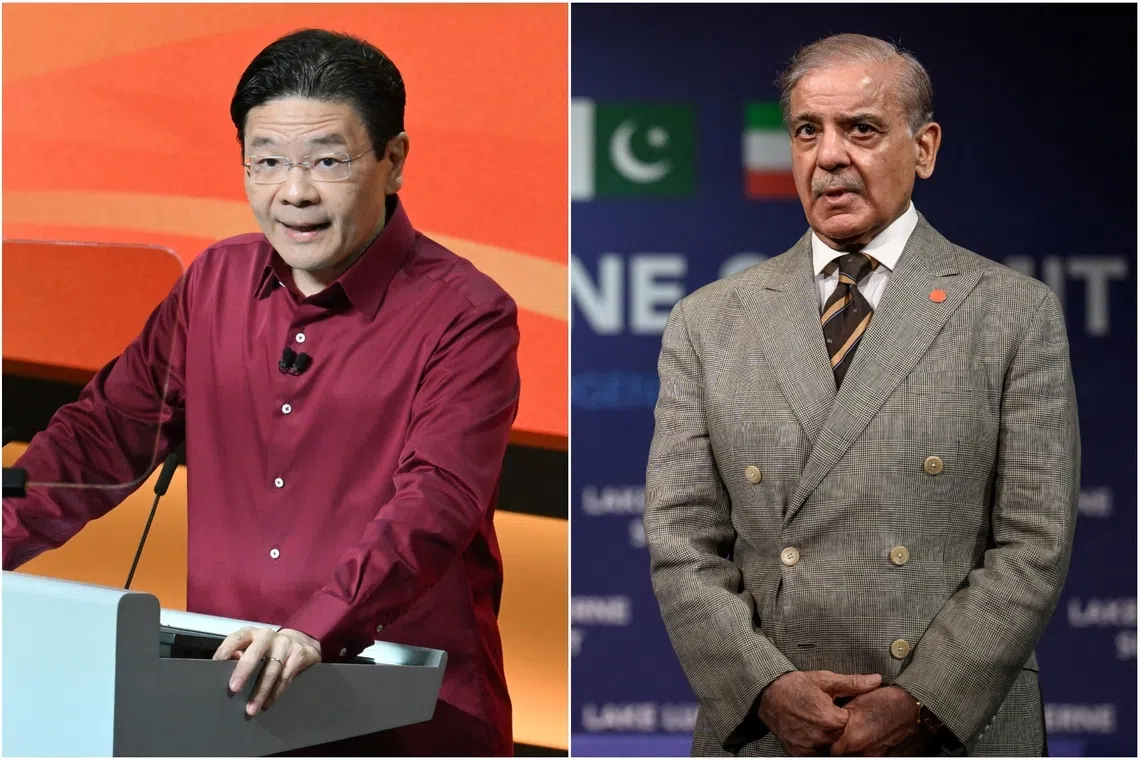
Singapore and Pakistan celebrated six decades of diplomatic relations on Aug 24. PM Wong wrote to PM Shehbaz Sharif noting Pakistan was among the first to recognise Singapore in 1965, while FM Balakrishnan wrote to FM Ishaq Dar on deepening capacity building and cultural ties.
Singapore and Pakistan have been friends for 60 years, ever since Pakistan was one of the first countries to say "welcome, Singapore!" in 1965. To celebrate, Singapore's leaders sent nice letters hoping the two countries can do more business together, share more culture, and help each other learn new skills.
Analysis
Pakistan's 1965 recognition
Pakistan was among the first countries to recognise Singapore's independence in 1965, a fact PM Lawrence Wong specifically highlighted in his congratulatory letter to Pakistani Prime Minister Muhammad Shehbaz Sharif. That early endorsement, issued in the same year Singapore separated from Malaysia and was scrambling for international legitimacy, has been invoked by Singaporean leaders for decades as the foundational moment of the bilateral relationship. The Straits Times reports that Wong described the past six decades as built on "mutual respect and understanding" — language that frames the partnership as steady rather than transactional, and that gives both sides political cover to expand cooperation without provoking sensitivities elsewhere in the region.
Wong's letter to Shehbaz Sharif on four cooperation pillars
PM Wong's message identified four specific areas for expanded cooperation: trade facilitation, the digital economy, people-to-people exchanges, and capacity building. The list is notable for what it omits as much as what it includes — there is no mention of defence, security, or geopolitical alignment, which keeps the relationship in a comfortable economic-and-cultural lane. Wong's framing of "scope to expand" rather than concrete new agreements suggests the anniversary is being used as a soft launchpad for future projects rather than a venue to announce signed deals. The phrasing also leaves room for the relationship to be deepened gradually through working-level engagement, which is how Singapore typically prefers to scale up newer partnerships.
Balakrishnan's message to Mohammad Ishaq Dar
Foreign Minister Vivian Balakrishnan wrote separately to Pakistani Deputy Prime Minister and Minister for Foreign Affairs Mohammad Ishaq Dar, foregrounding "close people-to-people ties" and prior cooperation in capacity building and cultural exchanges. His reference to navigating "evolving global challenges" frames the partnership in pragmatic, forward-looking terms — useful cooperation rather than ideological alignment. The parallel PM-to-PM and FM-to-FM track is standard diplomatic choreography for milestone anniversaries, but it also signals that Singapore wants the relationship institutionalised across multiple ministerial channels, not personalised to a single leader or era.
Key points
- Singapore and Pakistan marked 60 years of diplomatic relations on Aug 24 with congratulatory letters from PM Lawrence Wong and FM Vivian Balakrishnan.
- PM Wong wrote to Pakistani PM Muhammad Shehbaz Sharif, noting Pakistan was among the first countries to recognise Singapore's independence in 1965.
- Wong identified four areas for expanded cooperation: trade facilitation, the digital economy, people-to-people exchanges, and capacity building.
- FM Balakrishnan wrote to Pakistani Deputy PM and FM Mohammad Ishaq Dar, emphasising capacity building, cultural exchanges, and the need to navigate 'evolving global challenges'.
- No new agreements or signed deals were announced — the messages focused on reaffirming friendship and identifying future scope for cooperation.
The four cooperation pillars Wong outlined — trade facilitation, digital economy, people-to-people exchanges, and capacity building — give the relationship a concrete agenda beyond anniversary rhetoric. If even one or two of these areas generates working-level momentum, the 60-year tie could graduate into a more substantive economic partnership that benefits Singapore businesses eyeing South Asian markets and Pakistani institutions seeking technical expertise.
Anniversary letters rarely translate into binding outcomes, and the absence of any announced agreements or signed memoranda in the messages suggests the relationship remains largely symbolic. Structural headwinds — geographic distance, modest bilateral trade volumes, and competing strategic alignments between the two countries' larger partners — limit how far warm rhetoric can be converted into substantive cooperation.