Somerset detectorist strikes gold with ‘spectacular’ Roman ring find
A detectorist found a rare Roman gold ring near Ilminster, and it will stay in Somerset after a £78,000 acquisition.
Intelligence analysis by GPT-5.4 Mini
Kevin Minto uncovered an unusually large Roman gold ring and a coin hoard near Ilminster, then waited years for the find to be valued and acquired. The ring, dated to around AD297, is now being toured around schools before a permanent home in Taunton.
A man with a metal detector found something shiny in a field. At first it seemed like a coin, but it was actually a gold Roman ring with a tiny picture carved into a stone.
It is very old, from almost 1,700 years ago. Experts think someone important may have worn it, like a special badge on a fancy outfit.
The ring stayed near where it was found, instead of being taken far away. It is like finding an old treasure chest and then putting the most interesting piece in a local museum for everyone to learn from.
Analysis
The find
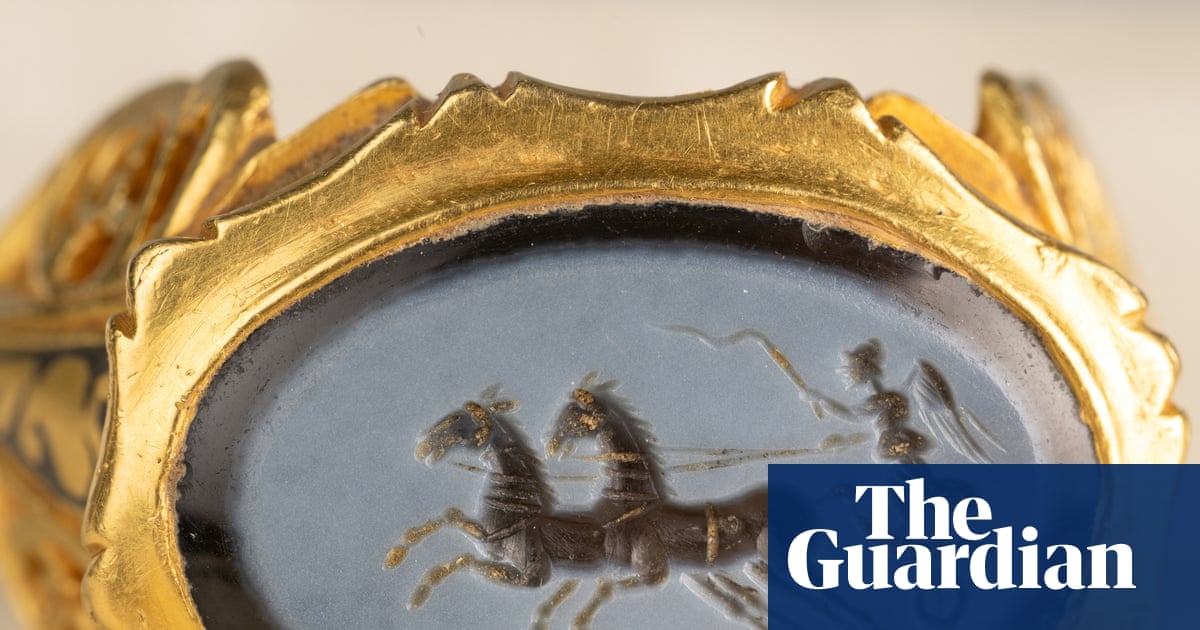
Kevin Minto, a lorry driver and former soldier who metal-detects for fitness, found something glinting in a Somerset field near Ilminster and first thought it might be a coin. It turned out to be a large gold Roman ring set with an engraved gemstone showing the goddess Victoria driving a two-horse chariot.
What it is
The South West Heritage Trust says the ring dates to around AD297 and weighs 48 grams. It describes the piece as rare in scale and craftsmanship, with gold work and an intaglio that make it stand out from other known examples. Curator Amal Khreisheh said it was likely worn on important occasions or may have had a ceremonial role.
The ring was found alongside a hoard of 297 Roman coins, plus lead and pottery objects. The trust says the evidence may help explain how south Somerset’s Roman residents lived through a period of unrest from 286 to 296, and it suggests the hoard may have been buried shortly after in 297. Khreisheh said wealthy Romans, trade routes and possible figures such as a governor, merchant or landowner could all fit the evidence, but further analysis is needed before stronger conclusions can be made.
Why it is being kept local
The trust has acquired the ring and coin hoard for £78,000, which means they remain in Somerset. Minto said he was glad the find is staying in the county and noted that the money helped him pay off his mortgage. The ring is due to tour primary schools this month, with an Ilminster discovery day planned for August, before it gets a permanent home at the Museum of Somerset in Taunton.
Key points
- Kevin Minto found a rare Roman gold ring near Ilminster while metal detecting.
- The ring is set with a gemstone showing goddess Victoria in a two-horse chariot.
- The South West Heritage Trust acquired the ring and 297 Roman coins for £78,000.
- Experts say the ring dates to around AD297 and may have belonged to a wealthy Roman.
- The ring will tour primary schools before moving to the Museum of Somerset.
The ring and coin hoard staying in Somerset means local museums, schools and visitors can learn from a rare Roman find without it leaving the area. Further analysis could also sharpen what is known about Roman life, trade and unrest in south Somerset.
The exact origin and purpose of the ring may remain uncertain even after more analysis, which limits how far experts can push the story. The dispute over who was entitled to the proceeds also shows how complicated treasure finds can become.