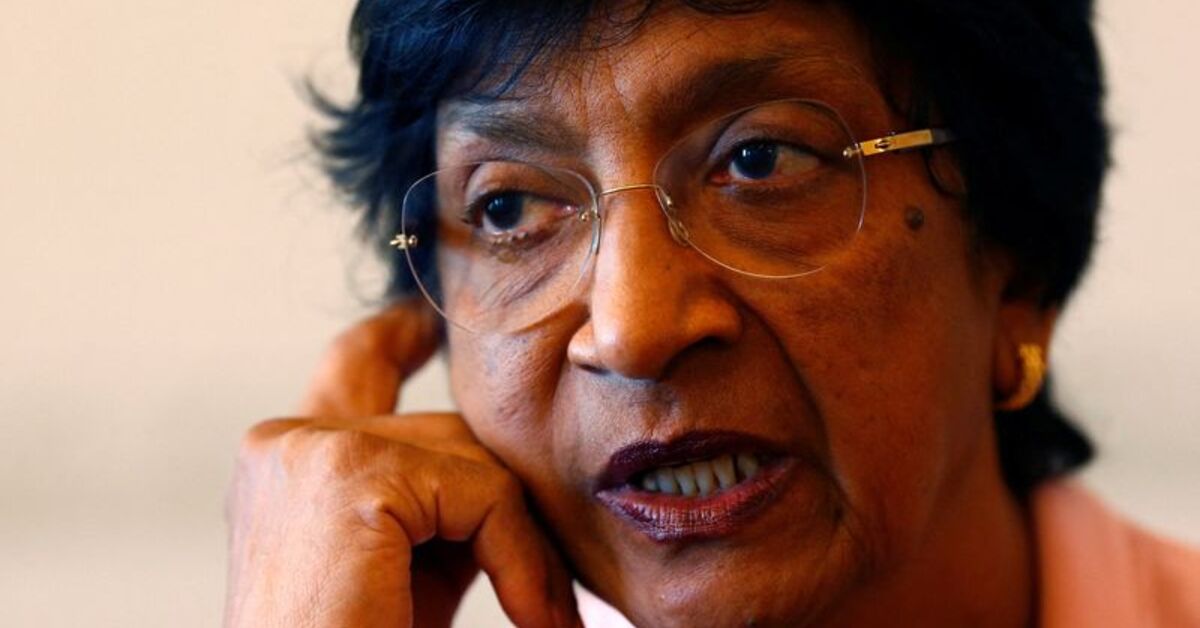
South African judge Navi Pillay wins Nobel Peace Prize
Navi Pillay, a South African judge and former head of the Rwanda genocide tribunal, has been awarded the Nobel Peace Prize for her work in prosecuting war crimes and crimes against humanity.
Intelligence analysis by Gemini 2.5 Flash Lite

The Nobel Committee recognized Navi Pillay's instrumental role in international law, particularly her leadership of a UN commission that found evidence of genocide in Gaza, a finding Israel rejected. The award highlights her independence and expertise amid escalating global conflicts.
Imagine a super-smart judge who helps make sure countries follow the rules, especially when bad things like war crimes happen. Navi Pillay is like that judge, and she won a special prize for being really good at making sure people who commit terrible acts are held accountable, like a referee making sure everyone plays fair.
Analysis
Navi Pillay's Career
Navi Pillay, an 85-year-old South African jurist, has been a prominent figure in international justice for decades. Her career has been marked by a steadfast commitment to prosecuting war crimes, crimes against humanity, and genocide. She previously headed the International Criminal Tribunal for Rwanda, where she played a crucial role in bringing perpetrators of the 1994 genocide to justice. Her tenure there established her reputation for independence and expertise in handling complex international legal cases.
More recently, Pillay led the UN Independent International Commission of Inquiry (COI) on the Occupied Palestinian Territory, including East Jerusalem, and in Israel. This commission's report, which found evidence of genocide in Gaza, was met with strong rejection from Israel, which labeled the findings as "distorted and false." Despite the controversy, Pillay maintained that her team had shared substantial information with the International Criminal Court. The Nobel Committee, while honoring her career, clarified that the prize was not a direct endorsement of the commission's findings on Gaza but rather a recognition of her lifelong dedication to fighting genocide and upholding international law.
International Court of Justice
Pillay's current role as a judge on the International Court of Justice (ICJ) further solidifies her standing in the global legal arena. At the ICJ, she is involved in cases such as the one where Myanmar stands accused of genocide. This position places her at the forefront of adjudicating disputes between states and interpreting international law. The Nobel Committee specifically cited her "independence, her expertise and steadfastness" as reasons for the award, highlighting her significant contributions to international jurisprudence at a time when global conflicts are on the rise.
Her work at the ICJ and in leading the COI demonstrates a consistent effort to ensure that international legal mechanisms are utilized to prevent and punish atrocities. The committee emphasized that in historic international court cases, she has shown that legal measures can indeed help prevent acts of war and violence, a message particularly relevant in the current global climate.
Global Conflicts and International Law
The Nobel Committee's decision to award Pillay the Peace Prize comes at a time of heightened global instability, with the committee noting "more wars and conflicts than the world has seen in a long time." The award serves as a powerful statement on the indispensable role of international law in maintaining peace and security. The committee stressed that international law is "an absolute necessity" in the face of existential challenges, moving beyond being a mere supplement to peace.
This recognition is also seen as a direct message against the increasing pressure and attacks on international justice institutions. Jorgen Watne Frydnes, chair of the Norwegian Nobel Committee, stated that "this needs to stop," referring to efforts to pressure or sanction judges and institutions. The award implicitly supports the integrity and importance of these bodies, even as they face political challenges, including from figures like former US President Donald Trump, who has openly expressed a desire for the prize and criticized international courts. Pillay's own reaction, a lighthearted remark about sharing the prize with Trump, subtly underscored the political undertones surrounding the award and the ongoing debates about the efficacy and impartiality of international justice.
Key points
- South African judge Navi Pillay has been awarded the Nobel Peace Prize.
- She is recognized for her work in prosecuting war crimes, crimes against humanity, and genocide.
- Pillay previously headed the Rwanda genocide tribunal and a UN commission that found evidence of genocide in Gaza.
- The Nobel Committee praised her independence, expertise, and steadfastness in international law.
- The award highlights the importance of international law amid rising global conflicts and challenges to justice institutions.
The award to Navi Pillay could bolster confidence in international legal institutions and encourage greater adherence to international law in conflict resolution. It may also inspire more individuals to pursue careers dedicated to human rights and justice, reinforcing the global commitment to accountability for atrocities.
The prize might intensify political backlash against international justice mechanisms from states that feel targeted or criticized by their findings. Furthermore, it could lead to increased scrutiny and pressure on Pillay and the institutions she represents, potentially complicating future legal proceedings.