South-eastern Europe faces heatwave energy crunch as Romania detonates Danube rock to increase water flow – Europe live
Romania's navy blew up a submerged rock in the Danube to keep the Cernavodă nuclear plant cool amid record low river levels, while Greek firefighters battle a fourth day of wildfires near Athens and Italy notifies the EU of temporary border controls with Spain over the Ce…
Intelligence analysis by Llama
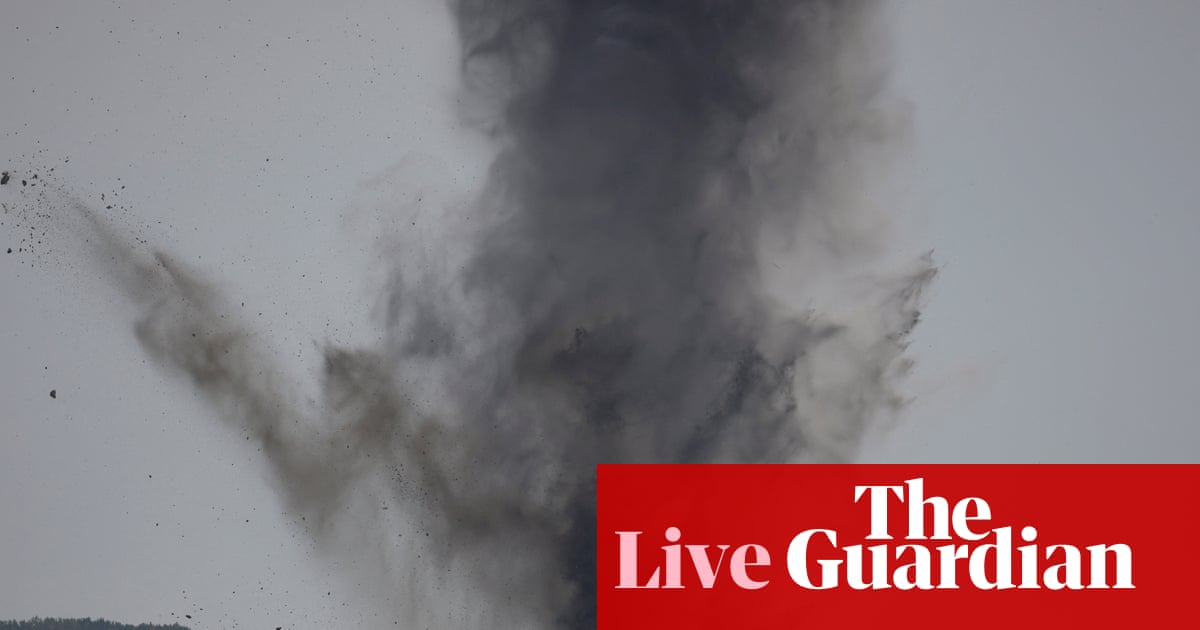
A punishing heatwave is exposing vulnerabilities across south-eastern Europe: Romania used 180 kg of explosives to keep a nuclear plant running, Greek wildfires continue to rage, and Italy is tightening Schengen borders in response to last week's Ceuta arrivals.
South-eastern Europe is sizzling like a giant oven right now. Rivers are drying up, so Romania used explosives to move a rock and send more water to a nuclear power plant to keep it cool. Greece has huge fires near Athens, and Italy is putting up border checks because too many people are arriving in Spain by boat. It's a really tough summer for everyone there.
Analysis
Blasting the Danube to Save a Reactor
Romania's decision to deploy 180 kilograms of explosives to demolish a submerged rock in the Danube reads almost like wartime engineering improvisation, but it is a 21st-century climate adaptation. With river flow collapsing to 1,500 cubic meters per second, less than a third of the July average, the cooling supply for the Cernavodă nuclear power plant was under direct threat. Acting defence minister Radu Miruță framed the operation as worthwhile, noting that every additional day of plant operation offsets the cost of the detonation, even as officials warned the facility might still need to temporarily suspend output.
The move underscores how dependent Romanian and Hungarian energy systems are on Danube hydrology, where declining flows simultaneously squeeze hydropower generation, impede barge traffic, and now jeopardize a nuclear baseload. The nationwide state of emergency declared for August reflects a cascading stress rather than a single point of failure. The Danube is one of Europe's most strategic inland waterways, and its current deficit is being felt across freight, electricity, and cooling, three sectors rarely aligned against one country at once.
Greece Ablaze as the Heat Dome Peaks
Hundreds of Greek firefighters spent a fourth consecutive day on Monday battling a wildfire northwest of Athens, with 21 aircraft and ground crews deployed near the communities of Kandili and Agia Skepi. Strong winds fanned flames through pine forests, farmland, and homes, forcing evacuations by land and sea. The operation was further complicated by the collision of two helicopters outside Athens, a stark reminder of the human and material cost of prolonged fire campaigns under extreme conditions.
The Athens fires sit at the sharp end of a broader heat dome stretching across the Balkans. Forecasters expect the heatwave to peak on Wednesday and Thursday, with temperatures pushing into the 40s Celsius and approaching all-time national records. With soils already parched and rivers at record lows, fire risk in the coming days is elevated not just in Greece but across Romania, Bulgaria, and the wider region, raising the prospect of simultaneous major incidents just as emergency services are stretched thin.
Schengen Under Strain as Italy Reintroduces Border Checks
In a separate but thematically linked development, Italy formally notified the EU on Monday of the temporary reintroduction of border controls with Spain, citing the Ceuta migration crisis. The notification invokes threats to public policy and internal security, and references the risk of secondary movements of third-country nationals within the Schengen area. Italian officials have stressed the measures will be targeted and limited to air and sea arrivals, with the controls set to run until 1 September.
The Guardian notes that the secondary-movements justification is contested: anyone leaving Ceuta for mainland Spain already faces strict border checks, making the practical risk to Schengen limited. Nevertheless, the move signals how quickly a localized migration surge can reopen political fault lines around free movement. EU interior ministers are scheduled to hold an urgent meeting on Tuesday to coordinate a response, but the optics of a major Schengen state restoring frontier controls so soon after a localized border episode will not be lost on other capitals watching the southern Mediterranean.
Key points
- Romania's navy used 180 kg of explosives to remove a submerged Danube rock to boost cooling water flow to the Cernavodă nuclear plant amid record low river levels
- Danube flow has dropped to 1,500 cubic meters per second, less than a third of the July average, prompting a nationwide state of emergency in Romania for August
- Hundreds of Greek firefighters are battling a fourth consecutive day of wildfires northwest of Athens, complicated by a mid-air collision of two helicopters
- Heatwave is forecast to peak Wednesday and Thursday with temperatures pushing into the 40s Celsius across south-eastern Europe
- Italy formally notified the EU of temporary border controls with Spain over the Ceuta migration crisis, with EU interior ministers set to meet urgently on Tuesday
If the controlled explosion sustains Cernavodă's cooling long enough and incoming cooler air arrives later this week, Romania and Hungary could avoid blackouts and keep Danube barge traffic moving. Coordinated EU action after Tuesday's interior ministers' meeting could also produce a more orderly response to the Ceuta arrivals, limiting the precedent of unilateral border closures.
With the heatwave forecast to peak midweek and Danube flows already at a third of normal, the Cernavodă plant could still be forced into a temporary shutdown, tightening regional power supply just as cooling demand peaks. Greek firefighting capacity is already strained by the helicopter collision, and any new ignitions in Romania or Bulgaria could overwhelm emergency services, while Italy's border move risks a domino of restrictions inside Schengen.