South Korean protesters demand ‘election re-run’ after ballot shortage
Protesters in Seoul demanded a re-run of local elections after a ballot shortage left some eligible voters unable to vote.
Intelligence analysis by GPT-5.4 Mini
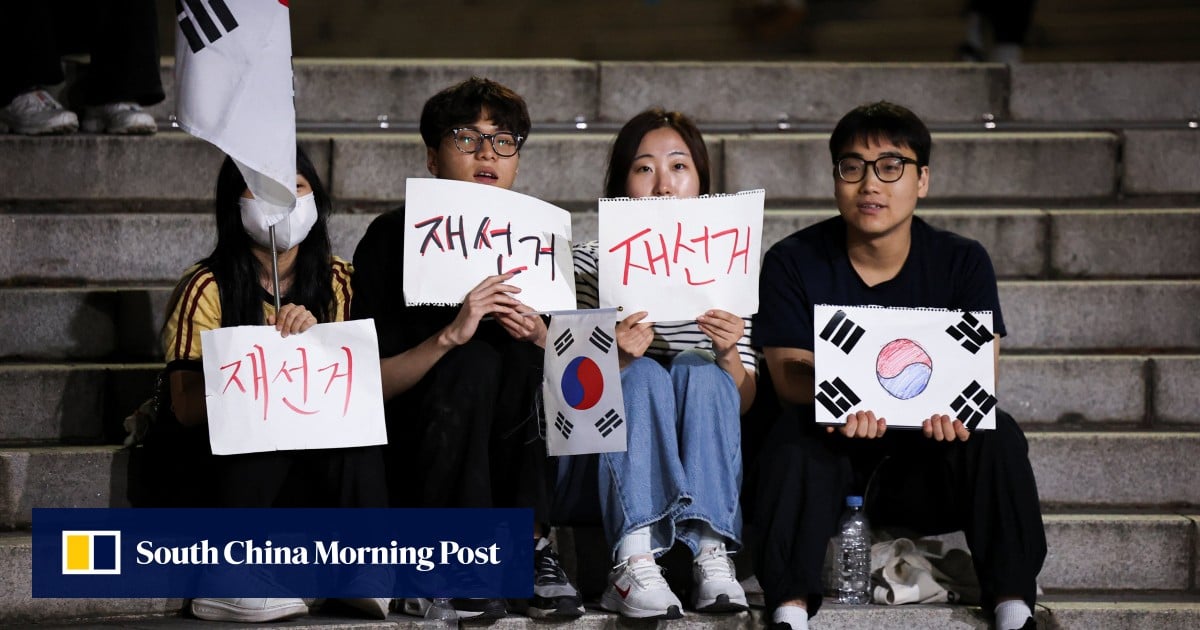
The protest was triggered by a ballot shortage during South Korea’s local elections, which the election commission said affected some polling stations and briefly suspended voting at others. The issue led to the resignation of the National Election Commission chief and calls for a deeper investigation.
Some people in South Korea were angry because some voting places ran out of ballots, like a store running out of tickets at the door. Since some people could not vote, protesters asked for the election to be done again.
Analysis
What happened
Protesters gathered outside a ballot-counting site in Seoul for a second day, demanding that South Korea’s local elections be held again. Reuters reported that around 10,000 people had assembled by late afternoon at the SK Olympic Handball Stadium, where votes from Wednesday’s elections were being counted.
Why the protests started
The demonstrations followed a ballot shortage that prevented some eligible voters from casting ballots in parts of the country. According to the election commission, 50 of 14,300 polling stations ran out of ballots, and voting was temporarily suspended at 22 polling stations because supplies arrived late. The shortage was serious enough to prompt the resignation of the head of the National Election Commission.
Political fallout
Seoul Mayor Oh Se-hoon condemned the shortage in a televised speech, calling it intolerable and saying it violated the right to vote. He also demanded that the election commission be disbanded and that special prosecutors investigate the matter. The article does not say whether officials have agreed to those demands, only that the protests intensified after the shortage became public.
The bigger picture
The article frames the issue as an election administration failure rather than a disputed count. That distinction matters: even when the vote count itself is not questioned, a shortage of ballots can still undermine trust in the process and trigger broader institutional criticism.
Key points
- Protesters in Seoul demanded a re-run of local elections after a ballot shortage.
- The election commission said 50 of 14,300 polling stations ran out of ballots.
- Voting was temporarily suspended at 22 polling stations because supplies arrived late.
- The head of the National Election Commission resigned after the shortage.
- Seoul Mayor Oh Se-hoon called the shortage a violation of the right to vote and urged an investigation.
If the investigation is thorough, officials could identify what caused the shortage and fix the election system before the next vote. A clear response could help restore trust among voters who felt their rights were violated.
If officials are seen as slow or evasive, the shortage could deepen public anger and weaken confidence in election management. The protests and calls for a re-run could also keep pressure on the election commission and widen the political fallout.