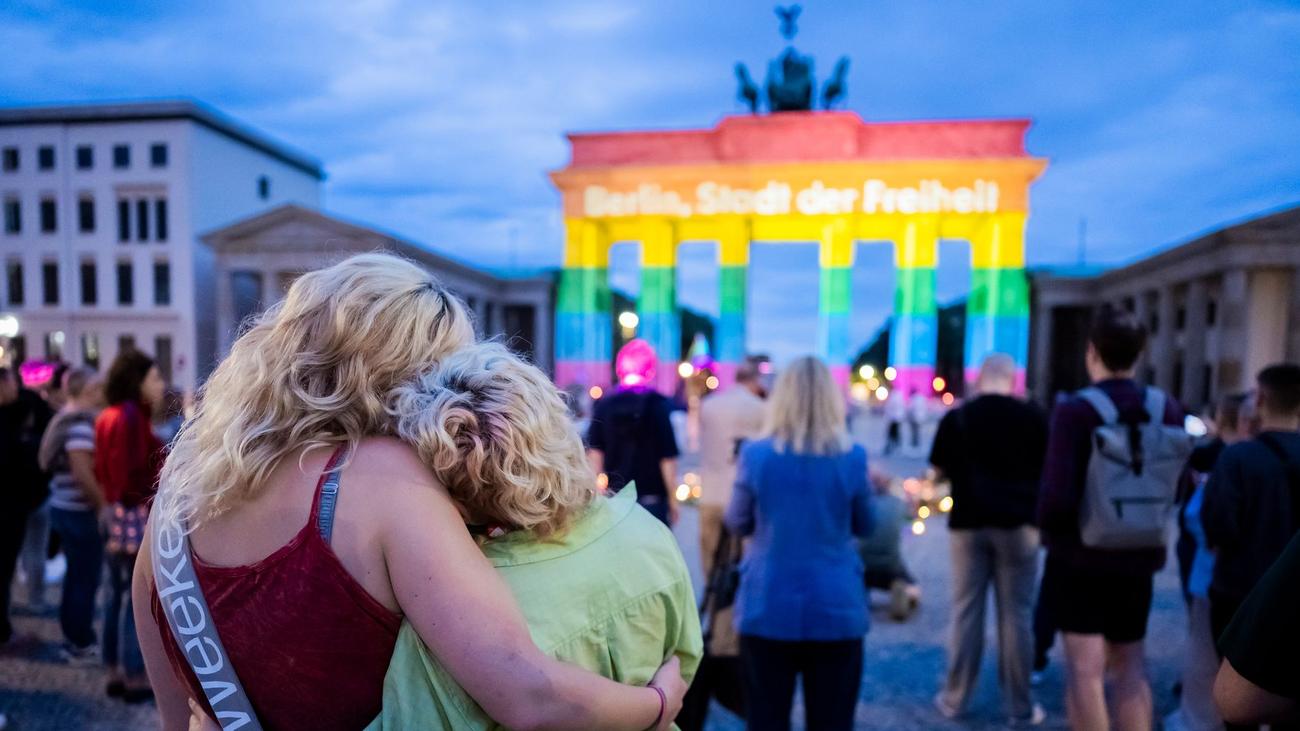
SPD Pushes for Anti-Discrimination Clause on Sexual Identity in German Constitution After Berlin CSD Attack
After a deadly attack on Berlin's Christopher Street Day, the SPD leadership is renewing its push to add sexual identity to Article 3 of the Basic Law's anti-discrimination clause.
Intelligence analysis by Llama

The SPD is pushing to add sexual identity to Article 3 of Germany's Basic Law following the Berlin CSD attack. Constitutional amendments require a two-thirds majority, which the Union-SPD coalition lacks alone, so opposition support is essential.
Some people in Germany want a special rule added to the country's most important law to make sure nobody is treated unfairly because of who they love. After a scary attack hurt lots of people at a big pride parade in Berlin, the SPD party said they will try really hard again to get this rule added, but they need lots of other politicians to agree.
Analysis
A Constitutional Push After a Deadly Attack
The SPD's renewed effort to amend Article 3 of the German Basic Law comes directly in the aftermath of a weekend attack on Berlin's Christopher Street Day, in which a woman was killed and dozens were injured after a suspect drove a van into the crowd and used a stabbing weapon. Party co-chairs Bärbel Bas and Lars Klingbeil, alongside General Secretary Tim Klüssendorf, issued a statement obtained by dpa announcing that adding sexual identity to the anti-discrimination clause would be put back on the political agenda "with renewed vigor." The constitutional amendment, first floated by the SPD in earlier legislative periods, would explicitly close a gap in the list of protected characteristics in Article 3, which currently covers gender, descent, race, language, homeland and origin, faith, and religious or political views.
The Math of a Two-Thirds Majority
Any amendment to the Basic Law requires a two-thirds majority in both the Bundestag and the Bundesrat, and the SPD's coalition with the Union does not come close to that threshold on its own. The Left party has already publicly backed the change, with co-chair Luigi Pantisano declaring on Monday that his party was ready in the Bundestag to deliver the necessary majority "immediately." Whether the CDU/CSU can be persuaded to support an amendment remains the central political question, particularly given the conservative wing's traditional caution toward expanding constitutional protected categories. The attack, with its confirmed links to Islamist terrorism, may provide the political momentum that previous attempts have lacked, but coalition arithmetic still constrains the path forward.
Defending Queer Support Services From the Budget Axe
Beyond the constitutional debate, the SPD leadership used the statement to push back against federal spending cuts affecting counseling and support services for queer people. The leaders warned that such programs are under pressure as the federal government tightens its belt, and they argued that these services provide indispensable protection. The party also emphasized that many Muslims in Germany are themselves frequent targets of Islamist violence and deserve state protection, a pointed note designed to frame the response as a defense of pluralistic society rather than a narrow identity-politics debate. With the suspect now confirmed to have had prior contact with police and judicial authorities and documented ties to Islamist networks, the political conversation in Berlin is shifting toward both legal-constitutional reform and a broader reckoning over how the security apparatus handles radicalization cases.
Key points
- SPD leaders Bas, Klingbeil and Klüssendorf announced a renewed push to add sexual identity to Article 3 of the Basic Law
- Constitutional amendments require two-thirds majorities in both the Bundestag and Bundesrat, which the Union-SPD coalition does not have alone
- The Left party's co-chair Luigi Pantisano publicly backed the change on Monday, offering potential opposition support
- The SPD also pledged to resist federal budget cuts to counseling and support services for queer people
- The push follows a Saturday attack on Berlin's CSD in which a woman was killed, dozens were injured, and the suspect was shot by police the following day
If a cross-party consensus emerges in the Bundestag, Germany could become one of the few European countries to explicitly enshrine sexual identity in its constitutional anti-discrimination clause, sending a strong signal of protection to queer citizens. The attack may also catalyze broader reform of how authorities monitor individuals with known extremist ties.
Without the Union's active support, the two-thirds threshold in both chambers makes passage nearly impossible, leaving the constitutional amendment as a symbolic gesture rather than a binding change. The push could also be overshadowed by partisan disputes over security failures, given that the suspect was already known to police and the judiciary.