S'pore youths are far cry from 'strawberry generation' stereotype, want to find success on their own terms: David Neo
Acting Minister for Culture, Community and Youth David Neo pushed back against the 'strawberry generation' stereotype, saying Singapore's youths are ambitious and want to define success on their own terms, ahead of the SG Youth Plan launch.
Intelligence analysis by Llama
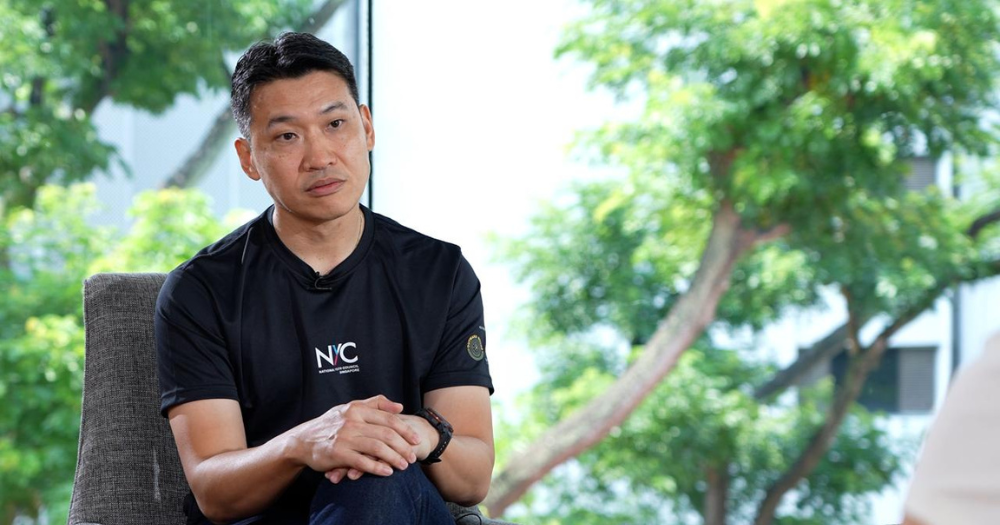
Speaking ahead of the SG Youth Plan launch, Acting Minister David Neo challenged the 'strawberry generation' label, arguing today's young Singaporeans are curious, driven and seeking deeper purpose. The Plan will fund youth spaces, a revamped Somerset Belt precinct, and a Finnish-inspired Curiosity Credits scheme for disadvantaged students.
A minister in Singapore says young people today are not the soft, fragile 'strawberry' kids some adults think they are. Instead, he says they want to try new things and chase their own kind of success. The government is launching a plan with new hangout spots and 'Curiosity Credits' — like pocket money for hobbies — to help kids from less well-off families try activities like skydiving or art.
Analysis
A Former Soldier Reframes a Cultural Punchline
David Neo is an unusual pick to lead youth policy. The 48-year-old spent three years as Chief of Army (2022–2025) before taking the acting minister role at the Ministry of Culture, Community and Youth, and his framing of young Singaporeans leans on a military register of resilience rather than the hand-wringing that often accompanies youth discourse. In a Jul. 20 interview with Mothership, he argued that the youth he has met on the ground are eager to "go deep in whatever they are doing" and to find "a deeper sense of meaning and purpose" — a portrait that deliberately cuts against the older "strawberry generation" trope of coddled, brittle young people unable to handle pressure. The reframing matters because the stereotype still circulates in Singaporean public life, and ministers rarely address it so directly. Neo's counter — that ambition, curiosity and self-direction are now the defining traits he has seen — gives the SG Youth Plan an explicit ideological anchor.
Loneliness, Not Just Opportunity, Is the Headline Finding
The most concrete evidence in Neo's remarks comes not from anecdotes but from a National Youth Council survey. About 8 per cent of Singaporean youths report having no close friends, one in three are not part of any social group, and the average number of close friends has dropped from 7.7 in 2013 to roughly 6 today. Half of those surveyed told the Council they wanted deeper, more meaningful relationships with the friends they already have, and around a third wanted to make new ones. These are not marginal figures: a one-third drop in average confidants over a decade suggests a structural shift in how young Singaporeans form ties, not a passing mood. The Plan's response — 12 new "youth spaces" and a revamped Somerset Belt youth precinct — is a physical-space strategy aimed squarely at the bonding problem. Neo was careful, though, to draw a line: the government can build the venues, but "the youths will have to step up" and exercise their own agency. It is a pointed reminder that the state is funding infrastructure, not manufacturing friendships.
Curiosity Credits and the Politics of Access
The Plan's most novel instrument is Curiosity Credits, a scheme modelled on Finnish practice that lets young people spend credits on hobbies and interests outside academics. For the first phase, eligibility is narrow: secondary school-aged youths from the four Self-Help Groups — Mendaki, Sinda, the Eurasian Association and the Chinese Development Assistance Council. Neo framed the targeting as a matter of "democratising" opportunity, so that a disadvantaged student can have the same shot at a skydiving trip or a ceramics class as a peer from a well-resourced family. The example he chose was telling: a young person who, through a partnership with Access Singapore, was able to try skydiving and returned "feeling that it opened up his horizons". Whether Curiosity Credits can be scaled beyond the Self-Help Group cohort is the open question, and Neo left the door open — "further scaled up" if the pilot works. That conditional language signals the government is treating the scheme as an experiment, not a permanent entitlement, and the real test will be whether the credits meaningfully reach the lonelier, more disengaged youths the survey identified.
Key points
- Acting Minister David Neo rejected the 'strawberry generation' label, saying Singapore's youths are ambitious, curious and seeking deeper purpose
- A National Youth Council survey found 8% of youths have no close friends, one in three belong to no social group, and average close friends fell from 7.7 in 2013 to about 6 today
- The SG Youth Plan will add 12 new youth spaces and revamp the Somerset Belt youth precinct to address the loneliness finding
- Curiosity Credits, modelled on Finnish principles, will launch first for secondary school students in Mendaki, Sinda, the Eurasian Association and CDAC, with possible later expansion
- Neo stressed that the government can only create opportunities; youths themselves must 'step up' and exercise agency
If Curiosity Credits are scaled beyond the initial Self-Help Group pilot, the scheme could meaningfully broaden what 'opportunity' means for lower-income Singaporean youths, giving them access to experiences that build confidence and networks outside the academic track. Combined with 12 new youth spaces and the Somerset Belt precinct, the Plan could help reverse the decade-long decline in close friendships documented by the National Youth Council.
The Plan's reach depends on youths actually showing up. Neo acknowledged that disengaged young people are precisely the cohort most likely to ignore new programmes, and infrastructure like youth spaces does not by itself manufacture friendships. There is also a risk that Curiosity Credits, by starting with only Self-Help Group students, will entrench the perception that adventure and exploration are benefits reserved for the disadvantaged rather than a universal right.