Starwatch: Venus and Jupiter to shine side-by-side at dusk
Venus and Jupiter will appear close together in the western sky after sunset this week, with Mercury possibly visible too.
Intelligence analysis by GPT-5.4 Mini
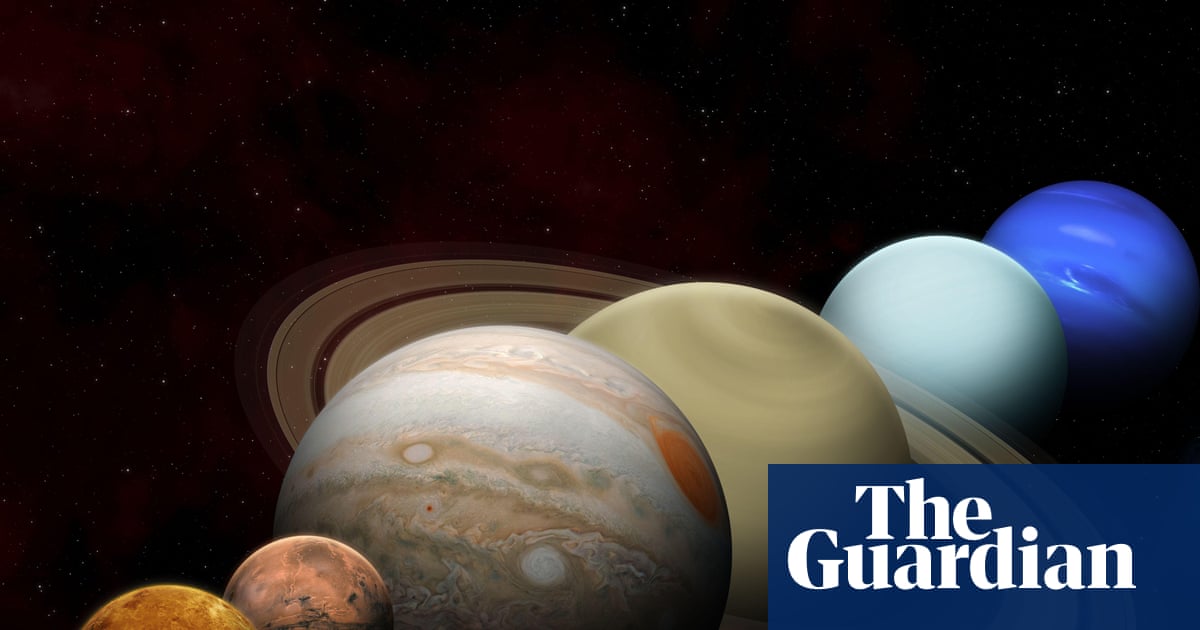
The Guardian’s Starwatch notes a brief dusk viewing window in which Venus and Jupiter sit about 1.5 degrees apart in Gemini. Venus is the easier target, while Jupiter, Castor and Pollux, and maybe Mercury, add to the evening display.
Two bright planets are lining up in the evening sky like two lanterns hanging close together. Venus will shine the brightest, Jupiter will sit nearby, and a small hill or open view may help someone spot them before they sink.
Analysis
What to look for
This week’s skywatching highlight is a close pairing of Venus and Jupiter in the western twilight after sunset. The planets are described as the two brightest in the solar system, and they will sit low above the horizon, separated by about 1.5 degrees, roughly the width of three full moons.
Venus should be the easiest to spot because it is much brighter and appears as the familiar “evening star.” Jupiter will be dimmer than Venus but still prominent. Both are currently in Gemini, though the constellation’s stars become easier to see only as the sky darkens.
Best viewing conditions
The article says the display will be easiest to catch with a clear view toward the west-northwest. A hill or any higher vantage point should help because the planets are low in the sky. The piece also notes that the twin stars Castor and Pollux may appear first as darkness deepens.
There is also a small chance of spotting Mercury, though the window is tight. The article says it sits midway down the twins and may disappear before the sky is dark enough, so any sighting would be brief and weather-dependent.
Overall, the story is a practical observing guide rather than a technical science report: it tells readers when to look, where to look, and which objects are likely to stand out.
Key points
- Venus and Jupiter will appear close together after sunset in the western sky.
- The planets are separated by about 1.5 degrees, or roughly three full moons across.
- Venus is the brighter and easier planet to spot, while Jupiter is still prominent.
- The view will be low on the horizon, so a clear western sightline matters.
- Mercury may also be visible briefly, but only with an excellent view and good timing.
If the weather is clear and the horizon stays open, the pairing should give many people an easy chance to see two major planets at once. The event could also help newer skywatchers learn how to identify Venus, Jupiter, and nearby stars in Gemini.
Because the planets are low in the west, buildings, trees, haze, or clouds could hide the view completely. Mercury is especially unlikely to be visible for long, since it must be caught before it drops below the horizon.