Steinmeier Appoints New Ministers Amid Cabinet Shuffle
German President Frank-Walter Steinmeier has appointed three new ministers to the cabinet, including Steffen Bilger, Nina Warken, and Carsten Linnemann. The appointments come as part of a broader cabinet reshuffle, with Patrick Schnieder being replaced by Bilger as the ne…
Intelligence analysis by Llama
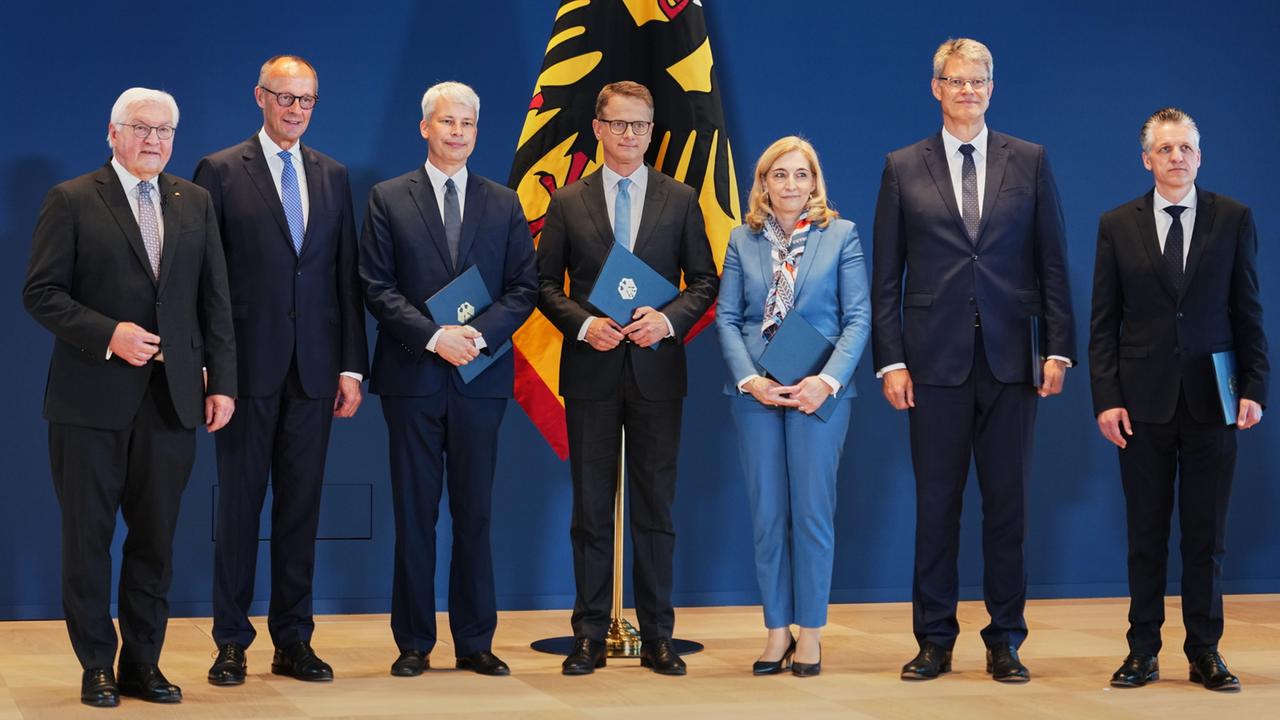
German President Frank-Walter Steinmeier has appointed three new ministers to the cabinet, including Steffen Bilger, Nina Warken, and Carsten Linnemann. The appointments come as part of a broader cabinet reshuffle, with Patrick Schnieder being replaced by Bilger as the new Minister of Transportation. The new ministers will be sworn in during the first session of the Bundestag after th…
Imagine you're playing a game of chess, and you need to make some new moves to win. That's kind of like what's happening in Germany right now. The country's president, Frank-Walter Steinmeier, has made some new appointments to the government, which is like making new moves on the chessboard. These new appointments will help shape the country's future and make decisions about things like the economy and climate change.
Analysis
A New Era for the German Cabinet
The recent cabinet reshuffle in Germany has brought about significant changes to the country's government. President Frank-Walter Steinmeier has appointed three new ministers, including Steffen Bilger, Nina Warken, and Carsten Linnemann. This move marks a major shift in the country's leadership and will have a direct impact on its policies and decision-making processes.
The appointments come as part of a broader cabinet reshuffle, with Patrick Schnieder being replaced by Bilger as the new Minister of Transportation. Warken, who was previously the Minister of Health, has been appointed as the new head of the Chancellor's Office, making her the first woman to hold this position. Linnemann, the former CDU General Secretary, has been appointed as the new Minister of Health.
The new ministers will be sworn in during the first session of the Bundestag after the summer break, which is scheduled for September. This decision has been met with criticism from some quarters, with many arguing that it is not in line with the country's constitution. The Grundgesetz requires ministers to take the oath of office before the Bundestag, and the delay in the swearing-in ceremony has been seen as a deviation from this requirement.
The cabinet reshuffle is significant as it marks a major change in the German government's leadership. The appointments of new ministers will have a direct impact on the country's policies and decision-making processes. As the country navigates the complexities of the global economy and the challenges of climate change, the new cabinet will play a crucial role in shaping the country's future.
The Road Ahead
The new cabinet will face numerous challenges in the coming months, including the ongoing COVID-19 pandemic and the need to address the country's economic and social issues. The government will also need to navigate the complexities of international relations, including the ongoing tensions with neighboring countries.
The appointments of new ministers will have a direct impact on the country's policies and decision-making processes. As the country navigates the complexities of the global economy and the challenges of climate change, the new cabinet will play a crucial role in shaping the country's future.
Implications for the German Economy
The cabinet reshuffle is likely to have significant implications for the German economy. The new ministers will need to work closely with the government and other stakeholders to address the country's economic and social issues. The government will also need to navigate the complexities of international relations, including the ongoing tensions with neighboring countries.
The appointments of new ministers will have a direct impact on the country's policies and decision-making processes. As the country navigates the complexities of the global economy and the challenges of climate change, the new cabinet will play a crucial role in shaping the country's future.
Key points
- President Frank-Walter Steinmeier has appointed three new ministers to the cabinet, including Steffen Bilger, Nina Warken, and Carsten Linnemann.
- The appointments come as part of a broader cabinet reshuffle, with Patrick Schnieder being replaced by Bilger as the new Minister of Transportation.
- The new ministers will be sworn in during the first session of the Bundestag after the summer break, which is scheduled for September.
- The delay in the swearing-in ceremony has raised concerns about the country's constitution and the rule of law.
- The new cabinet will face numerous challenges in the coming months, including the ongoing COVID-19 pandemic and the need to address the country's economic and social issues.
The new cabinet has the potential to bring about positive changes to the German economy and society. With a fresh perspective and new ideas, the government can work towards addressing the country's economic and social issues. The appointments of new ministers will also bring about a sense of renewal and rejuvenation to the government, which can help to boost morale and productivity.
The delay in the swearing-in ceremony of the new ministers has raised concerns about the country's constitution and the rule of law. If the government continues to deviate from the Grundgesetz, it could lead to a loss of trust and confidence in the institutions. Additionally, the new cabinet will face numerous challenges in the coming months, including the ongoing COVID-19 pandemic and the need to address the country's economic and social issues.