Stellar CEO says Clarity Act would help, but tokenization isn't dependent on it
DTCC’s choice of Stellar for tokenized securities settlement underscores institutional adoption. CEO Denelle Dixon says clearer U.S. rules would help, but aren’t required.
Intelligence analysis by GPT-5.4 Mini
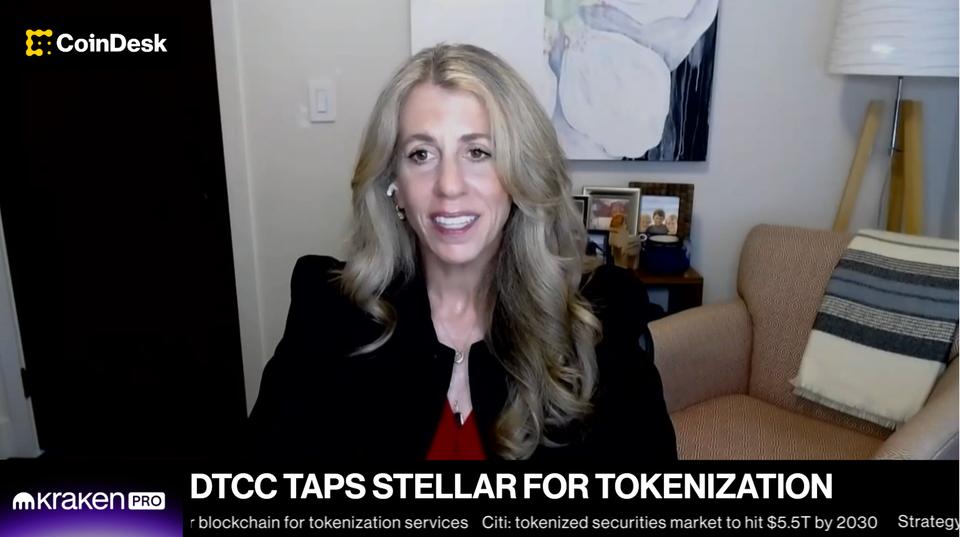
Denelle Dixon says DTCC’s decision to connect its tokenized securities platform to Stellar validates years of compliance-focused infrastructure. She argues regulation helps institutions move faster, but tokenization is already advancing across public blockchains and does not hinge on the Clarity Act.
Stellar is like a new rail line for digital shares. The boss says big rules would help, but the train is already moving because some big companies are using it now.
Analysis
DTCC’s Stellar choice is the headline
Denelle Dixon, CEO of the Stellar Development Foundation, said DTCC’s selection of Stellar as the first public blockchain connected to its upcoming tokenized securities settlement platform validates more than a decade of work aimed at institutional use. In her telling, the partnership is a milestone for a network that was built around compliance and enterprise requirements rather than retail speculation.
Regulation helps, but it is not the only catalyst
Dixon said the GENIUS Act gave financial institutions more confidence that the U.S. government wants a clearer framework for the industry. She also said the Clarity Act would benefit the sector if it passes. Still, her point was that tokenization will continue even if that bill stalls. She pointed to firms such as Franklin Templeton, which had already built tokenized products on Stellar before the latest legislative push.
Stellar is selling infrastructure, not hype
Dixon said Stellar has surpassed $1 billion in tokenized real-world assets since December and has grown to roughly $3 billion in about five months. She also said the network has maintained 99.99.99% uptime and handles billions of transactions each quarter. The emphasis is on reliability, compliance tooling, and privacy features that can be tuned for different assets and use cases.
The bigger market test is scale
The article contrasts Stellar’s progress with DTCC’s much larger traditional settlement workload, including $4.7 quadrillion in securities transactions last year. Dixon acknowledged that tokenized settlement volumes will grow gradually, not all at once, and that avoiding outages is critical for institutional trust.
A multi-chain future
Dixon rejected the idea that one blockchain will dominate institutional tokenization. Instead, she expects a smaller group of public blockchains to capture most issuance based on technical strengths, with open networks ultimately benefiting from faster development and broader participation.
Key points
- DTCC chose Stellar as the first public blockchain tied to its tokenized securities settlement platform.
- Dixon said the move validates Stellar’s long focus on compliance and institutional requirements.
- She said the GENIUS Act helped build confidence, and the Clarity Act would also help if passed.
- Stellar claims strong uptime and says it already handles billions of transactions each quarter.
- Dixon expects tokenized assets to spread across several public blockchains rather than one dominant network.
If DTCC’s integration proves reliable, it could make more institutions comfortable using public blockchains for settlement. Stellar’s compliance tools, uptime claims, and growing tokenized asset volume give it a credible case for deeper adoption.
The rollout may still be slow because Dixon said tokenized settlement volumes will ramp up gradually. If reliability slips or regulation stays unclear, institutions may keep experimenting instead of moving real flows onto blockchain rails.