Suburban Rail Loop: Victorian government secretly increased public transport fares to help pay for controversial SRL
The Victorian government secretly implemented a 1% annual levy on public transport fares since January 2025 to help fund the Suburban Rail Loop East, a fact revealed by an auditor general's report. This undisclosed "secret tax" is projected to raise $4.8bn by 2062 and has…
Intelligence analysis by Gemini 2.5 Flash
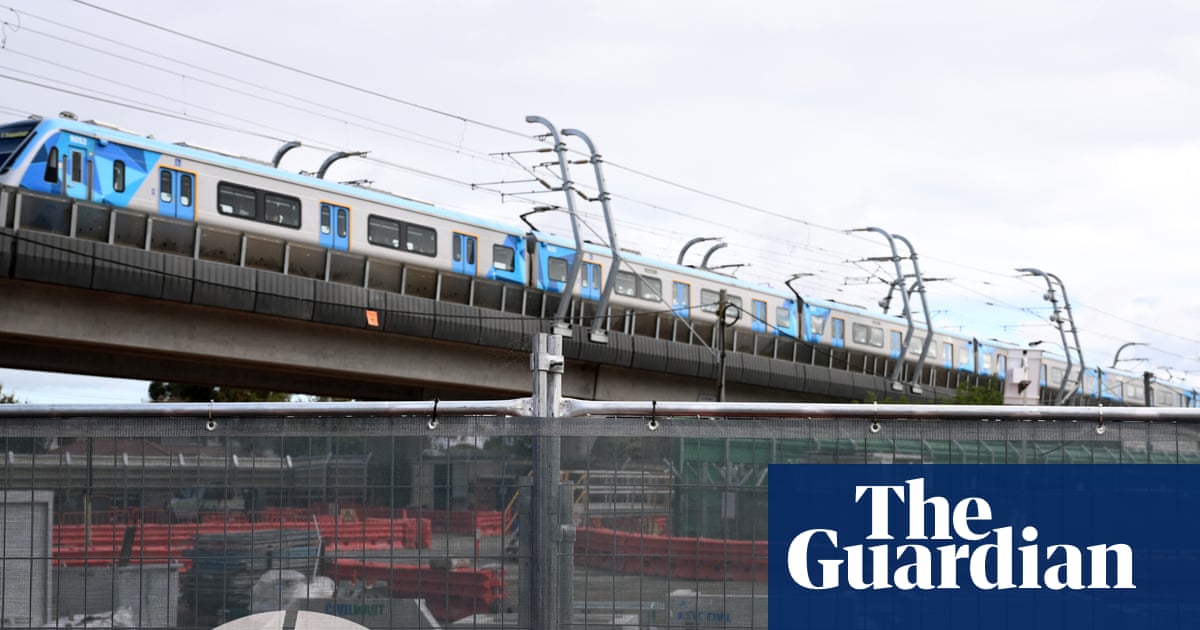
A report by the Victorian auditor general has exposed that the state government secretly imposed an annual 1% levy on public transport fares starting in 2025, specifically to finance the controversial Suburban Rail Loop East project. This undisclosed funding mechanism, set to continue until 2062, has sparked significant political backlash and raised serious questions about government …
Imagine your parents secretly added a tiny extra charge to your bus ticket every year, and that money was going to build a super-long train line that they hadn't told anyone about. That's kind of what happened in Victoria, Australia, where the government quietly added a small fee to all public transport fares to help pay for a huge new train project, and people are now very upset they weren't told.
Analysis
The revelation of a hidden public transport fare levy in Victoria, Australia, to fund the Suburban Rail Loop (SRL) East project has ignited a significant political scandal, raising profound questions about government transparency and accountability. The auditor general's report, tabled in parliament, detailed a 1% annual increase on all metropolitan Melbourne and regional Victorian public transport fares, implemented since January 2025, which was never publicly announced by the government or Transport Victoria.
SRL East
The Suburban Rail Loop East, a 26km stretch from Cheltenham to Box Hill, is the first stage of a multibillion-dollar infrastructure project. The auditor general's report indicates that the fare levy is expected to be the largest source of "value capture revenue" for SRL East, projected to generate an estimated $4.8 billion in net present value terms by 2062. This funding mechanism is intended to supplement other value capture measures, such as land tax, windfall gains tax, infrastructure contributions from developers, and revenue from state-initiated property development.
However, the report also casts doubt on the project's ability to be delivered on time or within its estimated budget, which was promised by Premier Ben Carroll to cost $33.3 billion for SRL East. The lack of transparency surrounding the levy's introduction has fueled public distrust, with opposition leaders describing it as a "secret public transport tax" and a "scandal of the highest order." The project's overall cost has been a point of contention, with initial estimates for the entire 90km loop at $50 billion in 2018, and a 2024 Parliamentary Budget Office analysis estimating SRL East and SRL North at $96.4 billion.
Ben Carroll
Premier Ben Carroll is at the center of the controversy, facing accusations of lacking integrity from opposition leader Jess Wilson. Wilson claims Carroll, who was public transport minister when the levy was first approved in August 2021, signed off on the tax and then withheld this information from Victorians during an election. While senior government sources have attempted to distance Carroll from the December 2023 committee decision that confirmed the levy, the auditor general's report explicitly states the levy was first approved in August 2021, when Carroll held the relevant portfolio.
Carroll, who became premier just last month, has responded by stating he will "lead a government that levels with Victorians" and that under his leadership, "Victorians deserve to know what their money is buying." This statement, however, comes after the levy had been in effect for over a year without public disclosure, intensifying scrutiny on his administration's commitment to transparency. The political fallout highlights the challenges new leaders face in inheriting and addressing past decisions that undermine public confidence.
Auditor General
The Victorian auditor general's report serves as the primary catalyst for this controversy, bringing to light the undisclosed fare levy and its implications. The report explicitly criticizes the government and Transport Victoria for not acknowledging the levy in their public communications about annual fare increases in 2025 and 2026, noting that it had still not been announced as of June 2026. This independent oversight body plays a crucial role in ensuring financial accountability and transparency within government operations.
The auditor general's findings underscore a significant lapse in public disclosure, particularly concerning a funding mechanism that directly impacts millions of public transport users for decades. The report's detailed analysis of the levy's revenue projections and its role in funding SRL East provides concrete evidence of the government's actions. This independent scrutiny is vital for democratic governance, as it empowers the public and opposition parties with information necessary to hold the government accountable for its financial decisions and policy implementations.
Key points
- The Victorian government secretly introduced a 1% annual levy on public transport fares starting January 2025.
- This levy, projected to raise $4.8 billion by 2062, is intended to help fund the Suburban Rail Loop (SRL) East project.
- The auditor general's report revealed the levy, noting it was never publicly announced by the government.
- Opposition leaders have condemned the "secret tax" and questioned Premier Ben Carroll's integrity, as he was public transport minister when the levy was first approved in 2021.
- The report also raised concerns about the SRL East project's ability to be delivered on time or within its $33.3 billion budget.
Despite the controversy, the Suburban Rail Loop project, if completed, could significantly improve public transport connectivity and reduce congestion in Melbourne, offering long-term benefits to commuters and the region's development. The increased scrutiny might also lead to greater transparency in future government infrastructure funding decisions.
The lack of transparency surrounding the fare levy risks eroding public trust in government and major infrastructure projects, potentially leading to increased political instability and public backlash. Furthermore, the auditor general's doubts about the project's on-time and on-budget delivery suggest potential for significant cost blowouts and delays, burdening taxpayers further.