Switzerland: US Vice President Vance Calls Iran Talks 'Historic'
The US and Iran have begun talks in Switzerland to reach a final peace agreement, with US Vice President Vance calling the negotiations 'historic'.
Intelligence analysis by Llama 3.3 70B
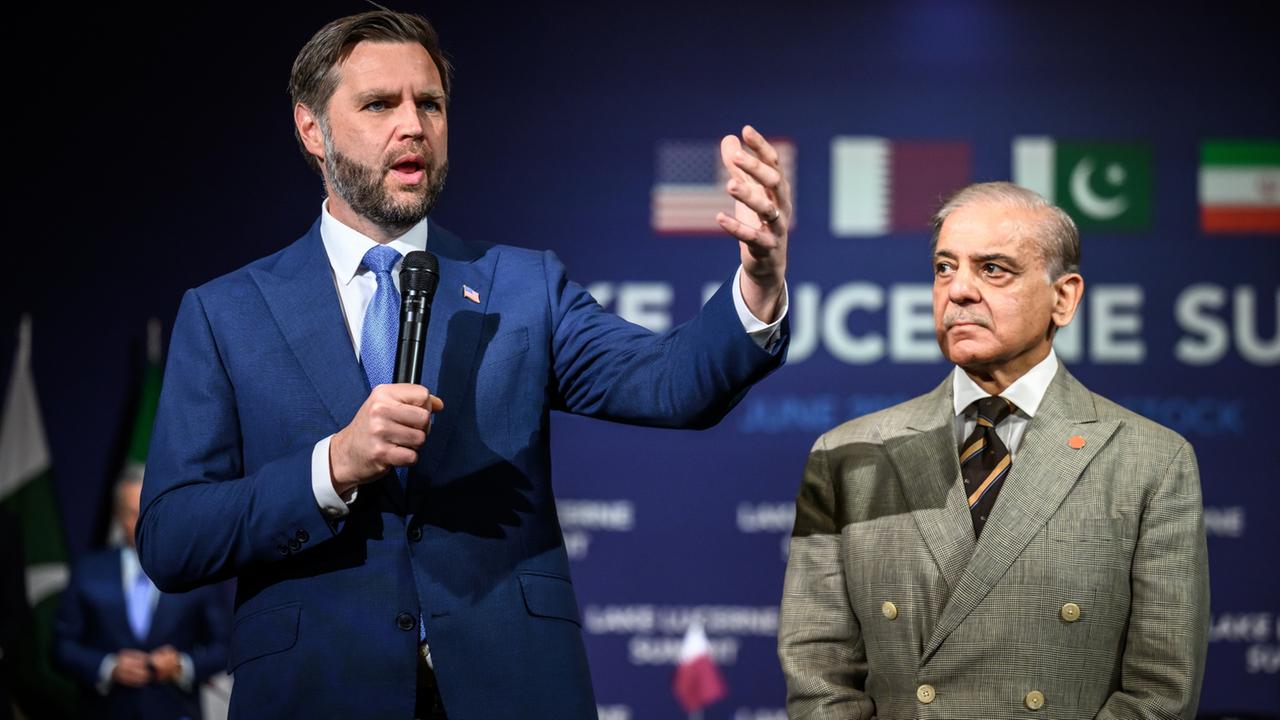
The talks, which also involve mediators from Pakistan and Qatar, aim to end the Iran conflict and address key issues such as Iran's atomic program and international sanctions.
Imagine two countries that have been fighting for a long time, and now they're trying to make peace. They're talking to each other in a special meeting in Switzerland, with some other countries helping to facilitate the conversation. It's a big deal because it could help to end the fighting and make the region safer.
Analysis
A New Chapter in US-Iran Relations
The talks between the US and Iran in Switzerland mark a significant shift in the relationship between the two countries. US Vice President Vance has expressed optimism about the negotiations, stating that 'we have already made significant progress' and that the US is willing to 'fundamentally change' its relationship with Iran if the country is willing to abandon its role as a factor of regional instability and give up its ambitions to acquire atomic weapons.
The Iranian delegation, however, has been upset by a recent statement from US President Trump, who threatened to take further action against Iran if the country does not stop supporting the Hezbollah militia in Lebanon. The Iranian chief negotiator, Mohammad Bagher Ghalibaf, responded by saying that Iran 'does not pay attention to American threats' and that the country's military forces are 'ready to respond in other ways'.
The Role of Mediators
The involvement of mediators from Pakistan and Qatar in the talks is significant, as it reflects the regional dimensions of the Iran conflict. The mediators are likely to play a crucial role in facilitating the negotiations and helping to build trust between the US and Iran.
The talks are also being closely watched by other countries in the region, including Israel, which has been involved in a conflict with the Hezbollah militia in Lebanon. The Israeli government has warned that it will take further action against Iran if the country does not stop supporting the militia.
Challenges Ahead
Despite the optimism expressed by US Vice President Vance, the talks are likely to face significant challenges in the coming days. The Iranian delegation has already walked out of the talks in protest at President Trump's statement, and it remains to be seen whether the negotiations can get back on track.
The talks will need to address a range of complex issues, including Iran's atomic program, international sanctions, and the situation in Lebanon. The US and Iran will also need to find a way to build trust and establish a framework for future cooperation, which will be a difficult task given the history of tensions between the two countries.
Key points
- The US and Iran have begun talks in Switzerland to reach a final peace agreement
- The talks involve mediators from Pakistan and Qatar
- The US is willing to 'fundamentally change' its relationship with Iran if the country abandons its role as a factor of regional instability
If the talks are successful, it could lead to a significant reduction in tensions between the US and Iran, and potentially even a new era of cooperation between the two countries. This could have positive implications for regional stability and global security.
However, there are also significant risks that the talks could fail, particularly given the recent tensions between the US and Iran. If the negotiations break down, it could lead to further escalation of the conflict and potentially even more violence in the region.