Syria says reached deal with Moscow on fate of Russian bases
Syria announces a deal with Russia to convert Hmeimim airbase and Tartus naval base into joint training centres, ending 18 months of talks.
Intelligence analysis by Llama
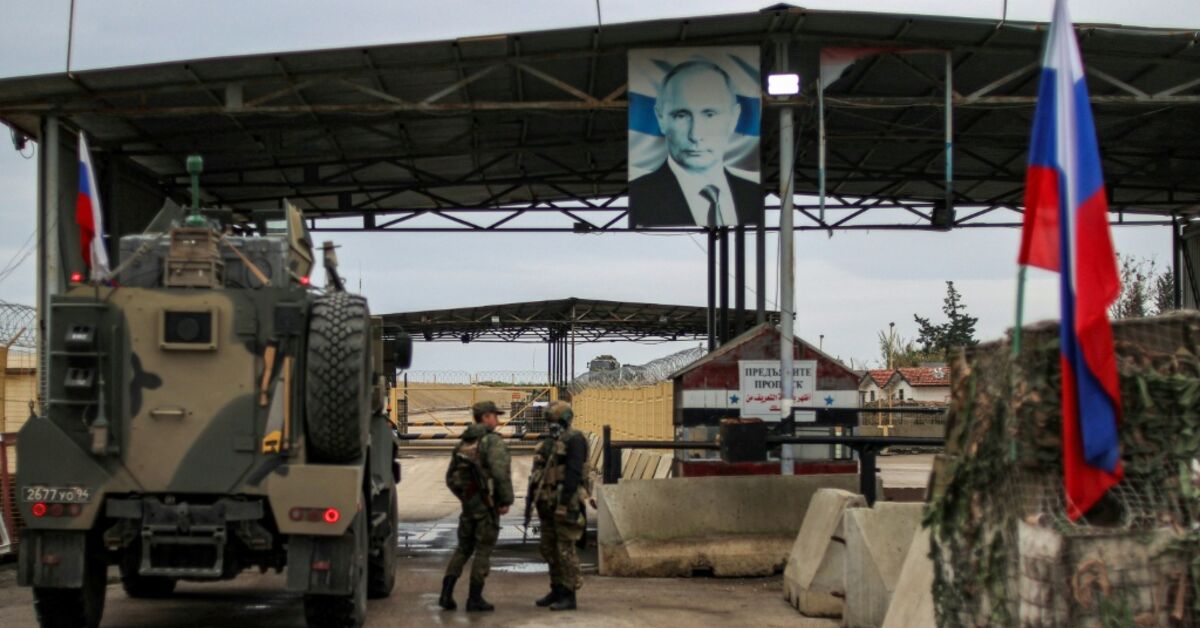
Damascus says it has reached a memorandum with Moscow turning Russia's two Syrian military installations into joint training hubs. Civilian facilities will be handed over within three months.
Russia used to have two big military bases in Syria, kind of like a permanent camping spot on the beach. After Syria got a new government, the two countries agreed to turn those camps into shared training places instead, and Syria gets back the civilian parts within three months.
Analysis
Hmeimim airbase
The Hmeimim airbase in Latakia province had been Russia's primary airborne bridge into the Syrian theater since 2015, hosting Sukhoi fighter rotations, helicopter gunships, and the airlift corridor that sustained Assad's forces through the civil war's hardest years. Converting it into a "joint training and capacity-building centre" effectively demotes a forward combat hub into a cooperation facility, signalling that Moscow no longer expects to run independent combat sorties from Syrian soil. The accompanying move by Syria's Civil Aviation Authority to take over Latakia international airport, a civilian strip whose flight schedules had long been intertwined with Russian military movements, underlines that Damascus now wants full sovereignty over the airspace around the base. According to Syria's foreign ministry, as quoted by SANA, civilian facilities will be handed over to the Syrian side in parallel.
Tartus naval base
Tartus, on Syria's Mediterranean coast, was Russia's only naval resupply point in the wider Mediterranean region and the logistical anchor that allowed its Black Sea Fleet to operate beyond the Bosphorus. The memorandum reframes Tartus as a shared training node rather than a unilateral Russian logistics hub, a shift that strips the installation of much of its Cold War-era strategic value. Syria had every incentive to push hard on Tartus: under the post-Assad order, Damascus wants visible symbols of regained sovereignty, and a Russian-flag warship idling at a sovereign Syrian port was politically untenable. The article notes both bases had remained operational throughout the negotiations, suggesting Moscow kept leverage in reserve by declining to withdraw until the civilian transfer clauses were locked in.
Three-month window
SANA says the memorandum sets a hard deadline of no more than three months to complete the handover process, an unusually tight clock for a deal of this size between two governments with complicated histories. The timeline reflects how long Damascus has already waited: President Ahmed al-Sharaa has been received by Vladimir Putin in Moscow twice since taking power, with Putin publicly praising Sharaa's "efforts to restore Syria's territorial integrity" during a January visit. The earlier Kremlin withdrawal from Qamishli airport in Syria's northeast set the precedent for a staged exit, and the new three-month clock appears designed to foreclose any Russian attempt to drag out the talks indefinitely. Whether Moscow formally endorses the deal remains open, as Russia had not officially commented at time of publication, and Damascus's unresolved demand for the extradition of ousted leader Bashar al-Assad, who is sheltering in Moscow with his wife, is left untouched by the memorandum.
Key points
- Syria says Hmeimim airbase and Tartus naval base will become joint training and capacity-building centres.
- Memorandum followed a year and a half of negotiations and sets a three-month window to complete the handover.
- Civilian facilities at both bases, including Latakia international airport, are being transferred to Syrian authorities.
- Russia has not officially commented on the announced deal.
- Damascus continues to demand Moscow extradite ousted leader Bashar al-Assad, who remains in Russia.
If implemented cleanly, the deal lets Damascus reclaim sovereignty over its territory and airspace while keeping a working channel to Moscow, and Moscow preserves a Mediterranean foothold without the political cost of an outright eviction. The two prior Putin-Sharaa summits suggest both sides have enough political will to translate the memorandum into on-the-ground handover within the stated three months.
Russia had not officially confirmed the agreement at time of publication, and the unresolved question of Assad's extradition remains a live irritant in bilateral ties. The three-month clock is tight for an operation of this scale, and any Russian attempt to retain de facto control over Latakia airspace or Tartus port access could collapse the deal and reopen a sovereignty dispute.