Tanvi Sharma gets first win over Isharani Barua vexing her with net nettles
Tanvi Sharma, World No. 21, secured her first victory over compatriot Isharani Barua with a dominant 21-12, 21-12 score at the French Open, primarily by exploiting Barua's weakness at the net.
Intelligence analysis by Gemini 2.5 Flash
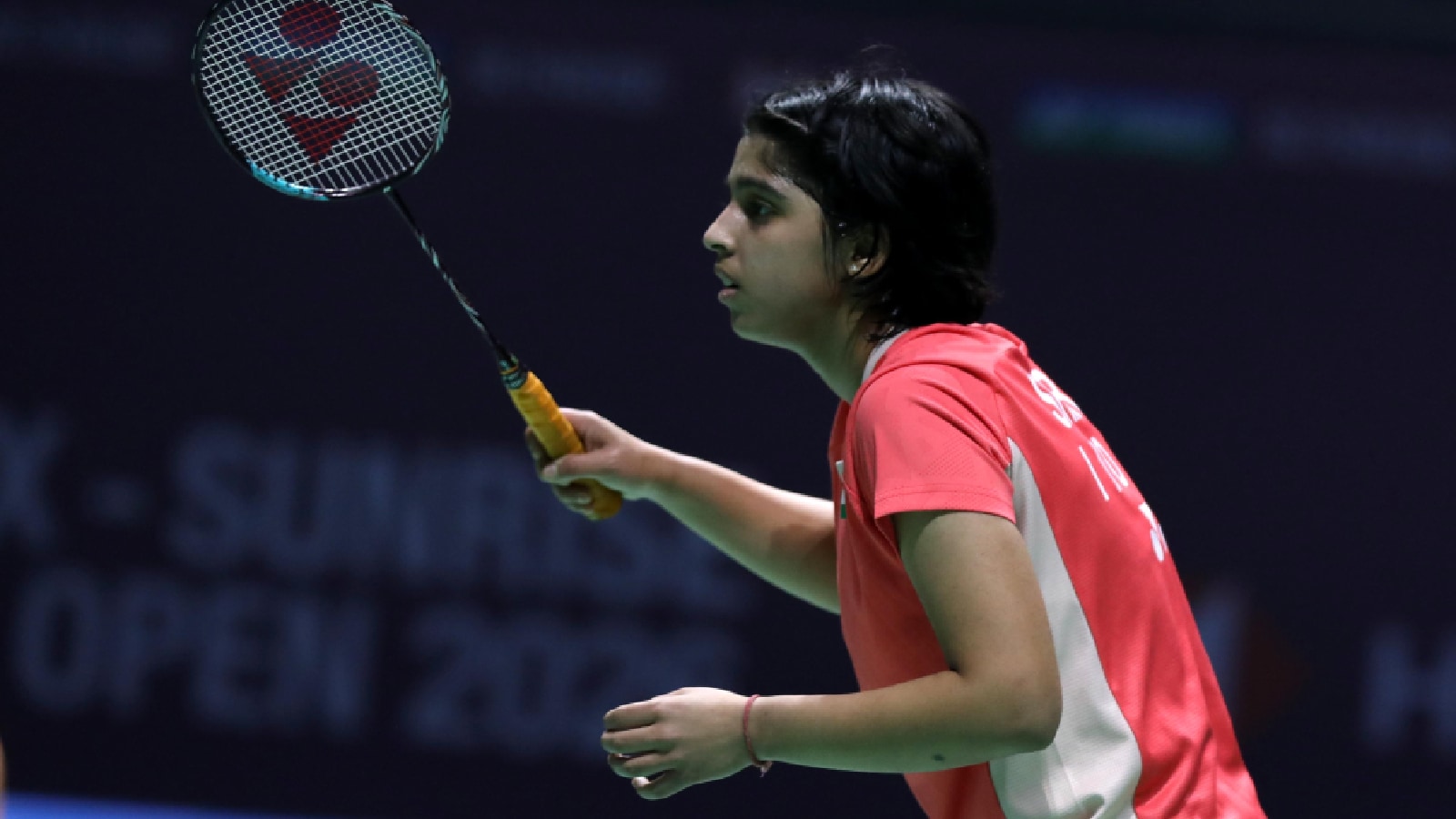
The badminton match saw Tanvi Sharma strategically pull Isharani Barua to the front court, where Barua struggled significantly with her net game. This tactical approach allowed Sharma to comfortably win, highlighting a critical area for improvement for the 22-year-old Barua, who has been stagnant in her world ranking.
Imagine a game of badminton where one player, Tanvi, is super good at hitting the shuttlecock right near the net, making it tricky for her opponent, Isharani, to hit back. Isharani likes to hit hard from the back, but Tanvi kept pulling her to the front, where Isharani got confused and made mistakes. So, Tanvi won easily because she had a secret weapon – her amazing net play!
Analysis
The recent French Open encounter between Tanvi Sharma and Isharani Barua offers a microcosm of the strategic shifts and developmental challenges within Indian women's singles badminton. Sharma's decisive victory, marked by identical 21-12 scores, was not merely a win but a tactical masterclass that exposed a significant vulnerability in her opponent's game.
Isharani Baruah
Isharani Baruah, despite possessing a powerful attack with jump smashes, speed, and defensive rigor, consistently falters in her net play. The article describes her as a "deer in headlights" at the net, a critical weakness that prevents her from advancing beyond her current World Rank 39-40. Her struggles with shot selection and rally construction further compound this issue, making her predictable and exploitable by opponents who can force her to the front court. This stagnation is particularly concerning given her prior victories over Sharma, suggesting a lack of progressive development in key areas of her game.
Tanvi Sharma
Tanvi Sharma, on the other hand, demonstrated a superior understanding of court strategy, particularly her adeptness at the net. Ranked World No. 21, Sharma effectively used her front-court presence to draw Baruah forward, capitalizing on her compatriot's discomfort. Her ability to execute high hairpin tumbles and quick putaways, combined with a steady midcourt game, allowed her to control the rallies and dictate the pace. Sharma's progressive improvement, especially in her net game, positions her as a rising force in Indian badminton, capable of holding her own in crucial front-court exchanges.
India’s Womens Singles
The match underscores a broader need for upgrades in the net game across India's women's singles players. The article points out that this area requires both technical-tactical and psychological enhancements. While players like Unnati Hooda and Tanvi Sharma are showing promise in strengthening their front-court play, they still need to develop more variations and a flatter game to truly use it as a holding weapon in rallies. The competitive jostle within Indian women's singles is intense, and players who can address these lacunae in court craft, particularly at the net, are poised to leapfrog their peers and achieve higher international rankings, as evidenced by Sharma's ascent past Baruah.
Key points
- Tanvi Sharma defeated Isharani Barua 21-12, 21-12 in the French Open, marking her first win against Barua.
- Sharma's victory was largely due to her superior net game, which exploited Barua's significant weakness in the front court.
- Isharani Barua, despite strong power and defense, struggles with shot selection and rally construction, hindering her ranking progression.
- The article highlights a critical need for improved net play among Indian women's singles players for better international competitiveness.
- Younger players like Tanvi Sharma and Unnati Hooda are showing promise in developing stronger front-court skills.
The rise of players like Tanvi Sharma, who exhibit strong net play and strategic court craft, signals a positive trajectory for Indian women's singles badminton. Their development in crucial areas like front-court control could lead to improved international performances and higher rankings for the country's athletes.
Players like Isharani Barua risk being consistently outmaneuvered and stagnating in their rankings if they fail to address fundamental weaknesses in their game, particularly at the net. This could hinder their individual careers and limit India's overall competitive strength in women's singles on the global stage.