Why elephant herds are led by grandmothers, not the youngest females
Elephant herds are led by older female matriarchs whose extensive memory, experience, and emotional intelligence are crucial for the group's survival and safety. These grandmothers guide their families to vital resources and protect them from threats.
Intelligence analysis by Gemini 2.5 Flash
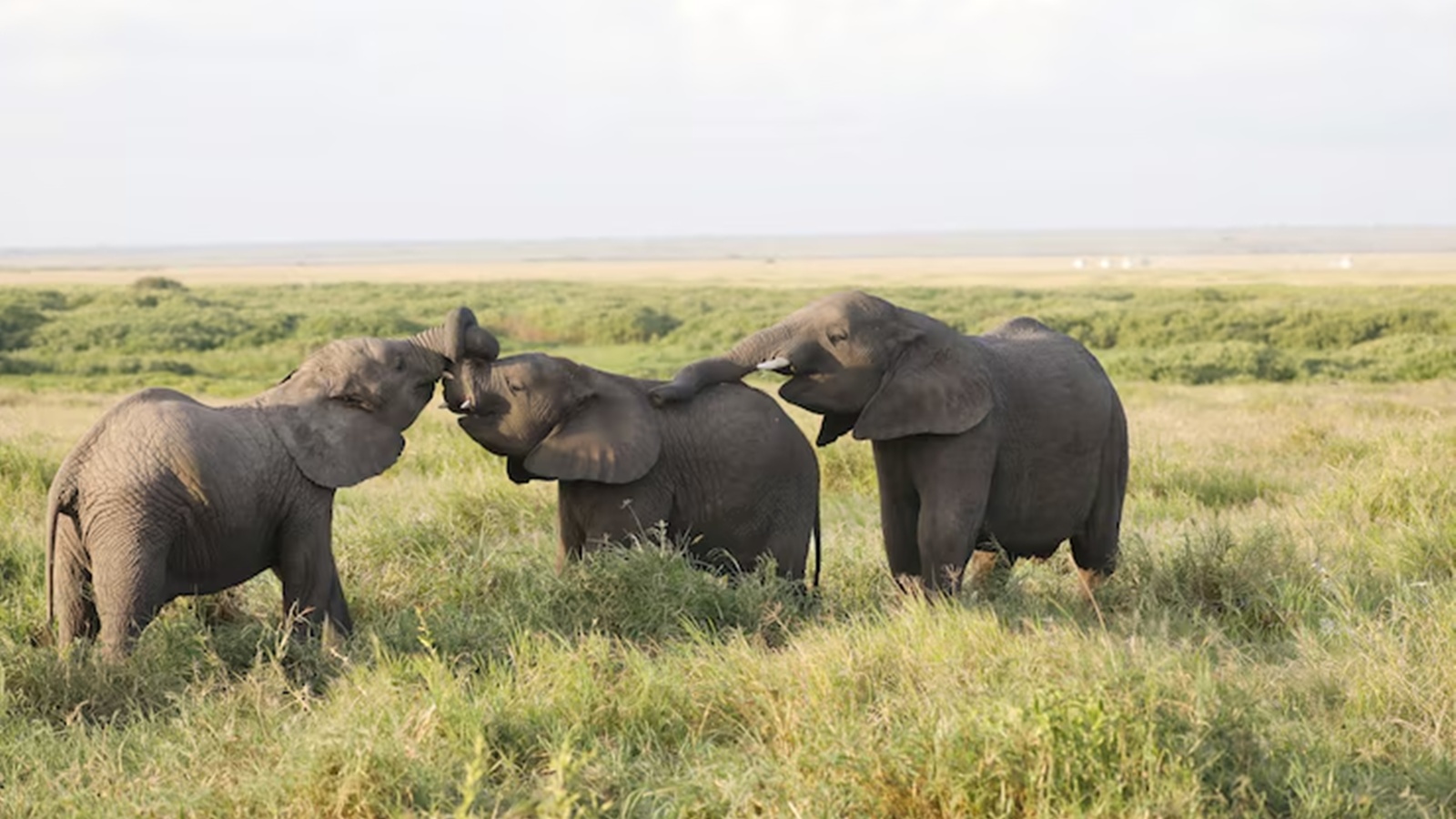
Unlike human societies that often value youth, elephant families rely on their oldest females, the grandmothers, for leadership. These matriarchs use decades of accumulated knowledge to remember water sources during droughts, navigate dangers, and provide emotional stability, ensuring the herd's well-being through challenging times.
Imagine a super-smart grandma who knows all the best secret spots for snacks and how to keep everyone safe from scary things. That's like an elephant grandmother! She remembers where all the water is when it's dry and how to avoid lions, helping her whole family stay alive and happy. Without her, the younger elephants would be lost and scared, like kids without their wise leader.
Analysis
The intricate social structure of elephant herds is fundamentally shaped by the wisdom and experience of their matriarchs, typically the oldest females. These grandmothers are not merely symbolic leaders; their long-term memory and accumulated knowledge are directly linked to the herd's survival, particularly in harsh environments. This leadership model contrasts sharply with many human societies, which often prioritize youth, demonstrating a unique evolutionary strategy for resilience within elephant communities.
Amboseli National Park
Research conducted in Kenya's Amboseli National Park has provided compelling evidence of the matriarchs' indispensable role. Scientists observed that during severe dry seasons, older female leaders successfully guided their families to distant, hidden water sources. These were places they had not visited in many years, yet their precise memory allowed them to recall these vital locations, a skill younger elephants had not yet developed. This ability to retain and recall critical environmental information over vast periods and distances is a cornerstone of the herd's ability to navigate and survive ecological challenges.
Beyond resource location, matriarchs also play a crucial role in herd safety. An experiment, published in the Proceedings of the Royal Society B, demonstrated that herds led by older females exhibited superior caution and coordination when exposed to recordings of lion roars. Their seasoned judgment allowed them to discern the level of threat, leading to more effective defensive responses compared to groups led by younger, less experienced females. This highlights how age-acquired judgment is critical for threat assessment and collective security.
Poachers
The profound impact of matriarchs extends to the emotional and social fabric of the herd. They act as emotional anchors, resolving conflicts, comforting distressed individuals, and maintaining group cohesion. The sudden loss of a matriarch, often due to poaching, can have devastating consequences for the entire herd. Poachers frequently target older elephants for their larger tusks, inadvertently removing the most knowledgeable and emotionally stabilizing members. This loss strips the herd of invaluable wisdom, collective memory, and social bonds, leading to disorientation, distress, and even depression among the remaining elephants. Conservationists therefore emphasize that protecting these grandmothers is as crucial as protecting the species itself, recognizing their irreplaceable role as memory-keepers, guardians, and emotional pillars.
Key points
- Elephant herds are led by older female matriarchs who possess decades of experience and memory.
- Matriarchs guide their herds to critical resources like waterholes during droughts and help avoid dangers.
- Research in Amboseli National Park and studies published in the Proceedings of the Royal Society B confirm their superior decision-making and threat assessment abilities.
- Beyond leadership, matriarchs provide emotional stability, resolving conflicts and comforting distressed elephants.
- The loss of a matriarch, often due to poaching, severely impacts the herd's survival, leading to disorientation and emotional distress.
Increased understanding of matriarchal leadership can lead to more targeted and effective conservation strategies, focusing on protecting these key individuals. By safeguarding older female elephants, conservationists can help ensure the transfer of vital knowledge and social stability across generations, strengthening herd resilience against environmental challenges.
The continued targeting of older elephants by poachers poses a severe threat to the long-term survival of herds. Losing matriarchs not only depletes the population but also erodes the collective wisdom, memory, and social cohesion essential for the herd's ability to find resources and avoid danger, potentially leading to widespread disorientation and decline.