TCS to Microsoft: Techie reveals 4 major differences in work culture
A tech professional shared his experience transitioning from Tata Consultancy Services (TCS) to Microsoft, highlighting significant differences in workplace hierarchy, dress code, office environment, and professional ownership. His insights into the culture shift have gar…
Intelligence analysis by Gemini 2.5 Flash
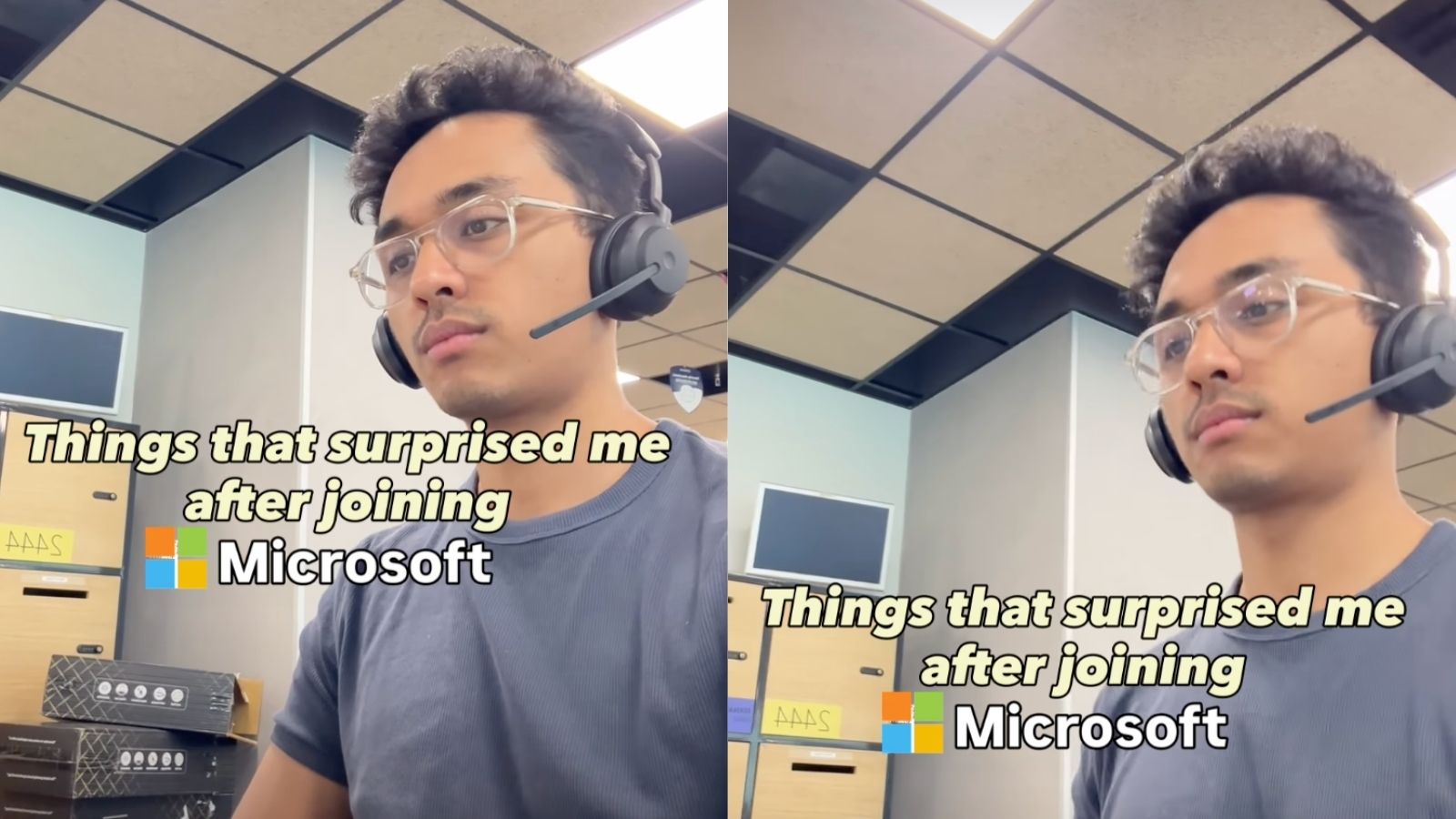
Sailesh Gurung, a techie, detailed his journey from TCS, where he experienced a structured, hierarchical, and shift-based work environment, to Microsoft, which he found to be flatter, more flexible, and focused on individual ownership. His viral video underscores a broader cultural contrast between service-based and product-driven tech companies.
Imagine a big school where everyone wears uniforms and follows lots of rules, and you only do one small part of a big project. That's like the first company. Then, you move to a different school where you can wear comfy clothes, play games, bring your family to visit, and get to be in charge of your whole project from start to finish. That's like the second company, where it feels more like a fun, grown-up playground designed for you.
Analysis
Sailesh Gurung's Journey
Sailesh Gurung's personal account of transitioning from Tata Consultancy Services (TCS) to Microsoft offers a compelling narrative on the evolution of corporate work environments. His initial understanding of professional life, shaped by his tenure at TCS as a fresher, was rooted in a highly structured, process-driven model. This experience, common in many service-based organizations, instilled a perception of work as a series of defined tasks, emphasizing adherence to protocols and sequential completion. The move to Microsoft, a global product-driven giant, fundamentally altered this perspective, introducing him to a different paradigm of corporate culture and employee engagement.
His journey highlights a significant contrast between the operational philosophies of these two tech behemoths. Gurung's observations are particularly pertinent for the Indian tech landscape, where a large workforce is employed by service-based companies like TCS. His insights provide a valuable benchmark for professionals contemplating career shifts and seeking environments that align more closely with their aspirations for growth and autonomy.
Workplace Dynamics
A primary distinction Gurung identified was the stark difference in workplace hierarchy. He characterized his experience at TCS as one with a visible, multi-layered management structure, where approvals and formal processes were prevalent. This often meant navigating several levels of authority for decision-making and project progression. In contrast, Microsoft presented a notably "flat" organizational culture, which he found conducive to direct communication and cross-team collaboration. This flatter structure allowed him to engage with colleagues and leaders across various departments, fostering an environment where individual contributions and ideas were actively solicited and heard.
Beyond organizational structure, Gurung also pointed to the contrasting dress codes as a reflection of broader cultural attitudes. While TCS maintained a more formal dress policy, Microsoft embraced a more relaxed approach, prioritizing comfort while still expecting presentability. This seemingly minor detail underscores a larger philosophical difference in how employee autonomy and personal expression are valued within each corporate setting, contributing to the overall employee experience.
Ownership and Environment
Perhaps the most impactful change for Gurung was the profound shift in the level of professional ownership. He described his work at TCS as "shift-based," implying a segmented approach where tasks were completed and then handed off to the next person in the chain. At Microsoft, however, he experienced "end to end" ownership, taking full responsibility for projects from conception to completion. This increased accountability, while demanding, significantly contributed to his professional growth and, notably, to improved compensation, illustrating a direct link between autonomy and reward.
The physical work environment at Microsoft also played a crucial role in enhancing his experience. Gurung highlighted amenities such as hackathons, cross-team events, dedicated gaming zones, and relaxation spaces. He was particularly impressed by the ability to bring family members or friends to the campus for meals, an experience he had not encountered previously. These features collectively contributed to his perception that Microsoft's workplace was "designed for humans, not just employees," fostering a holistic environment that supports well-being and creativity beyond mere task execution.
Key points
- A techie shared his experience moving from TCS to Microsoft, highlighting four key cultural differences.
- Microsoft's work culture is described as flatter, with less hierarchy and more cross-team collaboration, compared to TCS's structured, approval-heavy environment.
- Microsoft offers greater flexibility in dress code and a more amenity-rich office environment, including gaming zones and family visits.
- The biggest professional change was the shift from "shift-based" work at TCS to "end-to-end" ownership at Microsoft, leading to growth and better compensation.
- The techie noted that Microsoft's workplace felt "designed for humans, not just employees," with better infrastructure and conveniences.
The insights shared by Gurung could inspire other Indian tech professionals to seek out product-driven companies that offer greater autonomy, flatter hierarchies, and a more human-centric work environment, potentially leading to increased job satisfaction and professional development across the industry. This could also encourage service-based companies to re-evaluate their own cultures to retain talent.
While Gurung's experience is positive, the increased ownership and responsibility at product-driven companies like Microsoft might not suit everyone, potentially leading to higher pressure or burnout for some individuals. Furthermore, the cultural differences highlighted might create unrealistic expectations for those transitioning, as not all product companies offer the same benefits or cultural fit.