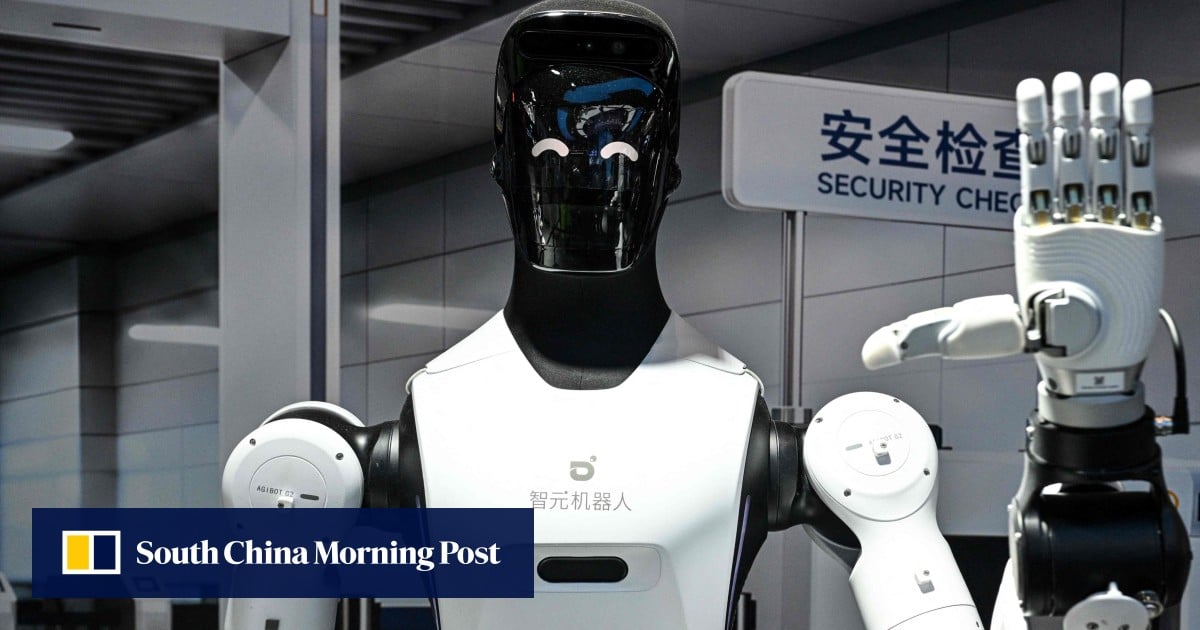
The dangerous illusion that AI understands, thinks and cares
An opinion piece argues that anthropomorphizing AI by attributing human emotions or consciousness is a dangerous illusion, leading to ethical and practical problems and risking vulnerable individuals.
Intelligence analysis by Gemini 2.5 Flash

The author contends that treating AI systems as humanlike, with emotions or consciousness, is a deceptive practice that obscures their mechanical nature and limitations. This anthropomorphism, she argues, misrepresents AI's statistical processing as genuine intelligence, posing ethical risks, particularly for vulnerable users who might mistake machine errors for human understanding.
Imagine a super-smart calculator that can guess the next word in a sentence really well, like "the cat sat on the..." and it knows "mat" is usually next. It's not actually thinking or understanding like you do; it's just really good at finding patterns in huge amounts of words it's seen before. Pretending it has feelings or thoughts is like thinking your toy robot is sad when it runs out of batteries – it's just a machine doing what it's programmed to do, and sometimes it makes mistakes.
Analysis
The Peril of Anthropomorphism
The article strongly cautions against the growing trend of anthropomorphizing artificial intelligence, which involves attributing human emotions, intentions, consciousness, or moral judgment to AI systems. Author Hannah Yee-Fen Lim, an associate professor of business law, asserts that while this practice might make AI interactions seem more approachable, it fundamentally distorts users' understanding of the technology's true nature and inherent limitations. This misrepresentation is not merely a semantic issue but a profound ethical and practical problem, as it blurs the lines between sophisticated computation and genuine human-like intelligence. Lim points out that the shift in common parlance from "AI systems" (adjective) to "the AI" (noun) subtly elevates these machines to a status on par with, or even surpassing, human intelligence. This linguistic evolution, she argues, contributes to a dangerous illusion, fostering a belief that AI possesses capabilities it does not. The article emphasizes that despite their impressive processing power and prowess in certain tasks, AI systems are ultimately machines prone to spectacular failures because they lack true understanding or consciousness.
Deconstructing AI's 'Intelligence'
A central argument of the piece is that what appears to be AI intelligence is, in fact, advanced data processing and statistical analysis. Generative AI systems, particularly text-based ones, excel at tasks like keyword searches, pattern recognition, and combining data far more rapidly than humans. However, Lim clarifies that this prowess, combined with statistical analysis, only creates a "semblance of intelligence," not true intelligence. She likens it to the industrial revolution, where machines were recognized for their efficiency without being mistaken for teammates. The author specifically addresses the concept of "hallucinations" in generative AI, reframing them as simple "errors and inaccuracies" rather than a sign of a system attempting to think or understand. She explains that these systems operate by statistically calculating the most probable next word or phrase based on vast training data. For instance, given "thank," the system generates "you" due to high statistical probability, not because it comprehends gratitude. This mechanistic explanation underscores the lack of genuine cognitive understanding in AI, challenging the notion that these systems "think" or "care."
Ethical Imperatives and Vulnerability
The article identifies deception as the "foremost ethical concern" arising from the anthropomorphization of AI. By treating AI systems as if they are humanlike, there is a significant risk to vulnerable individuals who might be misled into believing these systems possess empathy, understanding, or moral judgment. This misperception could have severe consequences, potentially impacting critical decisions or interactions where genuine human insight and care are paramount. The author's background in business law and AI governance lends weight to this ethical warning, highlighting the societal implications of mischaracterizing AI. The piece implicitly calls for greater clarity and honesty in how AI is discussed and presented to the public. It advocates for a precise vocabulary that accurately reflects AI's capabilities as sophisticated tools rather than sentient entities. By dispelling the dangerous illusion that AI understands, thinks, and cares, the article aims to foster a more realistic and responsible approach to AI development, deployment, and public engagement, ultimately protecting users from potential harm stemming from misplaced trust or misunderstanding.
Key points
- Anthropomorphizing AI by attributing human emotions or consciousness is an ethical and practical problem.
- Referring to "the AI" as a noun misleadingly elevates its perceived intelligence to human levels.
- AI "hallucinations" are simply errors and inaccuracies, not signs of understanding.
- Generative AI excels at statistical data processing and pattern recognition, not true intelligence.
- The foremost ethical concern is deception, risking vulnerable people's lives by treating AI systems as humanlike.
The dangerous illusion of AI understanding and caring could lead to significant ethical problems, particularly the deception of vulnerable individuals who might place undue trust in machines lacking true consciousness or moral judgment. This misperception risks serious consequences if critical decisions are based on the false belief that AI possesses human-like empathy or comprehension.