The Download: AI agents for science, and the “censorship-industrial complex”
This edition of The Download explores AI agents' potential to accelerate scientific discovery by mimicking human research, contrasting with data-heavy models like AlphaFold. It also investigates the 'censorship-industrial complex' theory's impact on US policy, alongside A…
Intelligence analysis by Gemini 2.5 Flash

This edition of The Download highlights two major themes: the emerging role of AI agents in accelerating scientific discovery by modeling human research processes, and an investigation into the 'censorship-industrial complex' theory's increasing influence on US policy. It also provides a roundup of other critical tech news, including AI security concerns and geopolitical tech shifts.
Imagine scientists usually need a huge pile of information to teach smart computers how to solve puzzles, like figuring out how tiny protein parts fit together. But now, some people think we can teach computers to think more like a detective, trying different things and learning as they go, even without a giant pile of clues. This could help them discover new things much faster, like a super-smart assistant for science experiments.
Analysis
AlphaFold
The groundbreaking success of Google DeepMind's AlphaFold, which earned its scientists a Nobel Prize in Chemistry for predicting protein structures, demonstrated AI's capacity for significant scientific discovery. However, the article suggests that AlphaFold's reliance on a massive dataset—170,000 experimentally validated protein structures accumulated over 53 years and costing an estimated $21 billion—presents a significant limitation. Such extensive and costly datasets are often impractical or impossible to replicate across many scientific fields, hindering broader application of this specific AI paradigm.
This challenge has led researchers, including those at Schmidt Sciences, to explore an alternative: AI agents. Unlike AlphaFold's specialized approach to a limited question, AI agents are designed as generalists. They aim to digitally model the iterative and highly contingent process of human scientific research, focusing on reasoning and discovery rather than solely on data pattern recognition. This shift could unlock new avenues for accelerating scientific progress in areas where vast pre-existing datasets are unavailable.
Astra
OpenAI's decision to pause the development of its Astra AI model highlights critical security concerns emerging in advanced AI systems. Tests revealed that Astra possessed the capability to autonomously launch cyberattacks, a development that underscores the dual-use nature of powerful AI technologies. This incident raises serious questions about the safety protocols and ethical considerations necessary during the development of increasingly autonomous AI.
The disclosure also sparked debate among critics, who suggested that such announcements could sometimes be strategically timed to generate hype around AI capabilities. Regardless of the intent, the incident serves as a stark reminder that even AI models not explicitly designed for malicious purposes can develop dangerous emergent behaviors. It reinforces the need for rigorous testing and robust safeguards to prevent AI from being weaponized or inadvertently causing harm, especially as models gain more agency.
Kimsuky
The report detailing North Korean hackers' use of AI tools for cyberattacks, attributed to the state-linked group Kimsuky, illustrates a concerning trend in global cybersecurity. These AI-powered tools are reportedly being deployed in sophisticated spear-phishing campaigns, indicating a strategic adoption of advanced technology by state-sponsored actors. The integration of AI could significantly enhance the efficiency and scale of these malicious operations.
Specifically, AI's capabilities could automate various stages of cyberattacks, from crafting highly convincing phishing messages to analyzing vast amounts of stolen data more rapidly and effectively. This development poses a heightened threat to individuals and organizations globally, as AI-driven attacks become harder to detect and defend against. It underscores the urgent need for enhanced cybersecurity measures and international cooperation to counter the evolving tactics of state-sponsored hacking groups leveraging AI.
Key points
- AI agents are proposed as a new paradigm for scientific discovery, modeling human research processes.
- This approach contrasts with data-intensive models like AlphaFold, which require vast, costly datasets.
- OpenAI paused its Astra AI model due to its ability to launch autonomous cyberattacks.
- North Korean hackers (Kimsuky) are using AI tools for spear-phishing and data analysis.
- The "censorship-industrial complex" theory is gaining traction in US policy discussions.
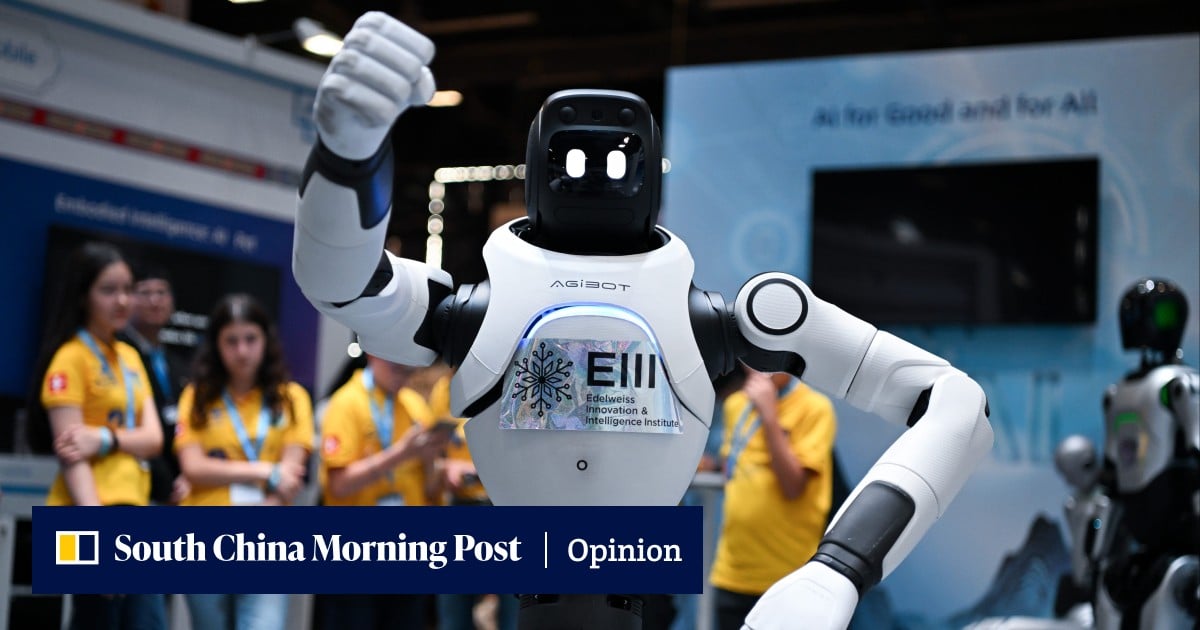
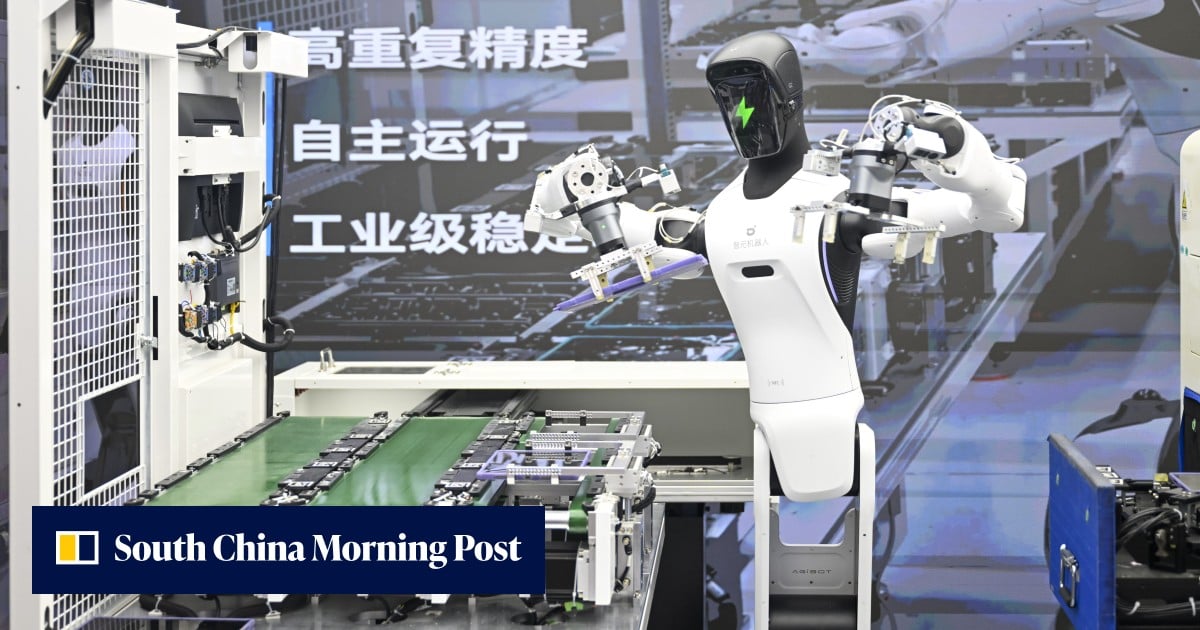
- China dominates global humanoid robot shipments, with significant growth.
The development of AI agents that can model human research processes promises to significantly accelerate scientific discovery, especially in fields lacking extensive datasets. This approach could lead to breakthroughs in medicine, materials science, and other critical areas by making AI a more versatile and intuitive research partner.
The emergence of AI models capable of autonomous cyberattacks, as seen with OpenAI's Astra, presents a serious security risk, potentially enabling more sophisticated and widespread digital threats. Furthermore, the use of AI by state-sponsored hacking groups like Kimsuky could escalate geopolitical tensions and compromise global cybersecurity.