The GENIUS Act turns 1: State of Crypto Policy
The GENIUS Act, a law addressing stablecoins, turns 1 year old. Regulators are still working on crafting rules for stablecoin issuers.
Intelligence analysis by Llama
The GENIUS Act, signed into law a year ago, sets the U.S. on a course to establish federal regulations for stablecoins. Regulators are still working on crafting the rules that stablecoin issuers will have to abide by.
Imagine you have a special kind of money that doesn't change value, called a stablecoin. The U.S. government wants to make rules for these special coins so that people can trust them. It's like setting up a new game with rules so everyone knows how to play.
Analysis
A Year of Progress and Uncertainty
The GENIUS Act, signed into law a year ago, sets the U.S. on a course to establish federal regulations for stablecoins. The law directed federal regulators to begin sorting out how stablecoins should be governed, with the details left to agencies like the Office of the Comptroller of the Currency or the Federal Depository Insurance Corporation.
With the GENIUS Act's implementation, the U.S. launched its first major federal law addressing cryptocurrencies, even if GENIUS only targets a small subsection of that sector. A year on, the rules aren't quite ready for implementation, but we have a much clearer idea as to how the regulators are thinking about stablecoins and where they're likely to land on those rules.
In an emailed statement, Crypto Council for Innovation CEO Ji Hun Kim called the passage of the bill 'a landmark moment.' 'A year in, agencies, institutions, and innovators are building on a clearer foundation, and stablecoins are moving rapidly toward mainstream adoption,' he said.
The various regulators have proposed rules out for comment on the different aspects of stablecoin governance and regulation, including a proposal that would require stablecoin issuers to conduct similar know-your-customer checks to more traditional financial firms. The FDIC published 144 questions a few months ago about how it would oversee stablecoin issuers, looking at concerns like custody, capital and liquidity standards.
The OCC, for its part, put out its own proposal in February laying out how it was interpreting the law. There's still a few months left before these rules start being finalized. And in the meantime, the industry is still working on getting the Digital Asset Market Clarity Act passed.
Clarity Watch
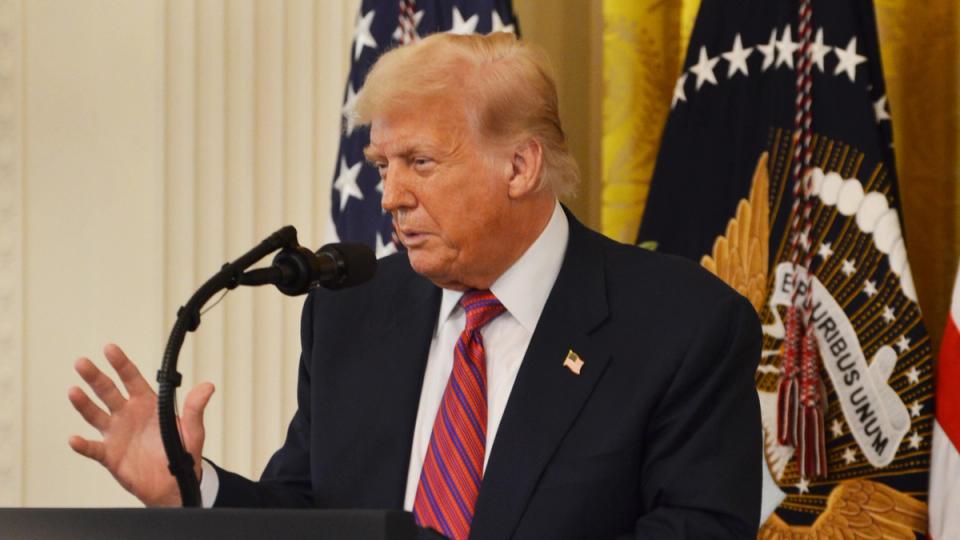
The text of the combined Clarity Act drafts is not yet public, at least as of Friday night. While industry sources expected the bill to be released last week, the timeline has constantly evolved. On Thursday, Senators Cynthia Lummis and Bernie Moreno were supposed to brief Trump on the bill. There was no public readout of that meeting available after, but both lawmakers tweeted about Trump's remarks on the election later Thursday.
There are a number of outstanding issues standing between the bill and passage, but the biggest one remains the lack of an ethics provision that would block senior government officials from profiting off of their own crypto ventures. There is no bipartisan agreement on ethics as of press time, individuals following the issue told CoinDesk last week.
In an emailed statement on Thursday, Senator Elizabeth Warren said she was asking Trump for a financial disclosure that included the first half of 2026, after his 2025 disclosure noted he made over $1.4 billion off of various crypto ventures. A voluntary disclosure would 'provide Congress with information it needs to effectively address governmental ethics concerns,' her press release said.
A Subtle Shift in the Industry
The GENIUS Act's implementation has brought about a subtle shift in the industry. Stablecoins are moving rapidly toward mainstream adoption, and the rules are starting to take shape. The industry is still working on getting the Digital Asset Market Clarity Act passed, but the lack of an ethics provision remains a major hurdle.
The GENIUS Act's impact on the industry will be significant, and it's essential to understand the rules and regulations that will govern stablecoins. The industry is still working on getting the Digital Asset Market Clarity Act passed, but the lack of an ethics provision remains a major hurdle.
Key points
- The GENIUS Act, signed into law a year ago, sets the U.S. on a course to establish federal regulations for stablecoins.
- Regulators are still working on crafting the rules that stablecoin issuers will have to abide by.
- The GENIUS Act's implementation has brought about a subtle shift in the industry, with stablecoins moving rapidly toward mainstream adoption.
- The industry is still working on getting the Digital Asset Market Clarity Act passed, but the lack of an ethics provision remains a major hurdle.
If the GENIUS Act's rules are implemented correctly, it could lead to more stablecoins being used in everyday transactions, making it easier for people to use cryptocurrency. This could also lead to more innovation in the industry, as companies and individuals are more confident in using stablecoins.
If the GENIUS Act's rules are not implemented correctly, it could lead to a lack of trust in stablecoins, making it harder for people to use them. This could also lead to a decrease in innovation in the industry, as companies and individuals are less confident in using stablecoins.