The Guardian view on Chinese workers picking up the pen: poetry in motion
A food delivery rider has won China's highest literary award, part of a growing trend for writing by labourers. This time, it is bottom-up rather than directed from above.
Intelligence analysis by Llama
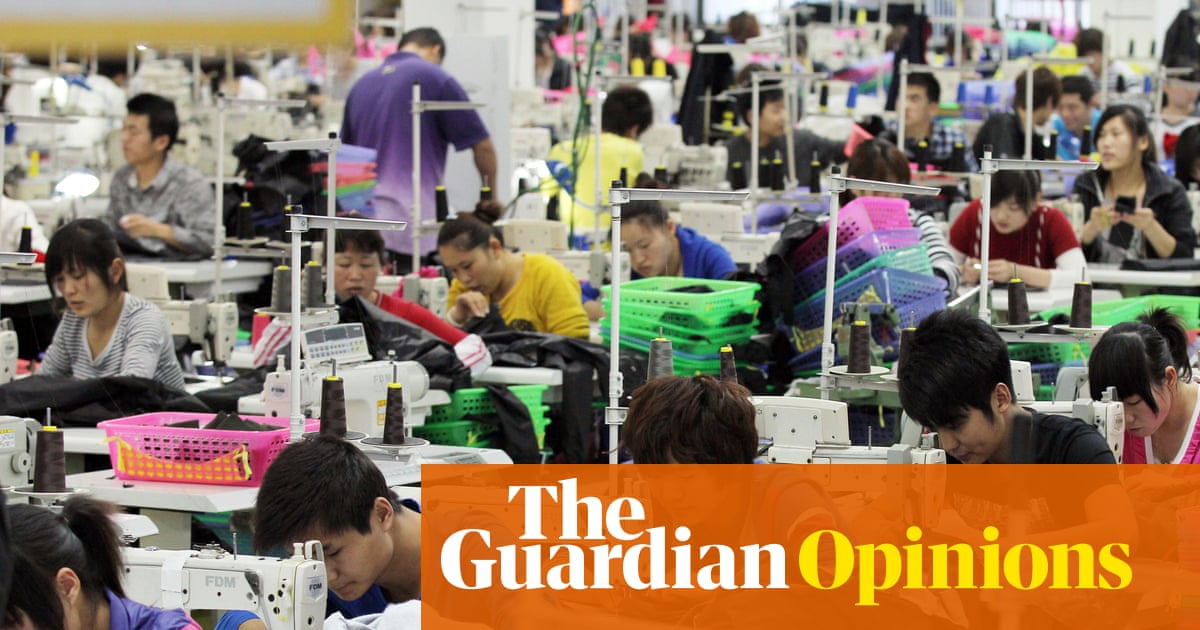
Chinese workers are picking up the pen, writing about their experiences and the harsh realities of working-class lives. This trend is a revival of workers' writing, which was previously directed from above.
Imagine you're a worker in a big factory, and you're writing about your experiences. You might write about how hard it is to make ends meet, or how you feel like you're just a small part of a big machine. This is what's happening in China, where workers are writing about their lives and the challenges they face. It's a way for them to express themselves and tell their stories.
Analysis
A $60B Vote of Confidence
The hundreds of millions who have built modern China from the ground up – sweeping its streets, labouring in its factories and ferrying its goods – are often overlooked. But they refuse to go unheard. Last week, a food delivery rider won China's top literary award. Wang Jibing, 56, first caught attention when a poem about his experiences went viral in 2022. The following year, Hu Anyan's memoir, I Deliver Parcels in Beijing, became a bestseller.
Why Cursor?
In the early 20th century, Chinese intellectuals sought to capture the harsh realities of working-class lives. But it was under Mao Zedong that the idea of writing by as well as about the masses became reality, with labourers encouraged to take up the pen. In an era when the party tried to govern the language even of diaries and personal letters, the parameters of style and content were strict, and this enthusiasm swiftly diminished after Mao.
The Road Ahead
But workers' writing has seen a revival in the 21st century. This time, it is bottom-up rather than directed from above. Maoist literature was meant to educate and mobilise the masses. Heavy labour was portrayed as offering a kind of transcendence, with workers becoming almost superhuman in their efforts. Contrast that with the testimony of the poet Xiao Hai, whose memoir, Adrift in the South, was published in English in May. Forced by family poverty to work on assembly lines from the age of 15, he writes of his 'bitterness and regret… when I realise I let the best decade of my life slip away from me on the factory floor'. The individual scrabble to get by has replaced paeans to collective toil, and the sense of hope has given way to numbness or despair.
Key points
- Chinese workers are picking up the pen, writing about their experiences and the harsh realities of working-class lives.
- This trend is a revival of workers' writing, which was previously directed from above.
- The stories of these workers shed light on the unsavory underpinnings of the globalised economy and speak to the unease that many feel with it.
- The Communist party has little tolerance for work that touches on topics such as the role of corrupt officials or collective organisation.
If this trend continues, it could lead to a greater understanding of the challenges faced by workers in China and around the world. It may also inspire others to share their own stories and experiences, creating a more nuanced and empathetic global community.
However, the Communist party has little tolerance for work that touches on topics such as the role of corrupt officials or collective organisation. Many grassroots writers post online, where their work can easily be deleted. This could lead to a suppression of free speech and a lack of accountability for those in power.