The ‘Hair-Dryer Incident’ Is Just the Start
A mysterious person reportedly tampered with a temperature sensor at a Parisian airport to win a bet on the prediction-market platform Polymarket, raising concerns about outsider trading and manipulation of the physical world.
Intelligence analysis by Llama
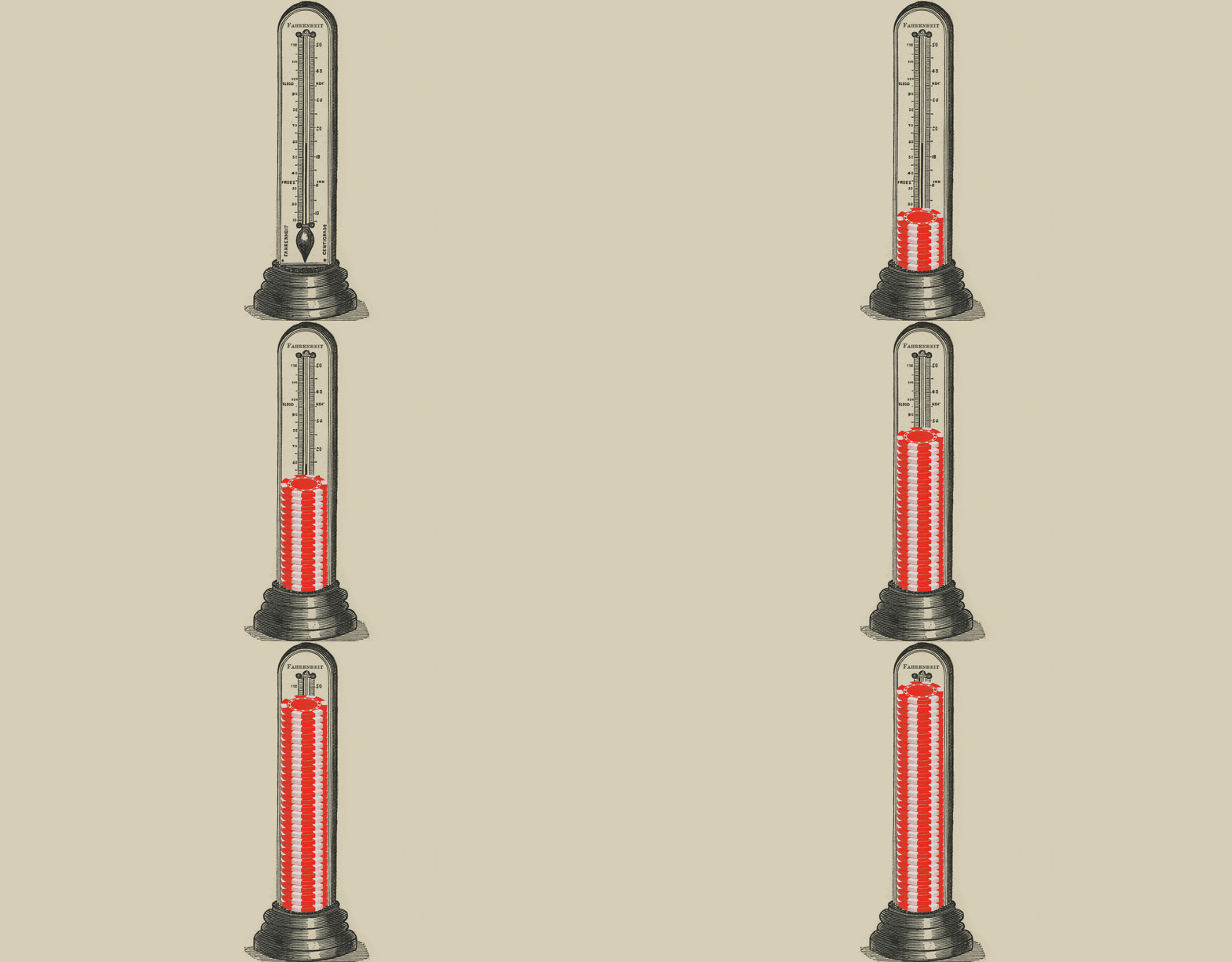
A person tampered with a temperature sensor at a Parisian airport to win a bet on Polymarket, raising concerns about outsider trading and manipulation of the physical world.
Imagine someone tampering with a temperature sensor at an airport to win a bet. This is called outsider trading, where someone changes the outcome to make money. It's a bigger problem than insider trading, and it could have serious consequences if not addressed.
Analysis
The ‘Hair-Dryer Incident’ Is Just the Start
The recent incident at a Parisian airport, where a mysterious person reportedly tampered with a temperature sensor to win a bet on the prediction-market platform Polymarket, has raised concerns about outsider trading and manipulation of the physical world. This type of fraud, where an apparent outsider changes the course of events to cash in on a given outcome, is a bigger issue than insider trading, according to Vincent Grégoire, a professor of finance at HEC Montréal. The Parisian-airport incident didn't hurt anyone, but future ones might. Experts call this type of fraud 'manipulation of the physical world,' but it's a little lacking. I would call this type of fraud 'outsider trading.' Outsider trading is also against platform rules. Polymarket and Kalshi both prohibit any type of market manipulation. The U.S. Commodity Futures Trading Commission recently proposed more federal rules for prediction-market platforms to ease the problem. One of the big suggestions was to prohibit the listing of markets that would 'create perverse financial incentives.' Polymarket includes a note on a market explaining which law a person would be breaking if they attempted to free a gorilla from a zoo, and that they could receive a life sentence in prison for doing so. The experts I spoke with said that the most appealing markets for this type of trickery would rely on a single number or simple, discrete outcome that a normal person could cheaply affect. Caleb Davies, an internet-famous prediction-market trader, highlighted another when he wrote about his experience losing thousands of dollars betting on Spotify's streaming charts, which scammers had apparently figured out how to game by artificially juicing how many times a given song was played. Davies says the experience led him to an epiphany. He's no longer just betting on the data, he said: 'I'm also betting that nobody is going to mess with it.' And that's a bad bet. Davies posted a screenshot to X to show that he'd removed about $250,000 from his Kalshi account, and he says he's stopped using it entirely. 'I love prediction markets,' he told me. 'I'd love to keep playing in them. But right now, both platforms are garbage, I think.'
Key points
- A mysterious person reportedly tampered with a temperature sensor at a Parisian airport to win a bet on Polymarket.
- This type of fraud is called outsider trading and is a bigger issue than insider trading.
- Prediction-market platforms are taking steps to address the issue, such as prohibiting the listing of markets that create perverse financial incentives.
- The lack of regulation and oversight in the prediction-market industry makes it vulnerable to outsider trading and manipulation of the physical world.
Prediction-market platforms are taking steps to address the issue of outsider trading, such as prohibiting the listing of markets that create perverse financial incentives. This could lead to a safer and more trustworthy environment for traders.
The lack of regulation and oversight in the prediction-market industry makes it vulnerable to outsider trading and manipulation of the physical world. If not addressed, this could lead to serious consequences, including financial losses and even physical harm.