The illusion of besieging Iran; How realistic it could be?
The US and Israel are reportedly examining a plan to blockade Iran by closing its land borders and restricting the passage of goods. However, this plan is unrealistic due to Iran's geographic position and its relationships with neighboring countries.
Intelligence analysis by Llama

A leaked plan to blockade Iran by closing its land borders and restricting the passage of goods is unlikely to succeed due to Iran's relationships with neighboring countries and its strategic position in the region.
Imagine Iran is a big hub where many countries trade and transport goods. If someone tries to block Iran's borders, it would be like trying to stop a big river from flowing. Many countries would be affected and would not want to help block Iran's borders.
Analysis
A Widening Gap Between Policy and Reality
The White House has tested every pressure tool against Iran, each falling short. Now, a leaked 'land blockade' scheme, mocked by allies, exposes a widening gap between policy and reality. As time passes, more signs of the confusion of Donald Trump's administration in dealing with Iran are revealed.
A Plan That Fails to Account for Reality
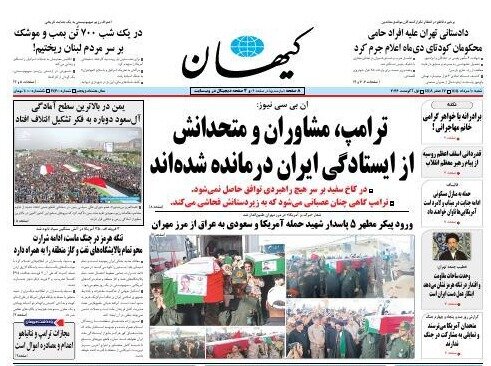
The latest example of this situation is the claim that the US and the Zionist regime are examining a plan for a 'land blockade of Iran'; a plan that, even before being met with Tehran's reaction, was ridiculed by many analysts and even Israeli journalists. The Telegraph newspaper has claimed that Washington and Tel Aviv are examining a scenario in which Iran's neighboring countries would close their land borders, restrict the passage of goods, and exert unprecedented economic pressure on Iran.
A Plan That Is Unworkable
The reason for this ridicule is completely clear. Iran is not a country that can be blockaded by a political decision or diplomatic pressure. Iran shares land borders with seven neighboring countries: Iraq, Turkey, Pakistan, Afghanistan, Turkmenistan, the Republic of Azerbaijan, and Armenia. The total length of these borders is about five thousand six hundred kilometers. This means that implementing any land blockade requires controlling more than 5,600 kilometers of borders and, more importantly, bringing on board seven independent governments with entirely different interests, policies, and security calculations.
A Plan That Is Unworkable
None of Iran's neighboring countries has an identical version of relations with Tehran. Iraq supplies a significant portion of its energy, electricity, and gas needs from Iran, and the economy of the two countries' border regions depends on trade. Turkey sees Iran as one of its main transit routes to Central Asia and East Asia and has extensive economic relations with Tehran. Pakistan, in addition to border cooperation, pursues important joint energy and transportation projects with Iran. The Republic of Azerbaijan, Turkmenistan, and Armenia each have direct interests in maintaining connectivity with Iran in the areas of transit, energy, and trade. Afghanistan, too, due to its extensive dependence on Iranian trade routes and goods, practically cannot comply with such a plan.
A Plan That Is Unworkable
In other words, to execute such a scenario, the US would have to convince seven independent countries to sacrifice their economic and security interests and even part of their decision-making independence for Washington's strategy; a strategy whose success even America's traditional allies doubt. The experience of past years has shown that many regional governments are unwilling to pay the costs of Washington's confrontational policies; especially when these policies could plunge their economy, domestic security, or regional relations into crisis.
A Plan That Is Unworkable
The second reason is Iran's geopolitical position. Iran is not merely a consumer or importer of goods, but is considered one of the most important transit hubs of West Asia. The North-South Corridor, the routes connecting the Persian Gulf to Central Asia, the link to the Caucasus, as well as the eastern routes toward Pakistan and Afghanistan, have granted Iran a special position. Any attempt to cut these routes would not only target Iran, but would also disrupt the region's trade and transportation chain. For this reason, many neighboring countries would themselves be harmed more than they would benefit from a blockade of Iran.
Key points
- The US and Israel are reportedly examining a plan to blockade Iran by closing its land borders and restricting the passage of goods.
- The plan is unlikely to succeed due to Iran's relationships with neighboring countries and its strategic position in the region.
- The plan highlights the confusion and lack of strategy in the US administration's dealings with Iran.
- The plan could lead to a significant economic crisis for Iran and its neighboring countries, and potentially even a regional war.
If the US and Israel abandon their plan to blockade Iran, it could lead to improved relations between Iran and its neighboring countries, and a more stable region.
If the US and Israel succeed in blocking Iran's borders, it could lead to a significant economic crisis for Iran and its neighboring countries, and potentially even a regional war.