The viral videos that inspired tens of thousands to swim to Spain's Ceuta
Misinterpretations of a Spanish Supreme Court ruling and false claims about a regularization deadline spread on social media, prompting more than 70,000 people to swim from Morocco to Ceuta, killing over 80.
Intelligence analysis by Llama
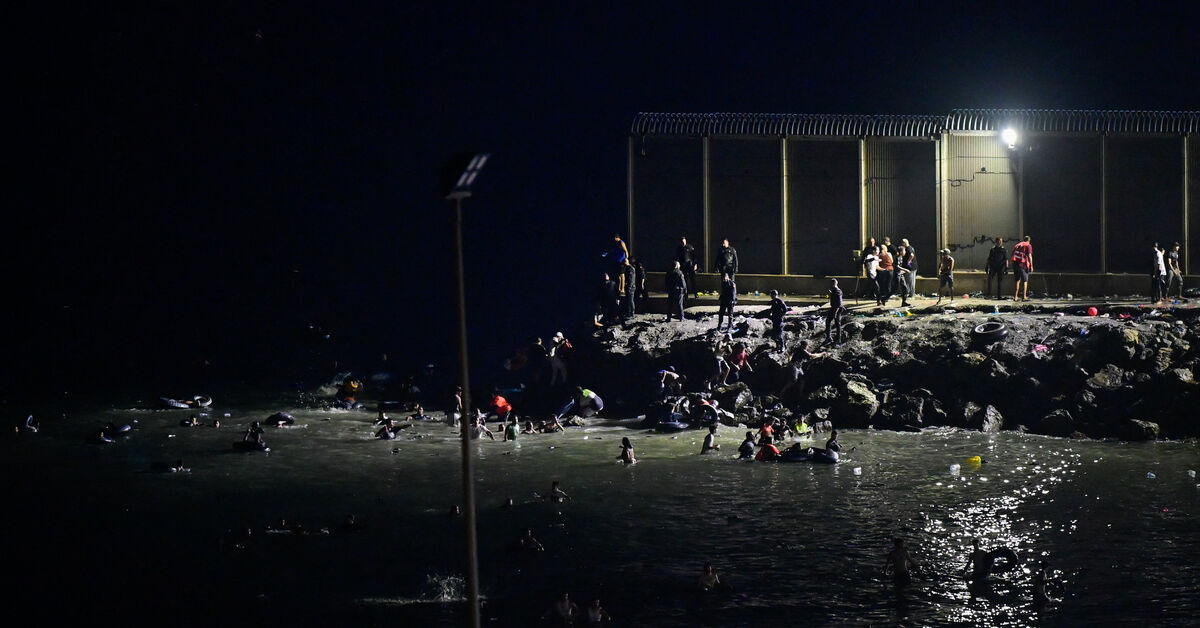
A small trickle of migrants became a 70,000-person surge into the Spanish enclave of Ceuta after viral videos, influencers, and WhatsApp groups amplified misinterpretations of a court ruling and a false regularization deadline.
Lots of people in Morocco saw exciting videos online saying they could swim to a Spanish city called Ceuta and start a new life in Europe. So they went — and more than 70,000 people tried, but 80+ drowned or were hurt. It turned out the videos were based on wrong information, and most people had to go back hungry.
Analysis
A court ruling, distorted into an open door
Three weeks before the surge, Spain's Supreme Court published a ruling saying migrants intercepted at sea near Ceuta and Melilla could not be immediately pushed back at the border. Legal experts quoted in the article note the ruling did not preclude summary return afterwards. That nuance collapsed on social media, where posts — including one Meta video with over 28,000 likes — falsely claimed anyone reaching Ceuta by sea or land could not be sent back. A second misinformation thread falsely announced that Spain's programme to regularise hundreds of thousands of undocumented migrants would close to new applications on July 30. Neither claim was true, but together they produced the belief that the window was narrow, the door was open, and the moment was now. By the early hours of July 30, similar messages were circulating in chat groups, and the numbers at the coast began to balloon.
When local journalism becomes a pull factor
El Faro de Ceuta, a small local outlet, reported on the early arrivals with footage of young men grinning and flashing V-signs after making it across. According to migrants interviewed by Reuters, the broadcaster's July 23 coverage had the unintended effect of advertising Ceuta as achievable. A follow-up report on July 28, captioned "Ceuta can't take it anymore," showed two waterlogged young women walking the city's streets and was widely viewed inside Morocco. The pattern — well-meaning documentation turning into recruitment material — is a recurring problem in migration reporting, and the article makes clear that journalists, not just platform algorithms, helped turn a trickle into a tide.
The digital infrastructure of a 70,000-person crossing
The movement was not only driven by passive virality. Influencers with tens of thousands of followers posted clips of themselves swimming to Ceuta, some equipped with wetsuits and swim rings. A Moroccan dog groomer with 31,000 Instagram followers told Reuters he went after seeing reports of good treatment at Ceuta's reception centre. A video viewed millions of times showed a young man with a selfie stick apparently swimming toward Ceuta, but was in fact filmed on Morocco's Atlantic coast weeks earlier. Spanish security analyst Chema Gil identified two public WhatsApp groups administered from Algerian phone numbers, totalling roughly 3,700 members, that pushed members to move quickly with messages like "Those who do not move today will regret it tomorrow." Within days, Spanish authorities counted more than 70,000 irregular entries. Hunger and hostility drove most back across the border by the following evening, but thousands remain stranded, particularly sub-Saharan Africans and unaccompanied minors who cannot be deported.
Key points
- More than 70,000 people crossed irregularly into Ceuta over a few days in late July 2026, and over 80 died by drowning or in a stampede.
- Misinterpretations of a Spanish Supreme Court ruling and a false July 30 regularization deadline — amplified across Meta platforms and WhatsApp groups — were the primary drivers.
- Local outlet El Faro de Ceuta's footage of successful arrivals had the unintended effect of encouraging more crossings, according to migrants interviewed by Reuters.
- Influencers with tens of thousands of followers posted their own swim-to-Ceuta clips, including at least one filmed elsewhere in Morocco and misidentified as Ceuta.
- Most migrants returned to Morocco within a day due to hunger and hostility, but thousands — including sub-Saharan Africans and unaccompanied minors — remain stranded.
If EU and Moroccan authorities work with Meta and messaging platforms to flag and remove misleading migration content, future surges could be dampened before they begin. The episode may also push Spain to clarify its Supreme Court ruling publicly, reducing the room for viral misinterpretation.
The combination of an active misinformation ecosystem, willing influencers, and organised WhatsApp networks is now a proven template. Without coordinated platform action and clearer communication of legal rules, a similar surge in Ceuta, Melilla, or another North African route is plausible whenever the next viral trigger appears.