Tories and Reform UK tell Burnham they will fight any plan to reform adult social care involving tax rises
Prime Minister Andy Burnham faces opposition from the Tories and Reform UK to his plans for social care reform, particularly if they involve tax increases. Both parties have signaled they will fight any such proposals, emphasizing efficiency savings over new taxes.
Intelligence analysis by Gemini 2.5 Flash Lite
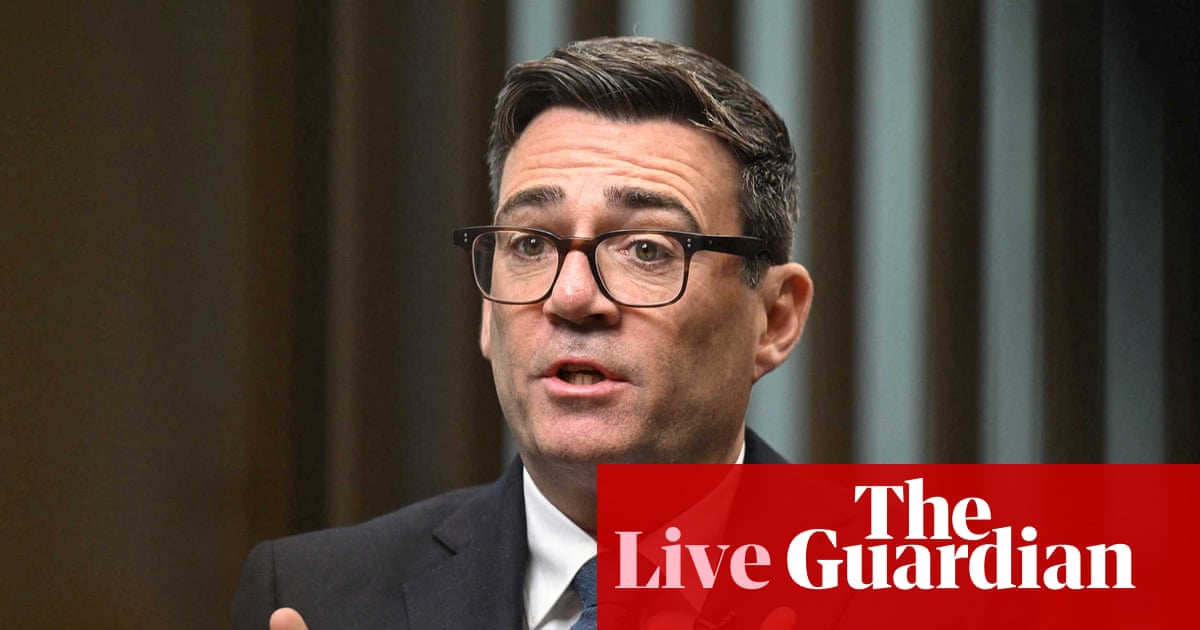
Prime Minister Andy Burnham is prioritizing the reform of England's social care system, warning of potential NHS collapse if action isn't taken. However, his plans, which may involve a 'care levy,' are already facing strong opposition from the Conservative and Reform UK parties, who are demanding tax cuts and efficiency savings instead of tax rises.
Imagine a house that's falling apart and needs fixing. The Prime Minister wants to fix the house (social care) so it doesn't damage the rest of the neighborhood (NHS). But some people who want to be in charge later say they won't help pay for the repairs if it means raising money by asking everyone for a little more pocket money (taxes).
Analysis
A Mandate for Difficult Decisions
Prime Minister Andy Burnham has signaled a clear intention to tackle the long-standing crisis in adult social care, framing it as a crucial issue that requires immediate attention to prevent the potential collapse of the National Health Service. In a recent interview, Burnham pledged to utilize his "political capital" to enact reforms, indicating a willingness to confront complex challenges head-on. This approach contrasts with a perceived tendency to shy away from difficult issues, with his government reportedly focusing on cost-of-living concerns in its initial week before pivoting to more systemic problems.
Burnham's commitment to social care reform is underscored by the urgency of the situation. He has indicated that while a complete overhaul might take years, significant changes can be implemented within the current parliamentary term. The Prime Minister is expected to deliver a major speech on the topic this week, following a review led by Louise Casey. While the exact proposals remain under wraps, the mention of a potential "care levy" suggests a possible funding mechanism that has historically proven contentious.
Political Battle Lines Drawn
The path to social care reform is fraught with political obstacles, even with Labour's substantial majority in the Commons. The opposition parties, specifically the Conservatives and Reform UK, have already voiced strong objections to any plans that involve tax increases. Robert Jenrick, Reform UK's Treasury spokesperson, has explicitly stated his party's opposition to what he terms a "radical tax grab," advocating instead for "meaningful efficiency savings." This stance sets the stage for a significant political confrontation, with Reform UK even challenging Burnham to hold an election on the issue.
The Conservative party, while expressing a willingness to engage in discussions, has also laid down firm conditions. Kemi Badenoch has implied that any Conservative support would be contingent on solutions that do not involve tax rises or increased borrowing, emphasizing fairness to those who have saved and the need to reduce current spending. This positions the Conservatives as staunch opponents of any levy-based funding model, creating a formidable barrier to Burnham's reform agenda.
The Shadow of Past Proposals
The political landscape surrounding social care funding is heavily influenced by past controversies. Burnham himself experienced the backlash to a proposed inheritance tax levy when he was health secretary before 2010. This proposal was quickly branded a "death tax" by the Tories, becoming deeply unpopular and ultimately contributing to Labour's electoral defeat. The memory of this public outcry looms large, making any new tax-raising proposal a sensitive and potentially damaging political undertaking.
Given this history, the current government faces a delicate balancing act. While the need for social care reform is widely acknowledged, the method of funding it remains a deeply divisive issue. The opposition's firm stance against tax increases, coupled with the public's sensitivity to new levies, suggests that Burnham's administration will need to navigate this challenge with extreme caution and potentially explore alternative funding streams or significant efficiency gains to achieve meaningful reform.
Key points
- Prime Minister Andy Burnham is prioritizing reform of the adult social care system in England, warning of potential NHS collapse.
- Burnham plans to use his "political capital" to drive reforms, with a "care levy" being a potential funding mechanism.
- The Conservative and Reform UK parties have vowed to oppose any social care reform plans that involve tax increases.
- Opposition parties are demanding efficiency savings and tax cuts rather than new taxes or borrowing.
- Past proposals for social care funding, like an inheritance tax levy, have faced significant public and political backlash.
If Prime Minister Burnham can successfully navigate the political opposition and implement a sustainable funding model for social care, it could lead to a more stable and effective system, reducing the strain on the NHS and improving the quality of life for vulnerable individuals. This could also set a precedent for tackling other complex societal challenges.
The strong opposition from the Conservatives and Reform UK to any tax-raising measures could stall or completely derail Burnham's social care reform plans, leaving the system to continue its decline and potentially exacerbating the crisis within the NHS. This political deadlock might also signal a broader inability of the government to enact significant policy changes on difficult issues.