Tracking Assad's 'Spider': From a Damascus Phone Book to a Moscow Hideout
A BBC investigation follows the trail of Hesham Louqa, once head of Syria's feared General Security Directorate under Bashar al-Assad, from an abandoned Damascus apartment containing an address book of his contacts to reports of a hideout in Moscow.
Intelligence analysis by Llama
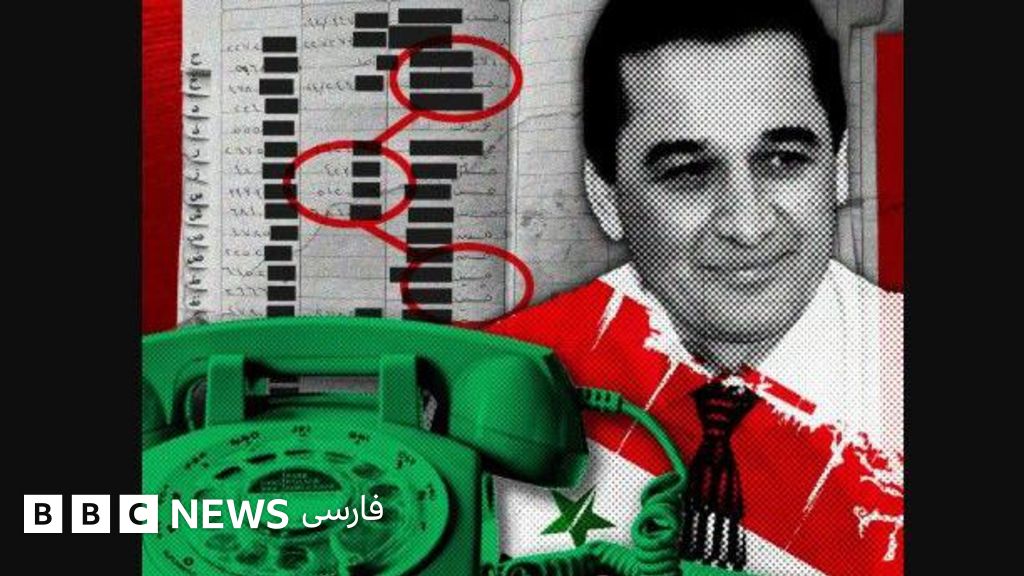
The BBC traces Hesham Louqa, the Syrian intelligence chief dubbed "The Spider" who allegedly oversaw systematic torture and mass detentions under Assad, by sifting through what he left behind after the December 2024 regime collapse and reports of his flight to Russia.
A scary spy boss named Hesham Louqa ran a big secret police group for Syria's old leader. People called him The Spider because he had helpers everywhere. When rebels overthrew the old leader, the Spider ran away. Reporters found his old fancy apartment in Damascus still full of his stuff, including a little notebook with phone numbers, and they're following clues to figure out where he went.
Analysis
The Spider's Address Book
When armed men in military fatigues moved through an abandoned, lavishly furnished Damascus apartment after Bashar al-Assad's overthrow, they found the belongings of Hesham Louqa. Dozens of photos showed the slim, decorated intelligence chief shaking hands with Assad, alongside medals and gilded commendations bearing his name. But the most tantalizing find was a small notebook on a narrow table, handwritten in blue ink with dozens of names: shopkeepers, doctors, military officials and members of the Louqa family. According to the BBC team on the ground, the pages offered a potential map of the network that earned Louqa the nickname "The Spider" among terrified residents of Homs, where his number was once spray-painted on walls during the early years of the civil war. The book offered investigative leads into a system of informants that opposition sources say reached deep into rebel-held neighborhoods.
Former rebel fighter Mou'ath al-Zaeidi told the BBC that during the siege of Homs, civilians were told to call Louqa's wall-written number to negotiate safe passage out of besieged areas. Some who called, he said, were allowed to leave; others were never seen again. The address book recovered from his apartment echoes that pattern, mixing the routine with the sinister, and giving investigators a starting point to trace who enabled Louqa's grip on the city.
The Ramadan Massacre at Al-Waer
The single most horrific allegation attached to Louqa's name is his purported role in what opposition sources call the "Ramadan Massacre," a September 2015 bombing in the al-Waer neighborhood of Homs that the United States later referred to as the "children's massacre." According to the BBC, a seven-year-old named Wael Mohammad Tuqatli was playing in a small park when the attack struck at 17:10, shortly after electricity rationing cut the lights. Wael's father walked the BBC through the same park, now planted with rows of saplings, and pointed to where the children's bodies had been found. The Syrian Human Rights Network put the toll at twenty-eight killed, including seventeen children and four women. A Syrian activist group and a pro-opposition newspaper have claimed that Louqa personally selected the targets for government strikes that day.
That accusation, more than any other, is what locked Louqa into the sanctions regimes imposed by Britain, the United States and the European Union. It also shaped how his career arc is read: from a local Political Security Directorate chief tasked with retaking rebel-held Homs to, eventually, head of the General Security Directorate at the heart of the Syrian state.
Sednaya and the Moscow Trail
In his later role, Louqa oversaw arrest strategy across Syria and directed the monitoring of communications entering and leaving Sednaya prison in Damascus, a facility so notorious it was called the "human slaughterhouse," where most detainees were never seen again. That makes the Sednaya file a critical piece of evidence against him, even though he vanished overnight when Assad fell in December 2024.
The article ends on a Moscow hook: reporting that Louqa is believed to have found refuge in Russia, the same destination absorbed by Assad himself. If confirmed, that flight puts him beyond the reach of any Syrian-led accountability process and raises the question of whether Moscow will extend the same protection to those accused of orchestrating Syria's repression as it did to the man who ordered it. For Tehran, whose regional posture leaned heavily on the very security services Louqa ran, the unanswered questions he leaves behind now sit in the same diplomatic shade as the broader post-Assad realignment.
Key points
- BBC investigation tracks Hesham Louqa, the Syrian intelligence chief known as 'The Spider' who allegedly oversaw systematic detention and torture under Bashar al-Assad.
- His Damascus apartment was found abandoned after the December 2024 regime collapse, with an address book of contacts offering potential leads into his informant network.
- Opposition sources link Louqa to the September 2015 al-Waer bombing in Homs, which killed 28 people including 17 children and prompted US, UK and EU sanctions.
- Louqa headed the General Security Directorate and oversaw monitoring at Sednaya prison, dubbed the 'human slaughterhouse,' where most detainees disappeared.
- He vanished when Assad fell and is reported to have found refuge in Moscow, beyond the reach of Syrian-led accountability efforts.
If Moscow is pressured or incentivised, Louqa could eventually face prosecution in a transitional Syrian court or international tribunal, exposing the architecture of intelligence cooperation with Tehran and providing a measure of justice for victims of Sednaya and the Homs massacres.
Louqa's reported flight to Moscow, following Assad's own refuge there, suggests he may escape accountability indefinitely, joining a pattern of senior Assad-era figures shielded by Russia. That outcome would leave victims without justice and leave the full scope of Iran's intelligence ties inside Syria's security services permanently in the dark.