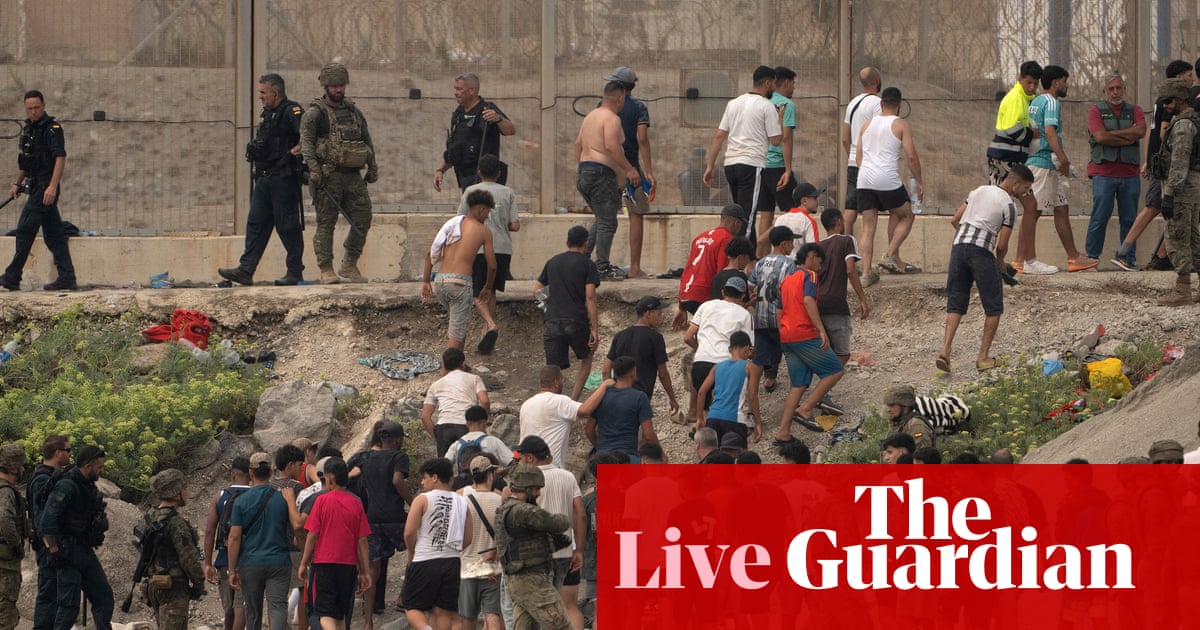
Trump blames Spain for migrant chaos despite return of tens of thousands to Morocco
US President Donald Trump and other far-right leaders seized on Spain's migration crisis to bolster their political messaging on immigration, while over half of the migrants who had crossed the border made their way back to Morocco voluntarily.
Intelligence analysis by Llama
Trump and other far-right leaders have seized on Spain's migration crisis to bolster their political messaging on immigration, while over half of the migrants who had crossed the border made their way back to Morocco voluntarily.
Imagine a big wave of people trying to get into a small country called Spain. This is what's happening in Ceuta, a tiny Spanish territory on the Moroccan coast. The people trying to get in are called migrants, and they're coming from Morocco. Some of them are trying to get to Spain to live and work, but others are trying to get in because they're fleeing war or persecution. The Spanish government is trying to control the number of people coming in, but it's a big challenge.
Analysis
A Crisis in the Making
The recent migrant surge in Ceuta, a tiny Spanish territory on the Moroccan coast, has sparked a heated debate on immigration and border control. US President Donald Trump and other far-right leaders have seized on the crisis to bolster their political messaging on immigration, while over half of the migrants who had crossed the border made their way back to Morocco voluntarily. The situation has highlighted the complexities of migration and the need for effective border control measures.
The Politics of Migration
The migrant surge in Ceuta has been a major talking point for far-right leaders, who have used it to fuel their anti-immigration rhetoric. Trump, in particular, has been vocal about the issue, claiming that the crisis is a warning for America if his opponents get into power. The State Department has also issued a statement blaming Spain's government for 'deliberate efforts to enable and facilitate mass illegal migration into Europe'.
The Humanitarian Crisis
The migrant surge in Ceuta has also sparked a humanitarian crisis, with thousands of migrants left stranded in the territory. The Spanish government has been criticized for its handling of the situation, with many accusing it of being slow to respond to the crisis. The situation has highlighted the need for effective humanitarian aid and support for migrants in need.
Key points
- Over 60,000 migrants have crossed from Morocco into Spain's tiny Ceuta territory in the past 24 hours.
- The Spanish government has been criticized for its handling of the situation, with many accusing it of being slow to respond to the crisis.
- The migrant surge in Ceuta has sparked a heated debate on immigration and border control, with far-right leaders using it to fuel their anti-immigration rhetoric.
If the situation in Ceuta is handled effectively, it could lead to a more coordinated and humane approach to migration, with better support for migrants in need and more effective border control measures.
If the situation in Ceuta continues to spiral out of control, it could lead to a humanitarian crisis, with thousands of migrants left stranded in the territory and a major strain on the Spanish government's resources.