Trump fumes over Canadian wildfire smoke and issues tariff threat
President Donald Trump has pledged to hold Canada responsible for costs associated with unhealthy air quality in the U.S. due to spreading smoke from the Canadian wildfires. He threatened to raise tariffs against Canada, citing the 'incalculable' cost of the pollution.
Intelligence analysis by Llama
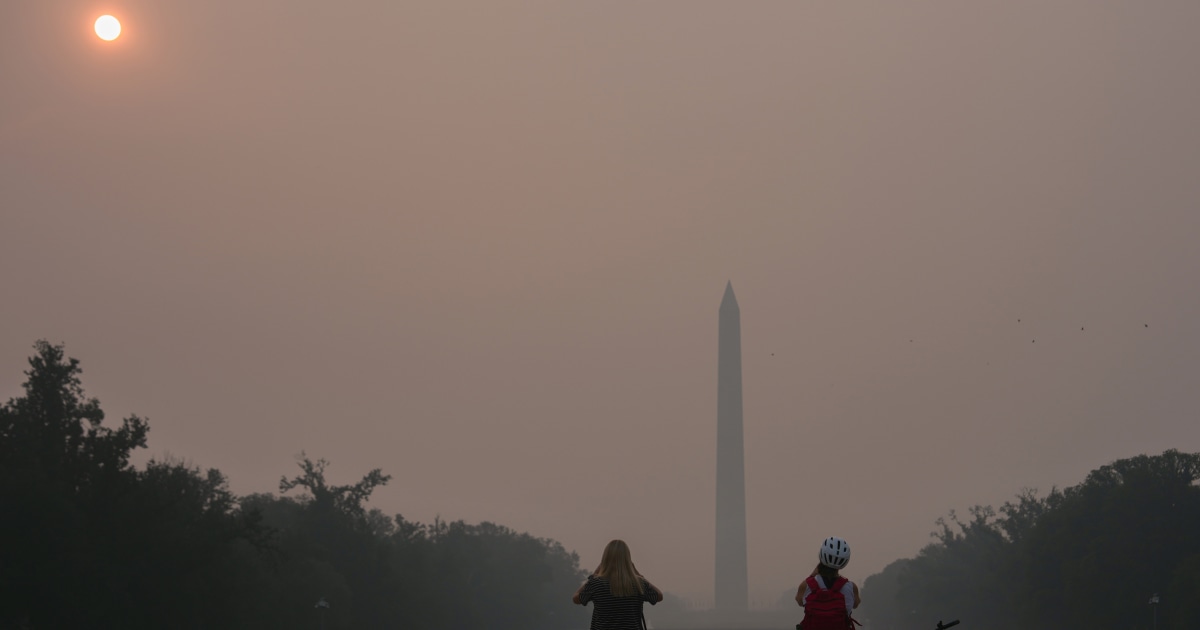
President Trump has vowed to hold Canada responsible for the costs of wildfire smoke affecting the U.S. He has threatened to raise tariffs against Canada, citing the 'incalculable' cost of the pollution. This comes as air quality alerts remain for over 100 million people across the country.
President Trump is upset about the smoke from wildfires in Canada that is affecting the U.S. He thinks Canada should pay for the costs of this pollution and has threatened to raise tariffs against them. This means that businesses and consumers in the U.S. might have to pay more for goods and services from Canada.
Analysis
A Threat of Tariffs: Trump's Response to Wildfire Smoke
President Donald Trump has made it clear that he intends to hold Canada responsible for the costs associated with the wildfire smoke affecting the U.S. This decision has significant implications for the U.S.-Canada relationship, particularly in the context of trade and tariffs.
In his post on Truth Social, Trump threatened to raise tariffs against Canada, citing the 'incalculable' cost of the pollution. This move is not unprecedented, as Trump has often used tariffs as a political cudgel in disputes with other countries. However, the context of this threat is unique, as it is tied to a natural disaster rather than a trade dispute.
The decision to raise tariffs against Canada has significant economic implications. The U.S.-Canada trade relationship is worth billions of dollars, and any disruption to this relationship could have far-reaching consequences. Additionally, the decision to raise tariffs could have a negative impact on the U.S. economy, particularly in industries that rely heavily on trade with Canada.
The Politics of Climate Change
The issue of climate change is a contentious one, particularly in the context of the U.S.-Canada relationship. The Trump administration has been vocal in its opposition to climate policies, and this decision is a reflection of that stance.
In his comments on the issue, Canadian Prime Minister Mark Carney highlighted the U.S.'s own opposition to climate policies. He noted that the U.S. has modes of production that are working against clean energy, and that Canada is pursuing its efforts on the world scale. This highlights the ongoing tensions between the two countries on the issue of climate change.
The Impact on the U.S.
The decision to raise tariffs against Canada has significant implications for the U.S. economy and public health. The wildfire smoke affecting the U.S. has already led to concerns about air quality, and the potential economic implications of this decision could be far-reaching.
In the short term, the decision to raise tariffs could lead to increased costs for businesses and consumers. This could have a negative impact on the U.S. economy, particularly in industries that rely heavily on trade with Canada.
In the long term, the decision to raise tariffs could have a negative impact on the U.S. economy, particularly in industries that rely heavily on trade with Canada. This could lead to job losses and economic instability, which could have far-reaching consequences for the U.S. economy.
Key points
- President Trump has threatened to raise tariffs against Canada due to the wildfire smoke affecting the U.S.
- The decision to raise tariffs has significant economic implications for the U.S. and Canada.
- The issue of climate change is a contentious one, particularly in the context of the U.S.-Canada relationship.
- The decision to raise tariffs could have a negative impact on the U.S. economy and public health.
If the U.S. and Canada can work together to address the issue of wildfire smoke, it could lead to a more collaborative approach to climate change. This could result in the development of new technologies and policies that benefit both countries.
The decision to raise tariffs against Canada could lead to economic instability and job losses in the U.S. This could have far-reaching consequences for the U.S. economy and public health.