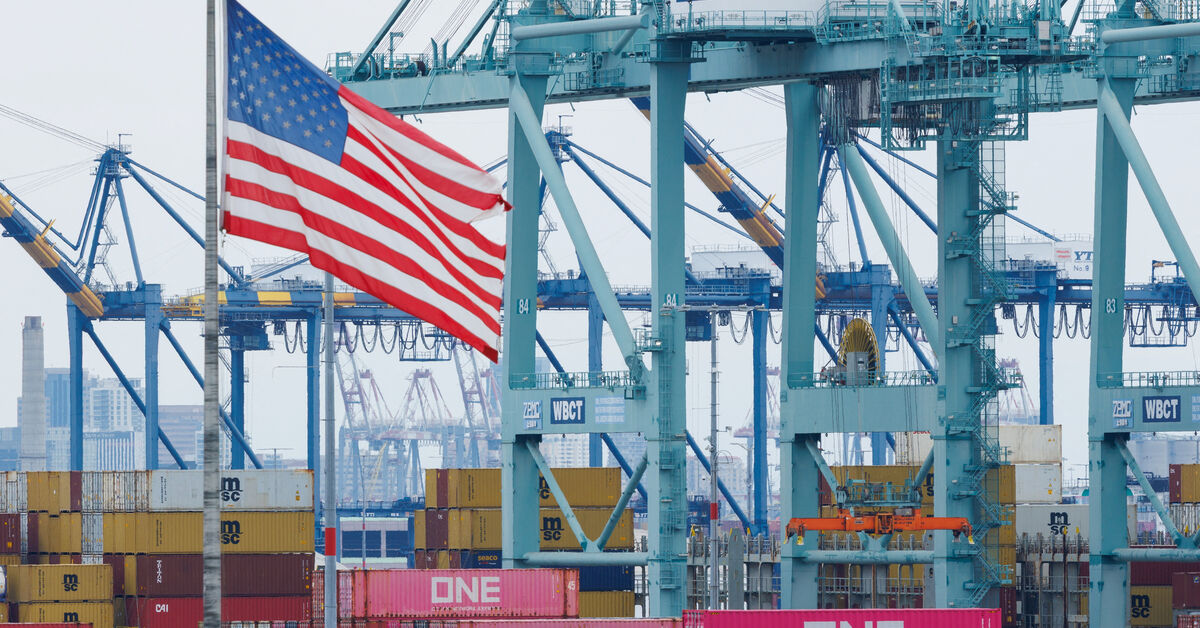
Trump imposes forced labor duties on 60 trading partners as 10% US tariffs expire
The Trump administration has imposed new tariffs of 10% and 12.5% on goods from 60 trading partners, including the European Union and China, over allegations of lax enforcement of forced labor bans. The move is the White House's latest effort to restore President Donald T…
Intelligence analysis by Llama
The Trump administration has imposed new tariffs on 60 trading partners, including the European Union and China, over allegations of lax enforcement of forced labor bans. The move is the White House's latest effort to restore President Donald Trump's campaign vision of a near-global tariff.
Imagine you're buying a toy from a store. The toy was made by workers who were treated unfairly. The U.S. government is trying to make sure that workers are treated fairly by imposing new tariffs on countries that don't follow the same rules.
Analysis
A $60B Vote of Confidence
The Trump administration's decision to impose new tariffs on 60 trading partners is a significant development in the ongoing debate over global trade and the enforcement of forced labor bans. The move is the White House's latest effort to restore President Donald Trump's campaign vision of a near-global tariff, which was struck down by the U.S. Supreme Court in February.
The new tariffs, which cover 99.4% of U.S. imports, are a response to allegations of lax enforcement of forced labor bans by trading partners. The U.S. has had a forced labor import ban for nearly a century, and rigorously enforces it. The administration argues that it is time for trading partners to do the same.
The move has drawn immediate protests from some trade partners, including the European Union, Australia, and Brazil. The EU has described the new tariffs as a shock and has questioned the U.S. rationale for imposing them. Australia and Brazil have also described the new tariffs as unjustified and have said they will seek to have them removed.
Despite the protests, the administration is confident that the new tariffs will have a significant impact on global trade. The U.S. Trade Representative, Jamieson Greer, has said that the tariffs will begin to correct what is both a human rights abuse and distortive trade practice to improve the welfare of workers everywhere.
Why Cursor?
The new tariffs are also a response to calls from Democrats and Republicans in Congress to eradicate forced labor from global supply chains. The administration argues that the U.S. has stronger import bans on goods made with forced labor and enforces them more rigidly than any other country, giving rivals an unfair trading advantage over the U.S.
The move has significant implications for global trade and the enforcement of forced labor bans. The administration is confident that the new tariffs will have a significant impact on global trade and will improve the welfare of workers everywhere.
The Road Ahead
The new tariffs are likely to face less legal risk than those struck down in February, as Section 301 has survived prior court challenges. The administration is confident that the new tariffs will have a significant impact on global trade and will improve the welfare of workers everywhere.
Key points
- The Trump administration has imposed new tariffs of 10% and 12.5% on goods from 60 trading partners, including the European Union and China.
- The move is the White House's latest effort to restore President Donald Trump's campaign vision of a near-global tariff.
- The new tariffs cover 99.4% of U.S. imports and include numerous product exemptions, such as oil and gas, fertilizer, and certain food items.
- The administration argues that the U.S. has stronger import bans on goods made with forced labor and enforces them more rigidly than any other country.
- The move has drawn immediate protests from some trade partners, including the European Union, Australia, and Brazil.
The new tariffs could lead to improved labor conditions for workers in countries that have been accused of lax enforcement of forced labor bans. This could have a positive impact on global trade and the welfare of workers everywhere.
The new tariffs could lead to retaliatory measures from countries that have been affected by the move. This could have a negative impact on global trade and the welfare of workers everywhere.