Trump to impose 'forced labor' duties on Friday as temporary 10% US tariffs expire
The Trump administration will impose new tariffs of 10% and 12.5% on goods from 60 trading partners, including the European Union, over allegations of lax enforcement of forced labor bans, just as a temporary 10% global tariff expires.
Intelligence analysis by Llama
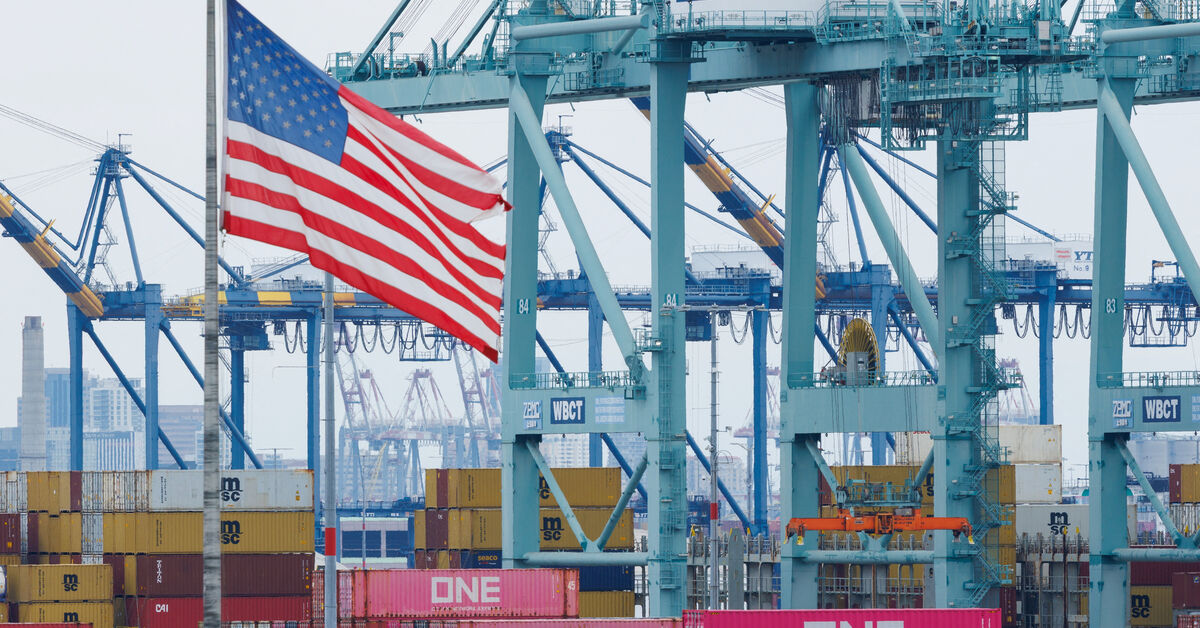
The Trump administration will impose new tariffs on goods from 60 trading partners, including the European Union, over allegations of lax enforcement of forced labor bans, just as a temporary 10% global tariff expires.
Imagine you're buying a toy from a factory in another country. The factory might be using workers who are being treated unfairly. The US government wants to make sure that factories don't use workers like this, so they're putting a tax on toys made in factories that don't treat their workers fairly. This tax is called a tariff, and it's meant to help workers in other countries.
Analysis
A New Era of Trade Tensions
The Trump administration's decision to impose new tariffs on goods from 60 trading partners, including the European Union, marks a significant escalation in the ongoing trade tensions between the US and its trading partners. The tariffs, which will take effect on Friday, are a response to allegations of lax enforcement of forced labor bans, and are intended to restore President Donald Trump's campaign vision of a near-global tariff.
The new tariffs will cover 99.4% of US imports, but will include numerous product exemptions, such as oil and gas, fertilizer, and certain food items. The tariffs are also likely to face less legal risk than those struck down in February, as Section 301 has survived prior court challenges.
The move has drawn immediate protests from some countries, including Norway, Australia, and Brazil, which have described the new tariffs as unjustified and have said they will seek to have them removed. Canada has issued a muted response to the 'unilateral' tariffs, saying it will continue to engage constructively with the US on the matter.
The new tariffs are a significant development in the ongoing trade tensions between the US and its trading partners, and have implications for global trade and commerce. The move is likely to have a negative impact on businesses and consumers, and will result in higher costs and weakened American competitiveness.
A Stronger Import Ban
The US has had a forced labor import ban for nearly a century, and rigorously enforces it. The new tariffs are intended to correct what is both a human rights abuse and distortive trade practice to improve the welfare of workers everywhere. The US Trade Representative, Jamieson Greer, has pledged that for countries that have reached trade deals with Washington capping US tariff rates, the new forced labor duties would not push them above those caps.
A Sledgehammer
The new tariffs could be harder to challenge in court because Section 301 has withstood past challenges and some judges may be reluctant to enjoin actions to curb forced labor. The tariffs are also intended to keep the 10% baseline in place, and the administration thinks they are well protected when this goes to court.
Exemptions Expanded
Many goods will be exempted from the duties, including oil and gas, fertilizer, certain foodstuffs, and goods that are not made with forced labor. The exemptions are intended to minimize the impact of the tariffs on businesses and consumers, but will still result in higher costs and weakened American competitiveness.
Key points
- The Trump administration will impose new tariffs on goods from 60 trading partners, including the European Union, over allegations of lax enforcement of forced labor bans.
- The tariffs will take effect on Friday and will cover 99.4% of US imports, but will include numerous product exemptions.
- The move has drawn immediate protests from some countries, including Norway, Australia, and Brazil, which have described the new tariffs as unjustified and have said they will seek to have them removed.
The new tariffs could lead to a more level playing field for US businesses, as they will be able to compete more fairly with foreign companies that do not use forced labor. Additionally, the tariffs could lead to increased investment in US manufacturing, as companies seek to take advantage of the new trade environment.
The new tariffs could lead to higher costs for businesses and consumers, as they will be forced to pay more for goods and services. Additionally, the tariffs could lead to a decline in US competitiveness, as foreign companies may be able to undercut US businesses due to lower labor costs.
Market signals
- XAU Escalation drives safe-haven demand for gold, per the article's framing of investor reaction.
AI-generated analysis of potential market relevance. Not financial advice.