Trump Threatens Houthis with 'Major Military Punishment'
US President Donald Trump warned Iran would be held responsible for any new Houthi attacks on ships in the Red Sea. Houthis brandished their weapons as they rallied in solidarity with Iran and Lebanon, amid the US-Israeli war with Iran, in the Yemeni capital Sanaa on Mar …
Intelligence analysis by Llama
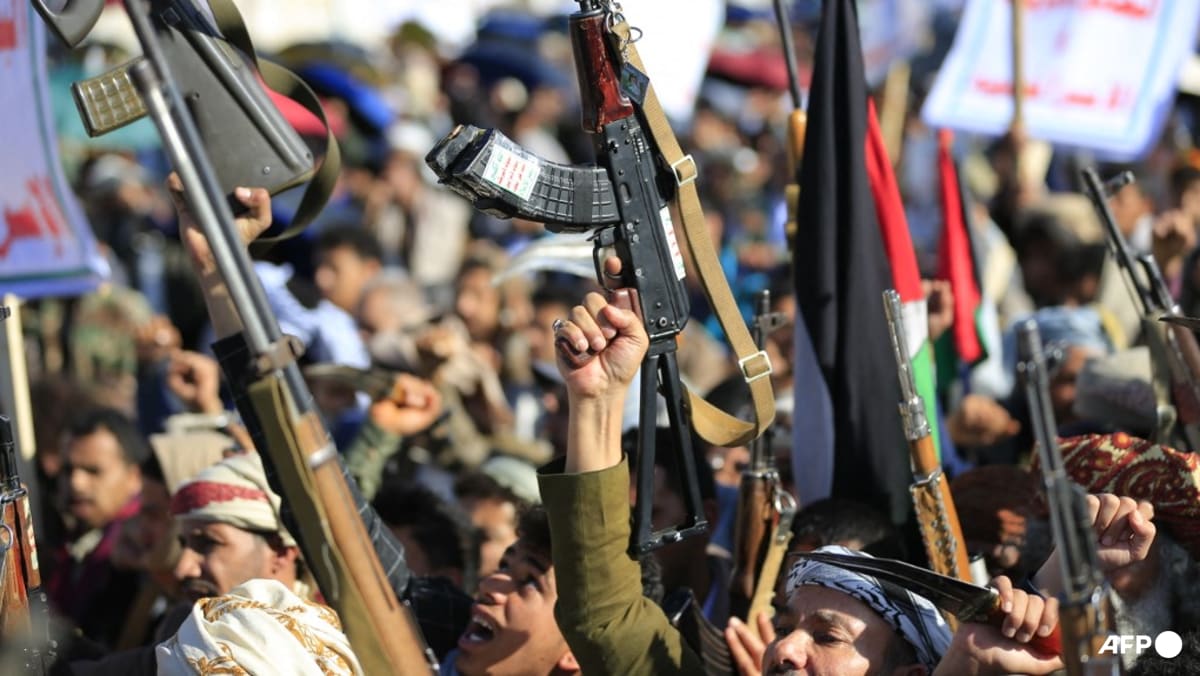
US President Donald Trump threatened Iran and the Houthi rebels with 'major military punishment' after the Houthis launched missile and drone strikes on oil tankers in the Red Sea. The Houthis said they had struck two Saudi oil tankers after declaring a blockade of Saudi ports.
Imagine a big war in the Middle East, and a group called the Houthis is fighting against a country called Saudi Arabia. The Houthis are backed by another country called Iran, and the US is threatening to punish Iran if the Houthis keep attacking ships in the Red Sea. This could make the war even bigger and more complicated.
Analysis
A New Front in the Middle East War
The Houthis' attack on a Saudi ship in the Red Sea has brought the Middle East war to a new front, sending oil prices surging. The US and Israel launched a war against Iran in February, and the Houthis have been a key player in the conflict. The group has been backed by Iran, which has provided them with military support and training.
Why the US is Threatening Iran
The US is threatening Iran with 'major military punishment' because the Houthis are seen as a surrogate and/or proxy of Iran. The US has been critical of Iran's involvement in the conflict and has imposed sanctions on the country. The threat of military punishment from the US could have significant implications for the Houthi rebels and their allies in Iran.
The Implications of the Houthis' Actions
The Houthis' actions in the Red Sea have sent oil prices surging, which could have far-reaching consequences for the global economy. The group's blockade of Saudi ports has also had a significant impact on the country's economy. The US and other countries have been critical of the Houthis' actions, and the threat of military punishment from the US could lead to further escalation of the conflict.
Key points
- The Houthis launched missile and drone strikes on oil tankers in the Red Sea to enforce a blockade on Saudi Arabia.
- The US President Donald Trump warned Iran would be held responsible for any new Houthi attacks on ships in the Red Sea.
- The Houthis said they had struck two Saudi oil tankers after declaring a blockade of Saudi ports.
- The US and Israel launched a war against Iran in February.
- The Houthis have been backed by Iran, which has provided them with military support and training.
If the US and Iran can find a way to resolve their differences, it could lead to a reduction in tensions in the Middle East and a decrease in the risk of further conflict. Additionally, if the Houthis can find a way to negotiate a peaceful resolution to their conflict with Saudi Arabia, it could also lead to a decrease in tensions and a reduction in the risk of further conflict.
If the US and Iran continue to escalate their conflict, it could lead to a wider war in the Middle East and a significant increase in the risk of further conflict. Additionally, if the Houthis continue to attack ships in the Red Sea, it could lead to a significant increase in the risk of further conflict and a decrease in global stability.