Uefa forms rare united front against Fifa in battle for football’s future
Uefa and its 55 member associations have united to boycott Fifa tournaments unless Gianni Infantino scraps his private investment plan for the World Cup. This fragile alliance emerged after Fifa's secretive proposal was revealed, causing widespread concern over governance…
Intelligence analysis by Gemini 2.5 Flash Lite
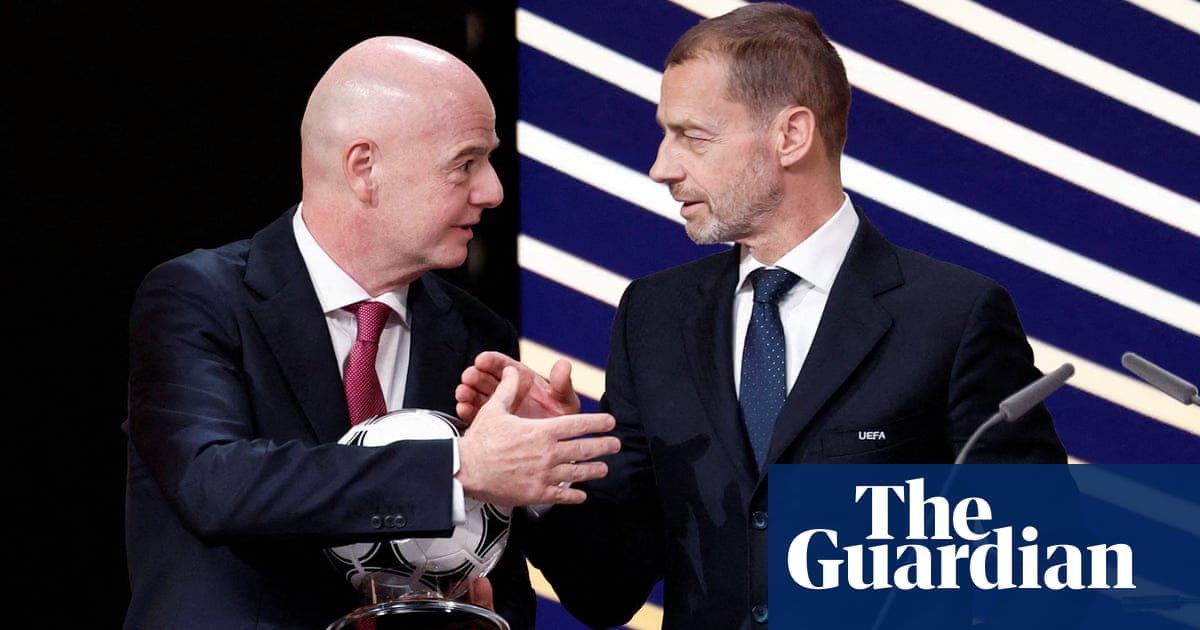
A rare, united front has formed among European football associations against Fifa's controversial World Cup investment plan. Despite Fifa's attempts to clarify the proposal, Uefa and its allies are threatening a boycott, highlighting concerns over governance and a lack of consultation. The situation is tense, with a narrow window to influence Fifa's September deadline.
Imagine two big clubs, Uefa and Fifa, are arguing over how to share money from a big soccer tournament. Uefa, representing many European teams, is very upset because Fifa made a plan without asking them, and they feel it's unfair. So, Uefa and its friends are saying they won't play in Fifa's games unless Fifa listens to them and changes the plan.
Analysis
A Fragile Accord Forged in Crisis
The recent decision by Uefa's 55 member associations to present a united front against Fifa's proposed World Cup investment plan, the Fifa Forward Enterprise (FFE), marks a significant, albeit fragile, moment in global football politics. The threat of boycotting Fifa tournaments unless the plan is scrapped underscores the depth of opposition and the perceived high-handedness of Fifa's approach. Senior Uefa executives described the unity as "touchingly unanimous," a rare sentiment when discussing pressing issues within European football. This accord was not easily achieved, requiring intensive lobbying to bring all members behind a common cause, with some federations initially tempted by Fifa's financial offers. The swiftness of the opposition, emerging just 48 hours after the plan's details became public, suggests a shared outrage over being "crudely sidelined" by the global governing body.
The Balogun Affair as a Catalyst
While Fifa's FFE proposal itself has generated significant concern, the timing of its announcement, coupled with recent events, appears to have galvanized opposition. The Folarin Balogun affair, where Fifa's intervention in a player's eligibility dispute drew criticism, is cited as a pivotal moment. Several Western European FAs were reportedly already mobilizing their peers following this incident, which involved allegations of Infantino being pressured to overturn a player's suspension. Although only two FAs publicly backed complaints, behind-the-scenes discussions were extensive. This prior mobilization, combined with the perceived insult of Fifa's sales deck for the FFE, created fertile ground for the unprecedented unity Uefa achieved.
The Narrow Window for Action
Despite the strong stance, Uefa and its allies recognize that the window of opportunity to influence Fifa's decision, set for a September 19 deadline, is narrow. Fifa's president, Gianni Infantino, has a history of weathering such storms, having previously seen his biennial World Cup proposal defeated only to later secure support for a 48-team expansion. The less economically fortunate nations, who might be swayed by Fifa's financial incentives, remain a potential vulnerability. While Uefa is encouraged by dissatisfaction expressed by some Asian Football Confederation (AFC) members and a loss of confidence in Concacaf, these confederations have not matched Uefa's boycott threat. Their public statements focus on governance and consultation issues rather than the substance of the FFE. The challenge for Uefa is to maintain its united front and potentially garner broader international support to scupper Infantino's plan before the de facto deadline.
Key points
- Uefa and its 55 member associations have formed a rare united front against Fifa's World Cup investment plan.
- The confederations are threatening to boycott Fifa tournaments unless the plan is scrapped, citing concerns over governance and lack of consultation.
- Intensive lobbying was required to achieve this unity, with some nations initially tempted by Fifa's financial offers.
- The Folarin Balogun affair is cited as a key event that accelerated European opposition to Fifa's leadership.
- A narrow window exists to influence Fifa's decision, which has a September 19 deadline, with potential vulnerabilities among less economically fortunate nations.
The united front could force Fifa to adopt more transparent and consultative governance practices, leading to a more equitable distribution of resources and decision-making power within global football. This could foster greater trust and cooperation between confederations, ultimately benefiting the sport's long-term health and development.
If Fifa pushes through its plan despite the opposition, it could lead to a permanent rift within global football, weakening Fifa's authority and potentially fragmenting the sport. Wavering confederations might align with Fifa, leaving Uefa isolated and diminishing its influence, while the FFE's implementation could exacerbate existing inequalities.