UK military ‘eyes innovative electric flying taxi’ as 2029 launch planned
Vertical Aerospace, a British flying taxi startup, has said the UK government has expressed interest in buying a military variant of its aircraft. The company has also welcomed another £10m grant from the government, taking its total UK state funding to £48m.
Intelligence analysis by Llama
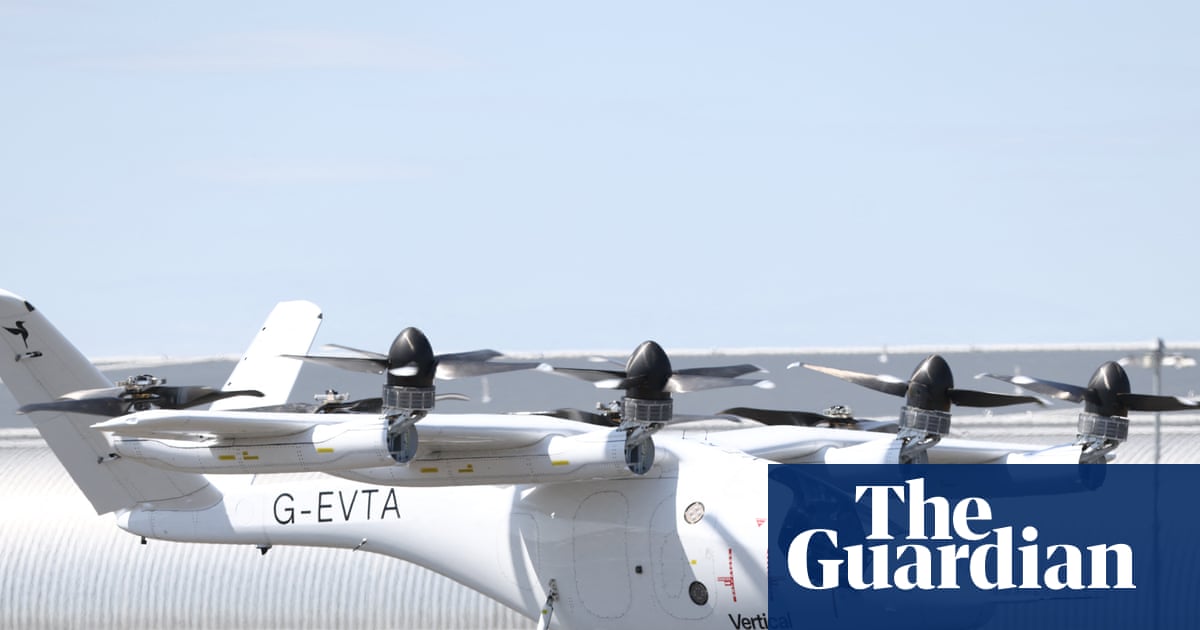
Vertical Aerospace has demonstrated its prototype model of the flying taxi at the Farnborough international airshow. The company has also received £10m in funding from the UK government, which has expressed interest in buying a military variant of the aircraft.
Imagine a taxi that can fly! Vertical Aerospace is working on an electric flying taxi that can take off and land vertically, without making much noise. It's like a helicopter, but with electric motors instead of a big engine. The UK government is interested in buying a special version of this taxi for the military.
Analysis
A £48M Vote of Confidence
Vertical Aerospace has received £10m in funding from the UK government, taking its total UK state funding to £48m. This significant investment is a vote of confidence in the company's electric flying taxi project. The funding will be used to finalise the down-selection of UK sites for its aircraft and battery facilities.
Why the UK Military is Interested
The UK government has expressed interest in buying a military variant of Vertical Aerospace's aircraft. The company's hybrid-electric and autonomous capabilities are of particular interest to the Ministry of Defence. The military variant will leverage the commercial airframe, but with a different powertrain. This will allow for silent takeoff and landing, as well as a low noise and heat signature.
The Road Ahead
Vertical Aerospace plans to launch its Valo production aircraft in 2029, after announcing a further delay to certification earlier this month. The company had originally aimed to be in service by 2025. However, it is now confident that it will meet the new target timeline after communications with the regulator. The company intends to build about 150 aircraft a year at its existing facility in Kemble, Gloucestershire, but it eventually wants a larger site to build 1,000 a year, as well as to assemble its battery packs.
Key points
- Vertical Aerospace has received £10m in funding from the UK government, taking its total UK state funding to £48m.
- The UK government has expressed interest in buying a military variant of Vertical Aerospace's aircraft.
- The company plans to launch its Valo production aircraft in 2029, after announcing a further delay to certification earlier this month.
- Vertical Aerospace intends to build about 150 aircraft a year at its existing facility in Kemble, Gloucestershire, but it eventually wants a larger site to build 1,000 a year, as well as to assemble its battery packs.
If Vertical Aerospace's electric flying taxi project is successful, it could revolutionise urban transport and reduce carbon emissions. The company's hybrid-electric and autonomous capabilities could also be used for military applications, making it a valuable asset for the UK government.
However, the development of electric flying taxis is a complex and challenging process. Vertical Aerospace has already faced cash crises and delays in its certification process. If the company is unable to overcome these challenges, it could impact the success of its project and the UK government's investment.
Market signals
- XAU The development of electric flying taxis could lead to increased demand for gold as a safe-haven asset, according to the article's framing of investor reaction.
AI-generated analysis of potential market relevance. Not financial advice.