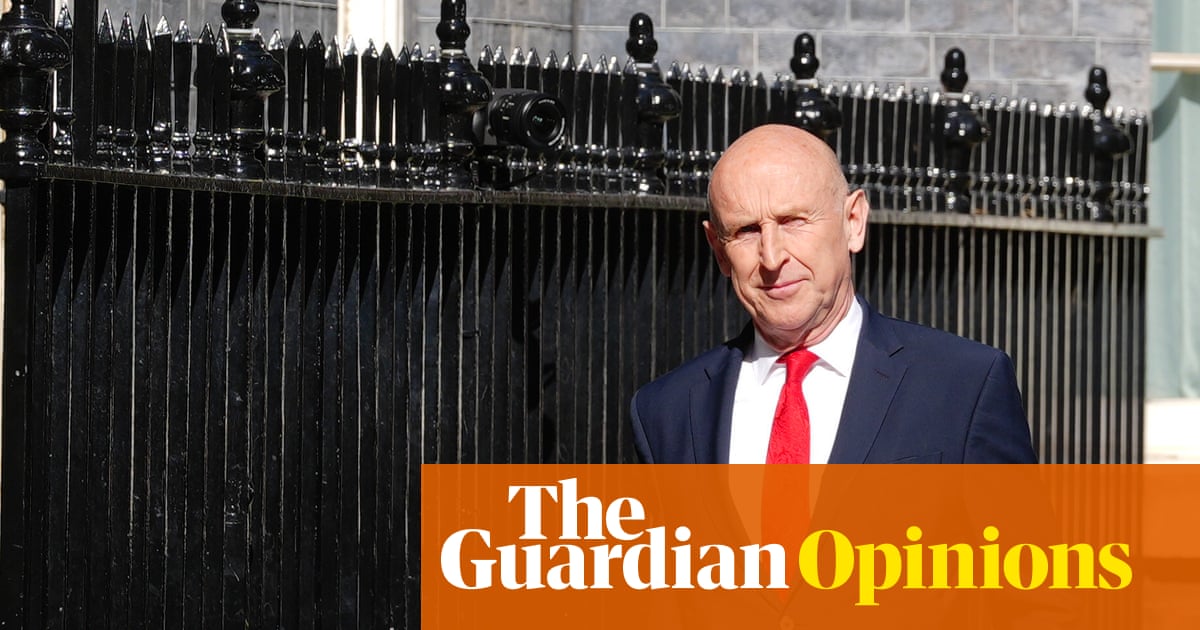
Andy Burnham promised urgent action on the cost of living – the heat is now on chancellor John Healey to deliver it | Alfie Stirling
New UK Chancellor John Healey faces immense pressure to tackle Britain's cost-of-living crisis, inheriting a challenging economic outlook with little time to act. The article proposes direct interventions to lower essential prices and tax reforms to fund them.
Intelligence analysis by Gemini 2.5 Flash
The new UK government, led by Prime Minister Andy Burnham and Chancellor John Healey, is under immediate pressure to address a severe cost-of-living crisis where household incomes are projected to fall over a decade. The challenge is compounded by high inflation and borrowing costs, creating a 'triple bind' that necessitates careful policy interventions to support families without exa…
Imagine your family's money isn't stretching as far as it used to, and things like electricity and rent keep getting more expensive. The new boss in charge of the country's money, John Healey, has a big problem: he needs to help families quickly, but if he spends too much, prices might go up even more, like trying to put out a small fire with too much fuel. So, smart people are suggesting he makes basic things like energy cheaper for everyone and changes how some rich people pay taxes to help pay for it, so everyone can breathe a little easier.
Analysis
The new UK Chancellor, John Healey, steps into a formidable economic landscape, inheriting a cost-of-living crisis that threatens to see average family incomes decline over a decade—a historically unprecedented situation. This challenge is exacerbated by a 'triple bind': the urgent need to improve household incomes, a tight timeframe before the next election, and a macroeconomic environment characterized by elevated inflation and borrowing costs. Any misstep in government intervention risks further interest rate hikes from the Bank of England, potentially worsening the economic plight for families and businesses.
Navigating the Triple Bind
The core dilemma for Chancellor Healey is how to provide immediate support to families without inadvertently fueling inflation and prompting higher interest rates. The article suggests a strategic approach: directly reducing essential prices, particularly for low- and middle-income households, and funding these measures through targeted tax contributions or by adjusting the taxation of investment income. This strategy aims to alleviate financial pressure on households while simultaneously dampening inflationary pressures, thereby easing the burden on the Bank of England to raise rates.
Targeted Interventions for Affordability
Specific policy recommendations focus on energy and housing. For energy, the proposal is an 'affordable energy guarantee' that reforms the Ofgem pricing system to provide cheaper basic energy portions, with larger allocations for those most in need. This would replace less targeted measures like temporary VAT cuts and could be funded by aligning tax treatment of capital gains, dividends, and rents with earnings from work, addressing current inequities. In the housing sector, the article advocates for national rent growth controls, with local flexibility for mayors, coupled with a rebalancing of landlord taxation. This involves allowing mortgaged landlords to fully deduct interest costs while charging national insurance on remaining income, a move projected to reduce financial distress among landlords and maintain housing supply.
Potential Economic Upsides
New modeling suggests that a comprehensive package incorporating these energy, housing, and tax reforms could restore real income growth for a majority of households, offsetting previous declines and anticipated impacts from global conflicts. Crucially, these measures are also projected to reduce inflation by half a percentage point, lessening the pressure for higher interest rates. Beyond immediate relief, improving household economic security is cited as a driver for longer-term economic growth, as financially stable individuals are more productive and more likely to pursue better job opportunities. The challenge for Healey will be to prioritize effectively and manage the political fallout from tax reforms.
Key points
- New UK Chancellor John Healey faces an unprecedented challenge to reverse a projected decade-long decline in average household incomes.
- The economic situation is complicated by high inflation, elevated borrowing costs, and new price pressures from global conflicts.
- The government is in a 'triple bind': needing to support families quickly without provoking higher interest rates.
- Proposed solutions include an 'affordable energy guarantee' to lower essential energy prices and national rent growth controls.
- These measures would be funded by reforming taxation on investment income, such as capital gains, dividends, and rents, to align with earnings from work.
If the proposed policies, such as the affordable energy guarantee and rent controls, are effectively implemented and funded through tax reforms, they could significantly boost real incomes for most households. This approach could also reduce inflation, easing pressure on interest rates and fostering greater long-term economic security and productivity.
The new Chancellor faces a 'triple bind' where clumsy interventions could exacerbate inflation and lead to even higher interest rates, worsening the cost-of-living crisis. Additionally, managing the political backlash from those negatively impacted by tax reforms will be a significant challenge, potentially hindering the implementation of necessary changes.