Ukraine using AI drones to strike vital Russian supply lines
BBC Verify says Ukraine is using AI-enabled drones to hit Russian supply convoys deeper behind the front lines, disrupting food, fuel and ammunition deliveries.
Intelligence analysis by GPT-5.4 Mini
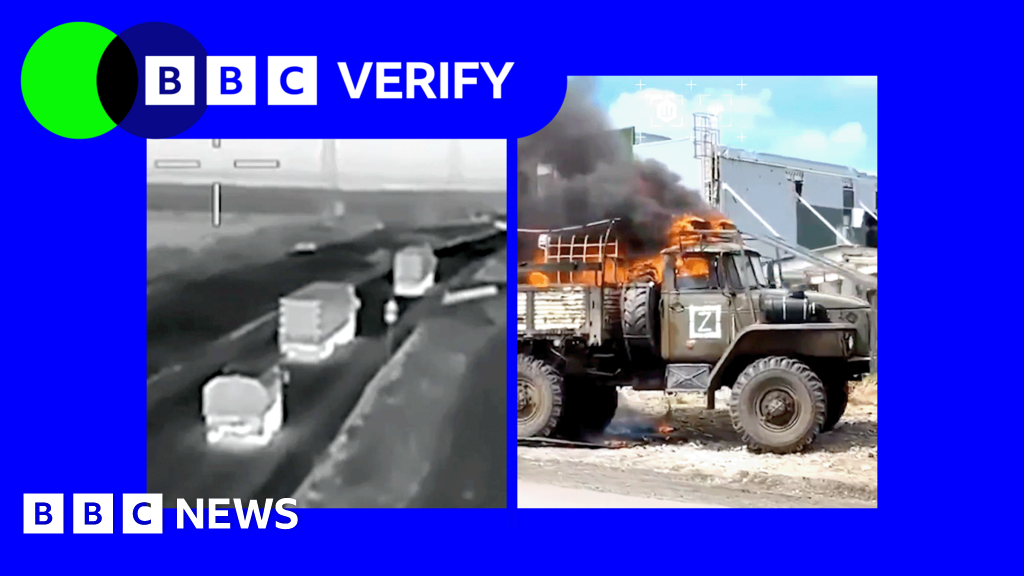
BBC Verify says Ukraine has expanded AI-assisted drone strikes on Russian logistics routes in occupied southern Ukraine, targeting supply trucks and military vehicles. The tactic aims to make it harder for Russian forces to sustain offensive operations and keep front-line units supplied.
Ukraine is using smarter flying machines to look for Russian trucks that carry food, fuel, and bullets. Instead of only fighting near the front line, it is trying to break the roads that keep Russian soldiers supplied.
Think of it like trying to play a game when the other side keeps stealing the batteries for your flashlight. Even if the players are still there, it gets much harder to keep going.
The article says these drones can spot targets from far away and may be harder to block. That makes the war more about stopping supplies, not just fighting soldiers.
Analysis
What BBC Verify found
BBC Verify says it confirmed footage of at least 14 recent incidents in which vehicles carrying food, fuel, and ammunition were struck along key routes in occupied southern Ukraine. The route network links Russia to Crimea and to other occupied areas, including roads near Mariupol and Melitopol.
Why the attacks matter
The article says Ukraine is trying to weaken Russian logistics rather than only hit front-line positions. Analysts quoted by BBC Verify argue that forcing convoys to shorten, hide, or reroute makes resupply slower and more fragile. One expert said some brigades may need about 1,000 tonnes of supplies each day, which makes transport a critical vulnerability.
The technology angle
BBC Verify reports that Ukraine’s Hornet drones use an AI targeting system trained on large amounts of battlefield video from the past four years. The drones can also connect through Starlink, which helps operators control them over longer distances and makes the system harder to jam. According to the article, this lets Ukraine send many loitering munitions toward a broad area and then guide them onto military targets as they are found.
Strategic impact
The piece frames the campaign as part of a broader shift in the war. Analysts cited by BBC Verify say Ukraine is creating pressure in the rear, pushing Russian logistics hubs farther from the front and making infiltration operations harder to support. The article also says Russian forces are responding by changing convoy patterns and using roads and fields that may reduce exposure, but at the cost of efficiency.
Key points
- BBC Verify says it confirmed at least 14 recent strikes on vehicles supplying Russian forces in occupied southern Ukraine.
- The attacks targeted trucks carrying food, fuel, and ammunition along routes tied to Crimea and other occupied areas.
- Analysts say Ukraine’s goal is to disrupt Russian logistics and make it harder to sustain offensive operations.
- The article says Hornet drones use AI targeting and can connect through Starlink for longer-range control.
- Experts quoted in the piece say Russia is responding by shortening convoys and changing routes to reduce losses.