UK’s Burnham ‘putting Britain first’ as he rules out 2029 election
Britain's new Prime Minister Andy Burnham stated he would always prioritize UK interests, even if it means challenging US President Donald Trump. He also confirmed there would be no general election before 2029.
Intelligence analysis by Gemini 2.5 Flash
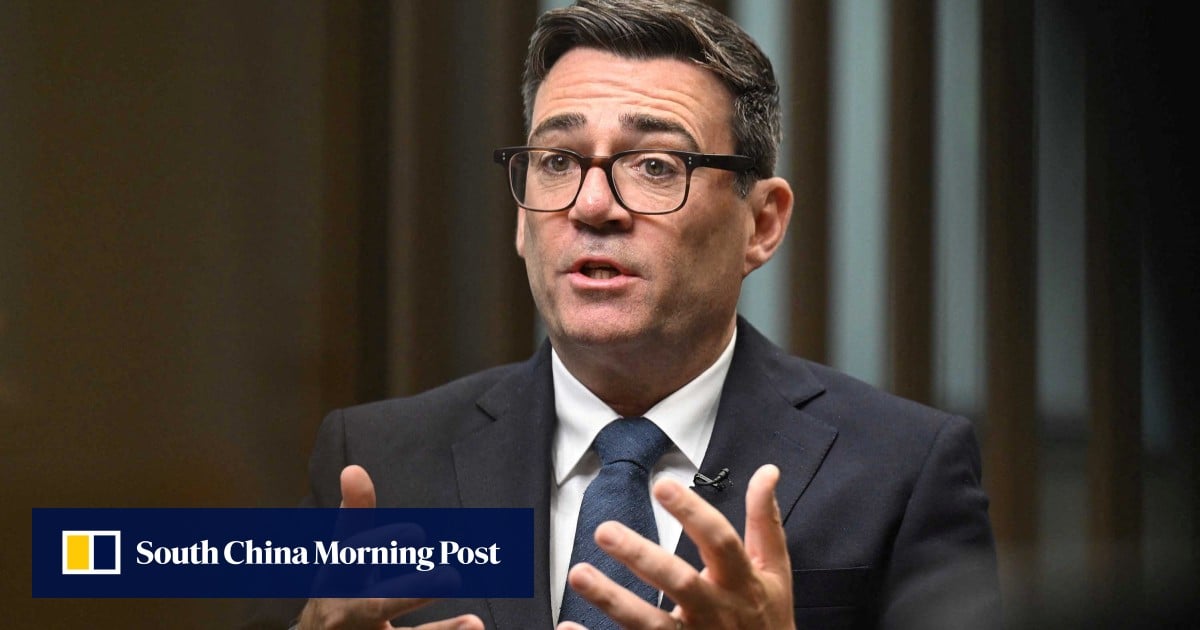
Andy Burnham, who recently became Britain's seventh prime minister in a decade, emphasized a "Britain first" approach in his inaugural interview. This stance suggests a potentially assertive foreign policy, particularly concerning relations with US President Donald Trump, whose previous interactions with Burnham's predecessor, Keir Starmer, were strained over various global issues. Bu…
Imagine the UK just got a new head teacher, Mr. Burnham. He says his main job is to make sure the school (Britain) is doing well, even if it means disagreeing with the head teacher of a big school next door (Mr. Trump from the US). He also said he won't let the students vote for a new head teacher until 2029, so everyone knows he's staying for a while to get things done.
Analysis
A New Era for Anglo-American Ties
Andy Burnham's ascension to the UK premiership marks a significant shift in leadership, following a decade of political volatility that saw seven prime ministers. His predecessor, Keir Starmer, experienced a notably difficult relationship with US President Donald Trump, characterized by disagreements on critical international issues such as the US-Israeli conflict, immigration policies, energy strategies, and tech regulation. This history sets a complex backdrop for Burnham's tenure, despite Trump's recent "very good conversation" with the new British leader, contrasting with his initial "extremely liberal" assessment.
Burnham's entry into office signals a potential recalibration of the UK's international posture. The rapid turnover in leadership underscores a period of domestic uncertainty, but Burnham's initial statements aim to project a clear direction for the country's foreign policy. The dynamic between London and Washington under this new leadership will be closely watched, especially given the historical "special relationship" and the current global geopolitical landscape.
Prioritizing National Interest
In his first major interview, Prime Minister Burnham unequivocally stated his commitment to "always put Britain’s interests first," even if it necessitates challenging President Trump. This declaration signals a potentially more independent and assertive foreign policy stance, emphasizing national sovereignty and strategic autonomy. Such a position could lead to both cooperation and friction with key allies, depending on the alignment of national interests on specific global challenges.
This approach suggests a pragmatic rather than purely ideological foreign policy, where the defense of domestic priorities takes precedence. It reflects a broader trend among some Western leaders to prioritize national concerns in an increasingly complex and multipolar world. The implications of this stance could extend to trade negotiations, security alliances, and responses to international crises, potentially reshaping the UK's role on the global stage.
Political Stability and Future Mandate
Beyond foreign policy, Burnham's firm decision to rule out a general election before 2029 is a crucial domestic announcement. This move aims to provide a period of political stability, allowing his new government to implement its agenda without the immediate pressure of an impending electoral contest. By deferring an election, Burnham seeks to consolidate power and demonstrate effective governance, potentially hoping to build public confidence and secure a stronger mandate when the time eventually comes for voters to cast their ballots.
This long-term planning contrasts with the recent rapid turnover in British leadership, suggesting a desire to break from past instability. The absence of an immediate electoral threat could enable the government to pursue more ambitious or potentially unpopular reforms, betting on their long-term benefits. However, it also places significant pressure on Burnham to deliver tangible results over the next few years to justify the extended period without a public mandate.
Key points
- Andy Burnham has become Britain's seventh Prime Minister in a decade.
- He stated his commitment to "always put Britain’s interests first," even when dealing with US President Donald Trump.
- Burnham's predecessor, Keir Starmer, had a "fraught relationship" with Trump over various issues.
- The new Prime Minister has ruled out calling a general election before 2029.
- Trump, who initially called Burnham "extremely liberal," recently had a "very good conversation" with him.
Burnham's clear stance on prioritizing British interests could lead to more focused and effective policy-making, potentially strengthening the UK's position on the global stage. The commitment to no early election offers a period of stability, allowing the government to implement long-term strategies without immediate political distractions, which could foster economic growth and social progress.
A "Britain first" approach, while appealing domestically, could strain relationships with key allies, particularly the US, if disagreements escalate beyond diplomatic channels. The decision to rule out an early election might also be perceived as avoiding accountability or limiting democratic choice, potentially leading to public discontent if the government's performance falters.