UP man never had a sister, so funded 101 Hindu, Muslim women’s weddings
Vinay Agarwal, a businessman from Uttar Pradesh, organized a mass wedding for 101 underprivileged Hindu and Muslim women, fulfilling his desire to act as a brother and provide dignified ceremonies.
Intelligence analysis by Gemini 2.5 Flash
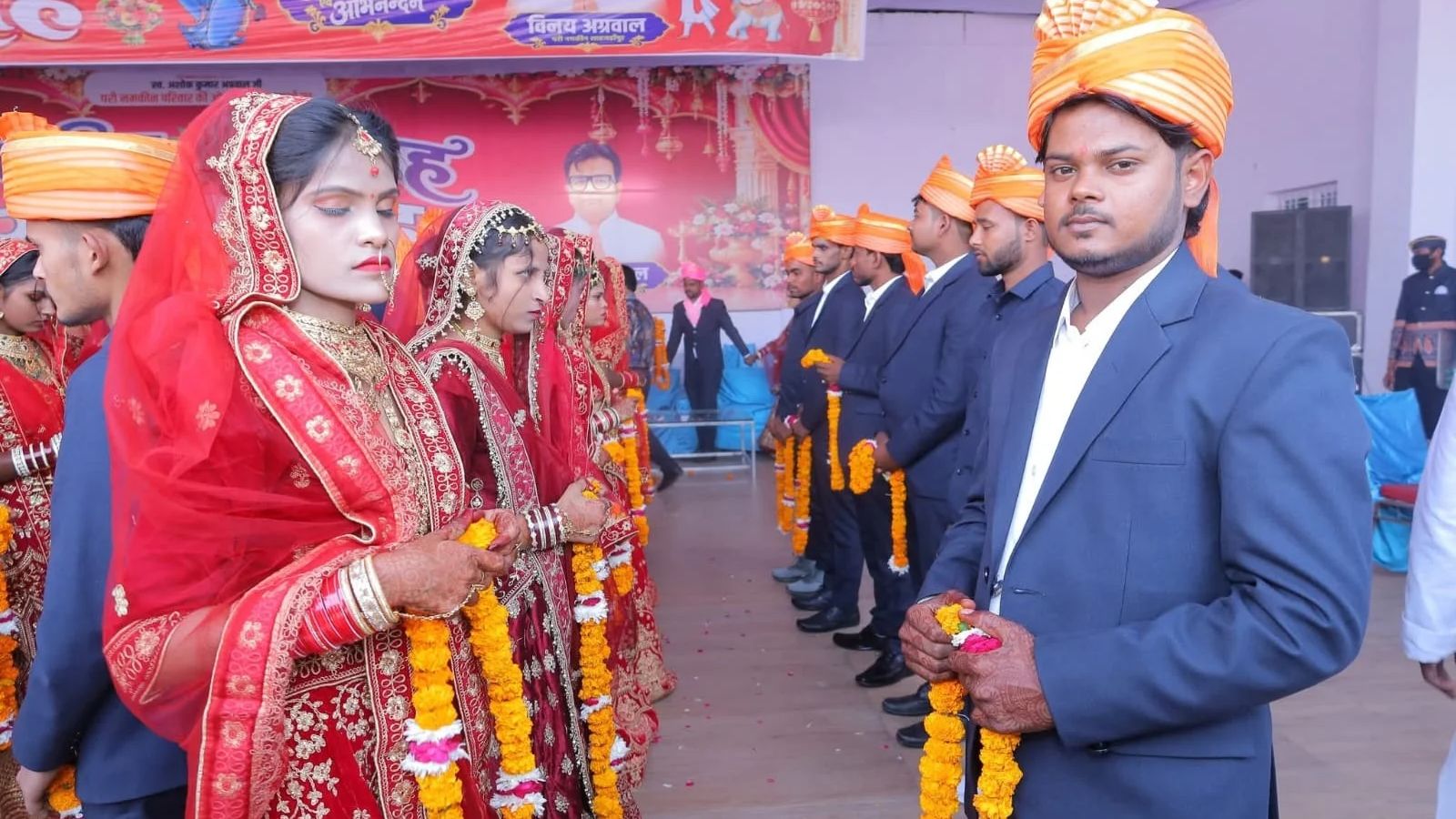
Inspired by not having a sister, Agarwal funded the weddings in Shahjahanpur, ensuring 93 Hindu and 8 Muslim couples received essential household items and a grand celebration, fostering interfaith unity and alleviating financial burdens for the families.
Imagine a kind man who never had a sister. He decided to be like a big brother to 101 girls from poor families, helping them have beautiful weddings, even giving them furniture and appliances to start their new homes. He made sure both Hindu and Muslim girls were celebrated, bringing everyone together like a big, happy family party.
Analysis
Vinay Agarwal
Vinay Agarwal, a businessman running a snacks enterprise, initiated a unique philanthropic endeavor driven by a personal void: the absence of a sister in his own life. This deeply personal motivation led him to embrace the role of a brother to numerous underprivileged women, facilitating their weddings with dignity and support. His journey began modestly in 2018, where he would offer assistance at weddings, often uninvited, before his mother, Saroj Agarwal, encouraged him to formalize his efforts.
What started with supporting 11 girls in 2023, rapidly expanded to 21 the following year, then 51, culminating in 101 weddings this year. Agarwal has committed to maintaining or increasing this number in the future, demonstrating a sustained dedication to his cause. He personally funds the entire initiative, steadfastly refusing financial contributions from others, instead encouraging them to organize similar events in their own communities.
Khirni Bagh
The mass wedding ceremony, held at Khirni Bagh in Shahjahanpur, Uttar Pradesh, was a grand affair that brought together two major communities. The event saw 93 Hindu couples solemnizing their vows according to Vedic rituals, while eight Muslim couples completed their nikah before clerics. This inclusive approach underscored a powerful message of unity and communal harmony, making the event a significant social gathering beyond just a series of weddings.
The celebration was marked by considerable pomp and splendor, with brides receiving professional beauty treatments and all 101 couples arriving at the venue in individual cars. Families from both communities shared a festive pandal, celebrating together in an atmosphere of shared joy and cultural exchange. The city's pride in this initiative was echoed by local social worker Satya Prakash Mishra, who praised the genuine, non-discriminatory service provided.
101 Couples
The selection process for the 101 couples was rigorous, involving a three-stage verification process to ensure that only genuinely needy families benefited. Out of approximately 200 applications received, those from well-off families or individuals seeking second marriages were carefully screened out. This meticulous approach ensured that the support reached those who truly required it, such as Muskan, whose family struggled to afford even daily meals, and Pooja and Ramniwas, a differently-abled couple with no stable income.
Beyond the wedding rituals, Agarwal's objective extends to helping couples establish their new households. Each couple received a comprehensive set of essential items, including a television, refrigerator, washing machine, bed, cupboard, and other daily-use articles. This thoughtful provision aims to alleviate the initial financial burden on newlyweds, allowing them to start their married life without the stress of debt, a common challenge for many underprivileged families in India.
Key points
- Vinay Agarwal, a businessman from Uttar Pradesh, funded the weddings of 101 underprivileged Hindu and Muslim women.
- The mass wedding ceremony took place at Khirni Bagh in Shahjahanpur, uniting 93 Hindu and 8 Muslim couples.
- Agarwal was inspired by not having a sister and started helping with weddings in 2018, formalizing the effort later.
- Each couple received essential household items like a television, refrigerator, washing machine, and bed.
- The selection process involved a three-stage verification to ensure genuine need, rejecting applications from well-off families or for second marriages.
The initiative fosters interfaith harmony and provides crucial financial relief to underprivileged families, potentially inspiring similar acts of philanthropy and community support across India. It demonstrates how individual efforts can significantly impact social welfare and promote unity.