Up to 23 feared dead in Japan quake
Up to 23 people are feared dead after a 7.1-magnitude earthquake struck Japan's Kumamoto region, with rescue workers searching a collapsed shopping mall and a paper factory.
Intelligence analysis by Llama
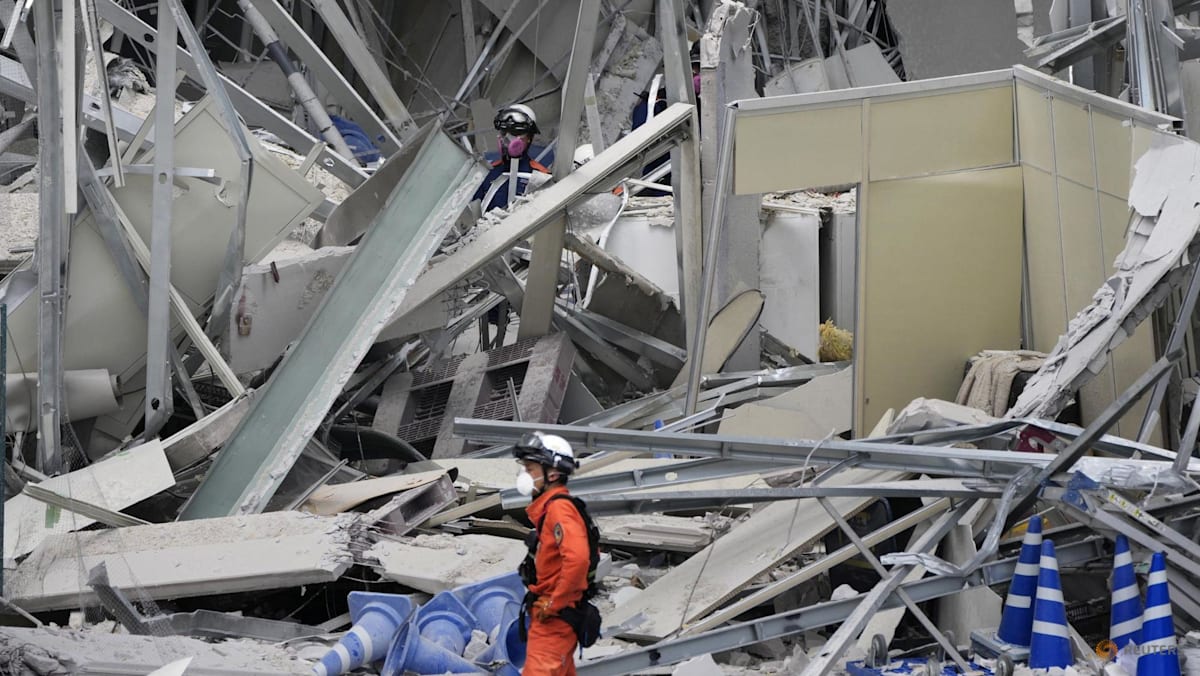
A 7.1-magnitude earthquake in Japan's Kumamoto region has left up to 23 people feared dead, including four pulled from a collapsed shopping mall. Rescue work continues amid aftershocks, 22,670 households without power, and water outages for 84,000 homes.
Imagine the ground is a giant jigsaw puzzle and sometimes the pieces bump into each other really hard, making everything shake. In Japan, this happened and a shopping mall and a paper factory got squished. People are working very hard to find anyone who might still be there.
Analysis
A Mall Gutted by an Hour-Late Blast
The most haunting scene unfolding in Kashima is the Aeon shopping mall, where a suspected massive gas explosion roughly 50 minutes after the initial tremor turned an evacuation into a death trap. Rescue officials told AFP they have pulled 10 people from the wreckage, with four confirmed dead, another without vital signs, and five suffering severe or minor injuries. The unknown number of employees still inside the gutted facility has forced hundreds of rescuers in orange overalls and white helmets to keep combing through twisted steel, dangling cables and shattered ceiling.
Local resident Fumihiko Matsuura, 56, told AFP he had watched the latest Toy Story movie at the mall only a week earlier. "I was here. I was just here," he said. "It's like I narrowly escaped the danger." The mall's fate underscores a recurring lesson from Japanese disasters: the primary tremor is often only the opening act, and the secondary fires, gas leaks and structural failures that follow can outpace even the most disciplined evacuation.
The Industrial Toll in Yatsushiro
Beyond the mall, the earthquake inflicted serious damage on industrial infrastructure, with five confirmed dead and four others unaccounted for at the Nippon Paper Industries factory in Yatsushiro. Part of a red-and-white smokestack collapsed, a government official said, illustrating how non-residential facilities often become secondary casualty sites. The factory toll brings the working-age victim count into focus, since collapsed industrial sites typically contain shift workers, contractors and delivery staff caught mid-shift.
Aftershocks have continued to rattle the area, and the heat has compounded the rescue challenge. Temperatures were forecast to hit at least 35°C later in the day, prompting a heatstroke warning that complicates the welfare of displaced residents and rescuers alike. The combination of ongoing seismic activity, severe heat, and damaged utility networks makes the next 48 hours critical for both the living and those still being pulled from rubble.
Kumamoto's Long Seismic Memory
The 7.1-magnitude quake, measured at 6.8 by the US Geological Survey, struck Kyushu in a region already scarred by twin earthquakes in 2016 that killed 273 people and injured more than 2,800, according to the article. Japan sits atop four major tectonic plates along the western edge of the Pacific "Ring of Fire," and the archipelago of around 125 million typically absorbs hundreds of jolts a year, accounting for roughly 18 per cent of the world's earthquakes.
The vast majority of those tremors are mild, but as this week's events show, the damage they cause depends heavily on depth, location and the resilience of the built environment. As of Thursday morning, some 22,670 households and facilities still had no power, while around 84,000 homes were suffering water disruptions, with TV footage showing queues forming for petrol and drinking water. Kumamoto's repeated testing has built up a hardened disaster response culture, but the recurring price, paid in lives, infrastructure and economic disruption, remains the heaviest burden a seismically active nation can carry.
Key points
- Up to 23 people feared dead: 17 fatalities and 6 without vital signs, per Kumamoto's disaster management office
- A 7.1-magnitude quake (USGS measured 6.8) struck Kyushu on Jul 28, flattening homes and damaging bridges
- Four bodies pulled from Aeon shopping mall in Kashima, gutted by a suspected gas explosion roughly 50 minutes after the tremor
- Five confirmed dead and four unaccounted for at Nippon Paper Industries factory in Yatsushiro after a smokestack collapsed
- Some 22,670 households still without power and 84,000 homes facing water disruptions as of Thursday
Aftershocks may subside and power and water could be restored quickly; Japan's well-drilled disaster response typically limits the eventual death toll. The country has hardened its infrastructure since the 2016 Kumamoto quakes that killed 273, which may help contain the long-term damage from this latest tremor.
Rescuers still face 35°C heat, a heatstroke warning, and continued aftershocks, which could claim more lives among the injured and trapped. The suspected gas explosion at the mall could presage secondary fires, and the damage at industrial sites like the Nippon Paper factory adds further rescue hazards and economic fallout.