US and Iran trade attacks, marking first major military escalation in a month
The US and Iran exchanged military strikes for the first time in over a month, risking a renewed escalation of conflict in the Middle East.
Intelligence analysis by Gemini 2.5 Flash
The recent exchange of attacks, initiated by a US strike on Iranian rocket launchers near the Strait of Hormuz and followed by Iranian retaliation against US targets in Jordan and the UAE, marks a significant military escalation after weeks of calm. This development challenges Washington's recent strategy of prioritizing economic pressure over direct military action against Tehran.
Imagine two big kids, the US and Iran, have been arguing over a very important road that many other kids use to get their toys. For a while, they were mostly just yelling at each other, but now one kid (the US) hit the other's toy launcher because they thought the other kid (Iran) was putting tricky traps on the road. Then, the other kid (Iran) threw some things back at the first kid's friends. This makes everyone worried that their arguments might turn into a bigger fight, especially since this road is super important for everyone's toys.
Analysis
The recent exchange of military strikes between the United States and Iran represents a critical juncture in the ongoing, six-month-long conflict, breaking a period of relative calm. This escalation, centered around the strategically vital Strait of Hormuz, underscores the persistent tensions and the challenges in finding a diplomatic resolution. The US action targeted Iranian minelaying capabilities, which Washington asserted posed an imminent threat to international shipping, while Iran's response aimed at US military positions in neighboring countries.
Strait of Hormuz
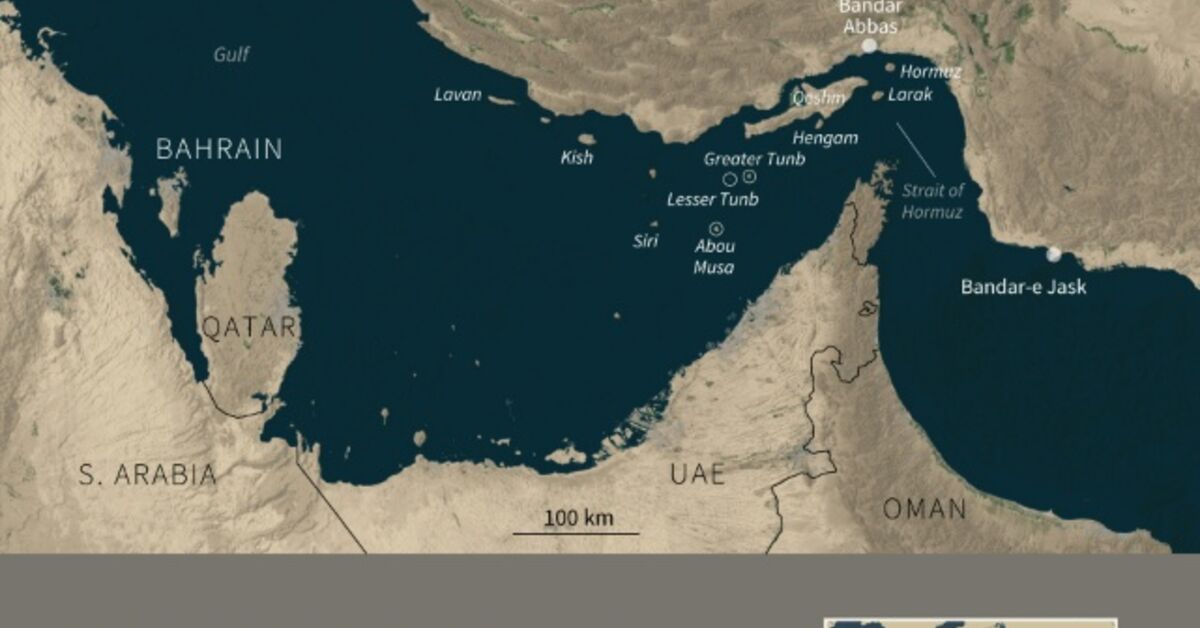
The Strait of Hormuz remains the focal point of contention, described as a key shipping route critical to global energy supplies. Iran asserts its claimed right to manage the waterway, leading to regular strikes on vessels, while the US is determined to maintain free traffic through guidance and a military blockade of Iranian ports. The US Central Command (CENTCOM) reported taking "limited, precise action" against Iranian forces on Larak Island, which were observed preparing to launch rockets with mines into the strait. This action was framed as necessary to protect civilian mariners, commercial shipping, and global commerce, especially after the Trump administration had declared the strait free from mines just days prior.
Trump Administration
The recent strikes mark a departure from the Trump administration's stated shift in focus towards maximizing economic pressure on Iran rather than military actions. President Trump had previously emphasized increasing economic pain for Iran, claiming that US financial strength would lead to a "very big victory." The US Treasury Department, under Secretary Scott Bessent, had threatened new sanctions, particularly on banks, signaling an "economic D-Day" with weekly new secondary economic sanctions. This military engagement, therefore, complicates the administration's broader strategy, potentially forcing a re-evaluation of its approach to containing Iranian influence and actions.
President Masoud Pezeshkian
Following the US strike, Iran's President Masoud Pezeshkian issued a strong statement, asserting that while Iran is "not seeking war," it would "never sit idly by" in the face of aggression and is "capable of delivering a decisive response." The powerful Revolutionary Guards (IRGC) echoed this sentiment, calling the US strike a "strategic and deadly mistake" and vowing retaliation. Iran subsequently claimed to have targeted bases used by the US military in Jordan and the UAE, with Jordan confirming the interception of eight missiles and the UAE reporting the interception of a drone. These statements and actions highlight Iran's resolve to respond militarily to perceived threats, further entrenching the cycle of retaliation.
Key points
- The US and Iran traded military attacks for the first time in over a month, marking a significant escalation.
- The US struck Iranian rocket launchers on Larak Island, claiming they were preparing to launch sea mines into the Strait of Hormuz.
- Iran retaliated by firing missiles towards US military targets in Jordan and launching a drone towards the UAE.
- The escalation breaks the Trump administration's recent focus on economic pressure over military action against Iran.
- Oil prices, including Brent crude and US crude, jumped significantly following the US strikes.
Despite the military escalation, the article notes that Iran and Oman continue discussions over a proposed arrangement to restore maritime traffic through the strait, backed by regional mediators like Qatar. This suggests that diplomatic channels, though stalled between the US and Iran directly, are still active and could potentially lead to de-escalation or a framework for managing the waterway.
The exchange of strikes risks reigniting the damaging conflict after weeks of relative military calm, potentially leading to a full-blown confrontation. With talks between the US and Iran stalled and both sides demonstrating a willingness to use force, the situation could quickly spiral, disrupting global energy supplies and destabilizing the entire Middle East region.
Market signals
- OIL Oil prices jumped after the US launched strikes on Iran, with Brent crude rising 2.8% due to supply-route risk from the conflict.
- OIL US crude prices rose 2.7% following the US strikes on Iran, indicating market concern over potential supply disruptions.
AI-generated analysis of potential market relevance. Not financial advice.