US envoy Kushner meets Netanyahu after visiting Hamas leader
US envoy Jared Kushner met with Israeli Prime Minister Benjamin Netanyahu in Jerusalem, a day after a rare meeting with a Hamas leader in Cairo, to advance President Trump's Gaza peace plan. Netanyahu has publicly rejected a key part of the US-backed agreement.
Intelligence analysis by Gemini 2.5 Flash
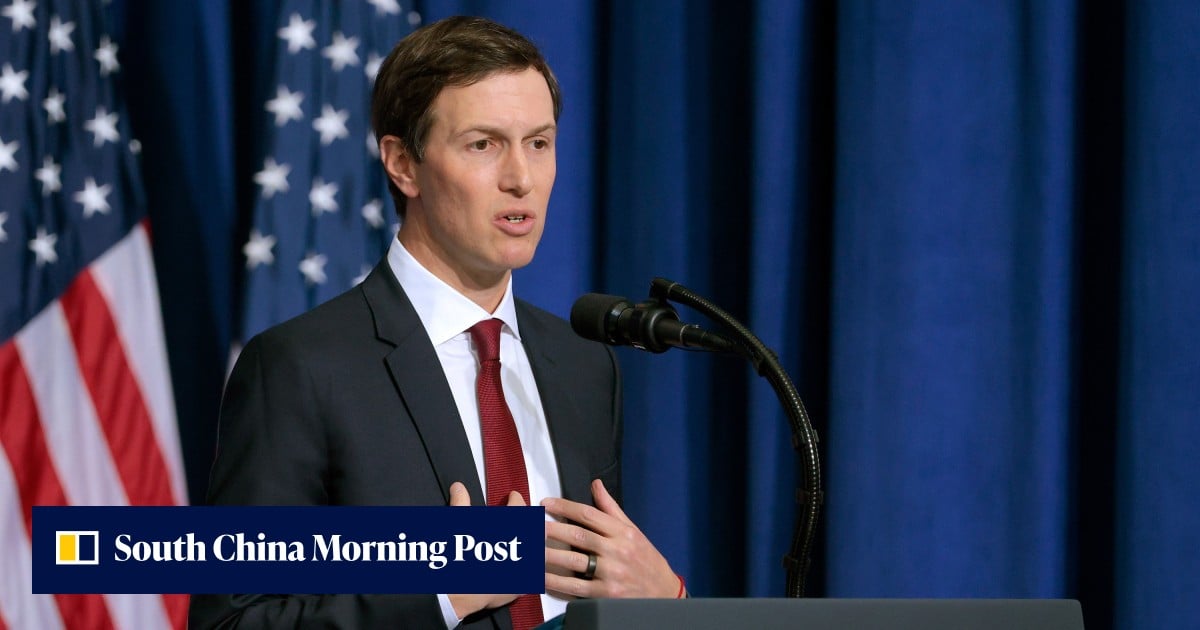
Jared Kushner, President Trump's son-in-law and envoy, is actively engaged in Middle East diplomacy, attempting to push a US-backed Gaza peace plan. His recent meetings with both Hamas leadership and Israeli Prime Minister Netanyahu highlight the complex and challenging nature of these negotiations, especially given Netanyahu's public rejection of a core disarmament-for-withdrawal pro…
Imagine two neighbors, Israel and Hamas, who have been fighting over a shared yard called Gaza. A special helper, Jared, from a big country, is trying to make them friends. He talked to Hamas first, then to Israel's leader, Netanyahu. Jared's idea is for Hamas to give up their toys (weapons) and Israel to move its fence back. But Netanyahu says, "No way! Hamas must give up ALL their toys first, then I'll move my fence." It's like trying to get two kids to share, but one wants all the toys gone before they'll even talk about sharing.
Analysis
Jared Kushner's Diplomacy
Jared Kushner, serving as President Donald Trump's envoy and son-in-law, has undertaken a significant diplomatic mission in the Middle East, aiming to advance the US president's comprehensive Gaza plan. His recent itinerary underscores the delicate balance required in regional negotiations, involving direct engagement with both Israeli and Palestinian factions. The meeting with a Hamas leader in Cairo, described as rare, signals a direct channel of communication being pursued by the US administration, indicating a willingness to engage with all relevant parties to achieve a resolution. This approach contrasts with previous diplomatic efforts that often excluded direct contact with Hamas.
Following his engagement with Hamas, Kushner proceeded to Jerusalem to meet with Israeli Prime Minister Benjamin Netanyahu. This sequence of meetings highlights a concerted effort to bridge the significant divides between the parties. The US-backed agreement, which proposes Hamas surrendering its arms in exchange for Israel withdrawing from Gaza, forms the core of these discussions. The phased implementation, involving an "International Stabilisation Force" and a new Palestinian police force, suggests a detailed framework for post-conflict governance and security.
Netanyahu's Rejection
A major hurdle in the US-led peace initiative is Israeli Prime Minister Benjamin Netanyahu's public rejection of a central tenet of the proposed agreement. Netanyahu has explicitly stated that Israel's military will only withdraw from Gaza once Hamas and other armed groups are completely disarmed, a stance that diverges from the US-backed phased withdrawal plan. This firm position, articulated ahead of an October national election where his ruling coalition is reportedly trailing in opinion polls, suggests a domestic political dimension influencing his negotiating posture.
Diplomats familiar with the situation indicate that Israel is unlikely to make substantial concessions regarding Gaza in the lead-up to the October 27 election. This political reality complicates Kushner's efforts, as any significant movement on the peace plan could be perceived through the lens of electoral strategy. Netanyahu's insistence on complete disarmament upfront reflects a deep-seated security concern within Israel, prioritizing the elimination of threats before any territorial concessions.
Nickolay Mladenov's Role
Accompanying Kushner in the Jerusalem meeting was Nickolay Mladenov, identified as Trump's Board of Peace envoy for Gaza. Mladenov's involvement is crucial, given his background as a former UN official and his close ties to the United Arab Emirates, an influential regional player. He played a pivotal role in brokering last month's disarmament agreement, which forms the basis of the current discussions, and is widely regarded as a key figure in implementing Trump's broader 20-point plan to end the conflict.
Mladenov's expertise and connections are instrumental in navigating the complex political landscape of the Middle East. His continued leadership in these efforts underscores the long-term commitment to the peace plan, which Israel and Hamas reportedly agreed to last year. The presence of such experienced diplomats alongside Kushner suggests a multi-faceted approach to diplomacy, leveraging both high-level political influence and seasoned negotiation skills to push for a resolution in the protracted Gaza conflict.
Key points
- US envoy Jared Kushner met Israeli PM Benjamin Netanyahu after a rare meeting with a Hamas leader in Cairo.
- The meetings aim to advance President Trump's Gaza peace plan, which includes Hamas surrendering arms for Israeli withdrawal.
- Netanyahu has publicly rejected the US-backed agreement, insisting on complete disarmament of Hamas before any Israeli withdrawal.
- Diplomats believe Israel is unlikely to make major concessions before its October 27 national election.
- Nickolay Mladenov, Trump's Board of Peace envoy, is leading efforts to implement the original 20-point plan.
The ongoing high-level diplomatic engagement, including direct contact with Hamas and the involvement of experienced envoys like Nickolay Mladenov, suggests a persistent effort to find a resolution. If a breakthrough occurs, it could lead to a de-escalation of conflict in Gaza, fostering regional stability and potentially paving the way for broader peace initiatives in the Middle East.
Netanyahu's firm rejection of the US-backed phased withdrawal plan, especially ahead of an election, indicates significant obstacles to peace. The inability to secure a disarmament agreement could prolong the conflict, leading to continued instability, humanitarian crises, and potential for further escalation in the region.