US Imposes Tariffs and Minimum Prices on Polysilicon Products
The US has imposed tariffs and minimum prices on polysilicon products to protect its domestic industry from Chinese competition. The tariffs will be 15% and the minimum prices will be set at $21 per kilogram for polysilicon, $100 per kilogram for blocks and wafers, $0.22 …
Intelligence analysis by Llama
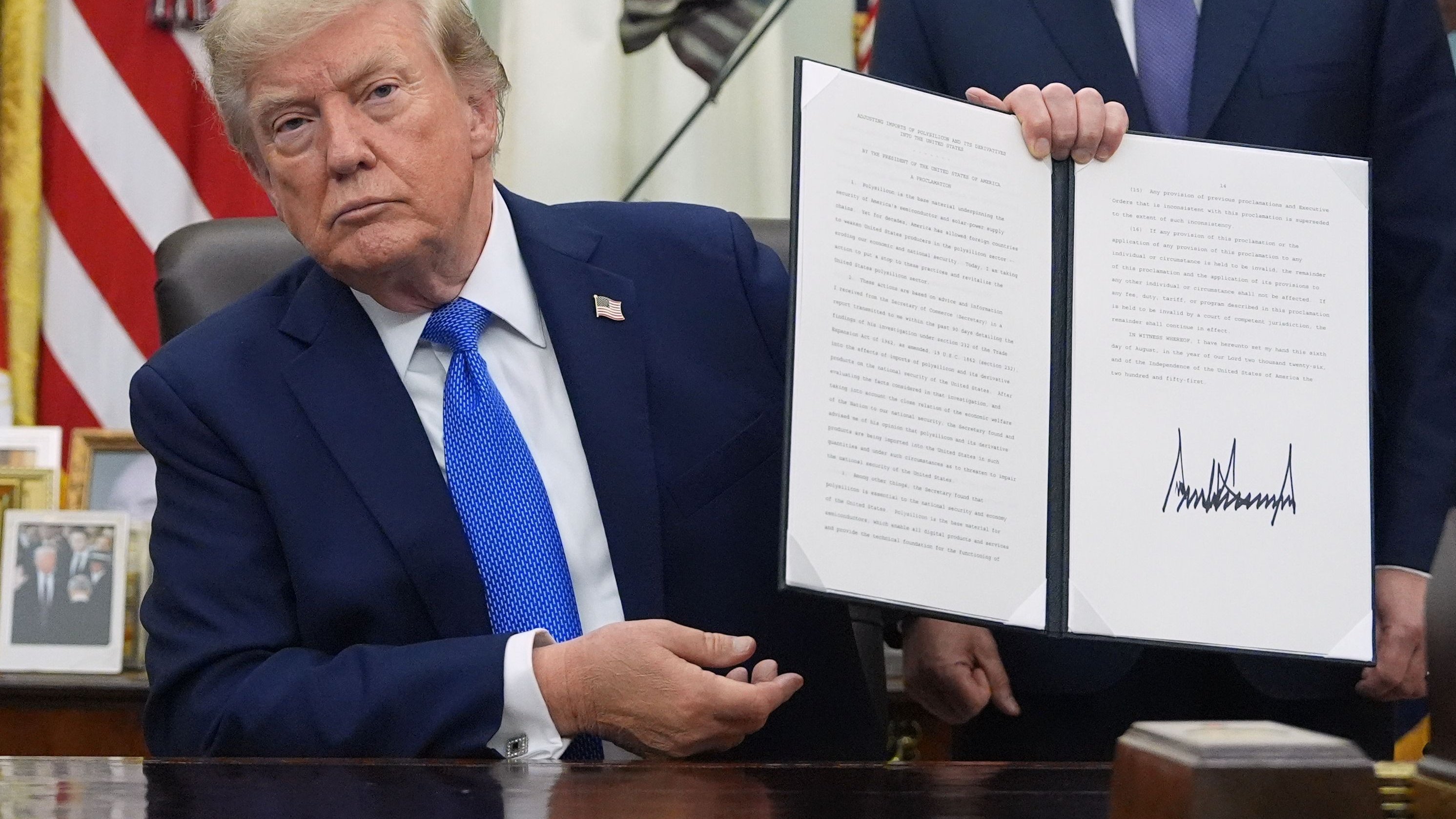
The US has taken steps to protect its domestic industry from Chinese competition by imposing tariffs and minimum prices on polysilicon products. This move is aimed at safeguarding the interests of US manufacturers and preventing the loss of jobs.
Imagine you're building a house, and you need a special kind of sand called polysilicon to make the solar panels. The US government is putting a tax on this sand to make it harder for other countries, like China, to sell it to them. This is to help US companies that make solar panels and to keep jobs in the US.
Analysis
Background
The US has imposed tariffs and minimum prices on polysilicon products to protect its domestic industry from Chinese competition. The tariffs will be 15% and the minimum prices will be set at $21 per kilogram for polysilicon, $100 per kilogram for blocks and wafers, $0.22 per watt for solar cells, and $0.38 per watt for solar modules.
What Changed
The US has taken steps to protect its domestic industry from Chinese competition by imposing tariffs and minimum prices on polysilicon products. This move is aimed at safeguarding the interests of US manufacturers and preventing the loss of jobs.
What's Next
The imposition of tariffs and minimum prices on polysilicon products is a significant development in the ongoing trade tensions between the US and China. It has implications for the global solar industry and may lead to retaliatory measures from China.
Key points
- The US has imposed tariffs and minimum prices on polysilicon products to protect its domestic industry from Chinese competition.
- The tariffs will be 15% and the minimum prices will be set at $21 per kilogram for polysilicon, $100 per kilogram for blocks and wafers, $0.22 per watt for solar cells, and $0.38 per watt for solar modules.
- The move is aimed at safeguarding the interests of US manufacturers and preventing the loss of jobs.
- The imposition of tariffs and minimum prices on polysilicon products is a significant development in the ongoing trade tensions between the US and China.
- It has implications for the global solar industry and may lead to retaliatory measures from China.
The imposition of tariffs and minimum prices on polysilicon products may lead to increased investment in US solar manufacturing, creating new jobs and stimulating economic growth. Additionally, the move may encourage US companies to innovate and develop new technologies to reduce their dependence on imported polysilicon.
The retaliatory measures from China may lead to a trade war, resulting in higher prices for solar panels and reduced demand for US solar products. Furthermore, the imposition of tariffs and minimum prices may lead to a shortage of polysilicon, causing production delays and increased costs for US solar manufacturers.