U.S. Navy sailor on USS Lincoln says dad was arrested by immigration officials
A Navy sailor deployed on the USS Abraham Lincoln says his Nicaraguan-born father was detained by Border Patrol during a Key West traffic stop, with DHS confirming the arrest and deportation proceedings.
Intelligence analysis by Llama
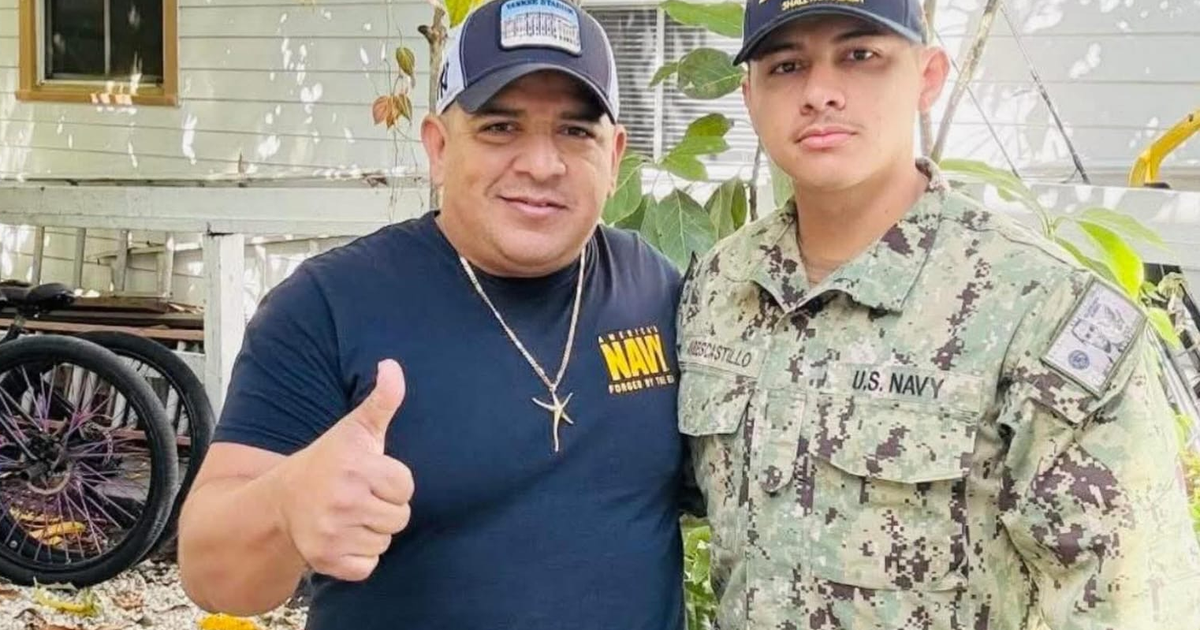
Petty Officer Joshua Aviles, nine months into a Middle East deployment aboard the carrier Abraham Lincoln, learned his father Luis Manuel Aviles Roa had been arrested by Border Patrol in Florida. DHS says the family member's military service does not exempt him from enforcement.
A sailor far away on a big Navy ship found out that immigration officers picked up his dad during a car stop in Florida. His dad has lived in America for about 20 years and was applying to stay legally, but the government says being related to a soldier doesn't excuse breaking immigration rules.
Analysis
Luis Manuel Aviles Roa
The Nicaraguan native had reportedly lived in the United States for roughly two decades before Border Patrol agents took him into custody during a traffic stop in Key West, Florida, on Saturday. His stepdaughter, Katty Delgado, told CBS News he was heading to a mechanic when he was detained, and said the family has a pending immigration application seeking legal status. The Department of Homeland Security confirmed the arrest but did not dispute the family's claim that Aviles Roa has no criminal record. In a Sunday statement, DHS framed the case bluntly: "(h)aving a family member in the military is not a free pass to violate our nation's laws," and added that "this Administration does not pick and choose which laws to enforce."
Nine months at sea aboard the Abraham Lincoln
Joshua Aviles learned of his father's arrest while serving his ninth month deployed aboard the USS Abraham Lincoln, a nuclear-powered carrier operating in the Middle East with roughly 5,000 crew members. The vessel left the region last week and is now sailing back to San Diego, a journey that could take several weeks. In a Facebook post over the weekend, Joshua wrote that he does not know how he can "mentally continue working 12+ hour days" while worrying about his father. His half-sister told CBS News that communication has been "on and off" because he remains deployed, and that he has been struggling to sleep and eat as his mind fixates on his father's situation.
A 20-year residency interrupted
The Key West arrest is the latest in a string of immigration cases involving U.S. military families that, while once rare, have become more common under the second Trump administration. According to CBS News, the administration has rescinded prior limits on arrests by ICE and Border Patrol as part of its mass deportation campaign, and DHS officials have consistently maintained that anyone in the country illegally is vulnerable to detention regardless of family ties to the armed forces. The deployment itself adds another layer of pressure: the Abraham Lincoln has been at the center of recent reporting on mental health challenges and subpar living conditions for service members, meaning sailors like Joshua are navigating family emergencies from thousands of miles away with limited communication. The case also highlights the gap between a family's pending legal application and an enforcement system that does not pause for paperwork in progress.
Key points
- Border Patrol arrested Nicaraguan native Luis Manuel Aviles Roa during a Key West traffic stop on Saturday; he is now in ICE custody facing deportation.
- His son Joshua Aviles, a U.S. Navy sailor nine months into a Middle East deployment aboard the carrier USS Abraham Lincoln, learned of the arrest while at sea.
- DHS confirmed the arrest and said 'having a family member in the military is not a free pass to violate our nation's laws.'
- The family says Aviles Roa has lived in the U.S. for about 20 years and has a pending immigration application; DHS did not dispute that he has no criminal record.
- Immigration arrests of military spouses and parents, historically rare, have become more common under the second Trump administration's mass deportation campaign.
The family's pending immigration application could provide a path to legal status for Luis Manuel Aviles Roa, and the public attention drawn by his son's deployment may create political pressure for a case-by-case review. Lawmakers sympathetic to military families have occasionally intervened in similar cases, and the carrier's return to San Diego in coming weeks could improve Joshua's ability to support his family and coordinate legal help.
Unless the pending application is processed quickly or a political intervention materializes, Aviles Roa could be deported to Nicaragua after roughly two decades in the United States, leaving Joshua to complete a strained deployment while his family is separated. The case also signals that the administration's enforcement posture toward military-connected families is unlikely to soften, meaning more service members could face similar shocks mid-deployment, compounding the mental health pressures already documented aboard the Abraham Lincoln.