US Senator Chris Van Hollen to Challenge Chuck Schumer for Senate Majority Leader
Senator Chris Van Hollen announced he will run for Senate Majority Leader, challenging incumbent Chuck Schumer. Van Hollen cites a public call for change and progressive support.
Intelligence analysis by Gemini 2.5 Flash Lite
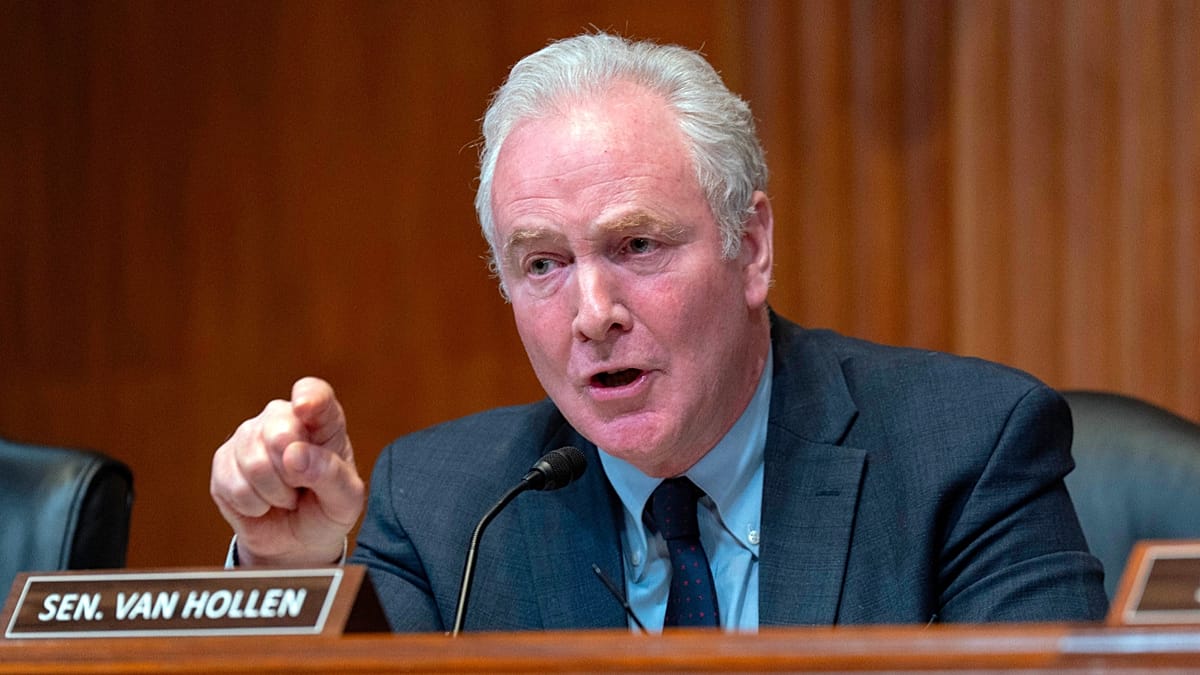
Chris Van Hollen's challenge to Chuck Schumer for Senate Majority Leader highlights a generational and ideological divide within the Democratic party following their midterm election success. Van Hollen, backed by progressives, argues for new leadership, while Schumer asserts he has the votes to retain his position.
Imagine your school class is choosing a team captain. One captain, who's been captain for a long time, wants to stay. But another student, who thinks the class needs new ideas, wants to be captain instead. They're having a vote to decide who will lead the team next.
Analysis
Chris Van Hollen's Challenge
Senator Chris Van Hollen of Maryland has officially declared his candidacy for Senate Majority Leader, directly challenging the long-serving incumbent, Chuck Schumer. This move marks the first open contest for the Democratic leadership position in decades, signaling a significant internal party dynamic. Van Hollen's announcement, made shortly after the Democratic party's success in the midterm elections, is framed as a response to a perceived public mandate for change. He explicitly stated, "The American people called for change," and that to meet this moment, "we need new leadership." This framing positions his candidacy not as a personal ambition, but as an answer to the electorate's demands.
Van Hollen, while not dramatically younger than Schumer (67 to 75), has strategically positioned himself as a fresh face and a voice for the more progressive wing of the party. His campaign is reportedly gaining traction with some vocal progressives, including newly-elected Senator Abdul El-Sayed of Michigan, who has publicly endorsed Van Hollen. This progressive backing is crucial, as it underscores an ideological undercurrent within the party that seeks a more assertive or distinct policy direction. The challenge itself, regardless of its outcome, exposes a rift that has been simmering, exacerbated by past disagreements over spending votes and a broader desire for generational renewal within the party's top ranks.
Chuck Schumer's Position
Despite the challenge, Senate Minority Leader Chuck Schumer remains confident in his ability to retain his leadership position. He has stated, "I have the votes to continue serving as the Democratic Leader" and expressed eagerness to lead the party's new majority. Schumer's tenure has seen him navigate significant legislative battles, including a government shutdown, and he is credited with orchestrating key victories in the recent election. His supporters point to his experience and established relationships as vital assets for the party. However, the challenge from Van Hollen, coupled with public statements from figures like Senator Bernie Sanders indicating a lack of support for Schumer's continued leadership, demonstrates that his position is not unassailable.
The contest highlights a broader debate within the Democratic party about the future of its leadership and its appeal to the electorate. While Schumer has demonstrated an ability to rally the caucus and achieve electoral success, the push for new leadership reflects a segment of the party base that desires a different approach or a more prominent generational shift. The fact that many senators are reluctant to publicly declare their vote for Schumer underscores the sensitivity and division surrounding this leadership race, making it a critical juncture for the party's internal cohesion and future strategy.
Party Dynamics and Future Implications
The emergence of a contested leadership race within the Democratic party is a significant development with potential ramifications for legislative priorities and party unity. Van Hollen's candidacy, supported by progressive elements, suggests a potential push for more ambitious policy initiatives or a different communication strategy. This internal debate could shape how the Democrats approach key issues in the next Congress, from economic policy to social legislation.
Furthermore, Van Hollen's consideration of a presidential run adds another layer of complexity, potentially turning this leadership contest into a prelude for broader national ambitions. The division within the caucus, even if Schumer ultimately prevails, indicates a need for careful management of internal dissent and a clear strategy to unify the party. The outcome will not only determine the Senate Democrats' leadership for the coming term but could also influence the party's messaging and direction heading into future election cycles, potentially impacting its ability to present a cohesive front to the American public.
Key points
- Senator Chris Van Hollen is challenging Chuck Schumer for the role of Senate Majority Leader.
- Van Hollen cites a public call for change and has support from progressive Democrats.
- Schumer, the incumbent, expresses confidence in retaining his leadership position.
- This is the first contested election for Democratic leader in decades, highlighting internal party divisions.
- Van Hollen's candidacy may signal a push for new leadership and potentially different policy directions.
Van Hollen's challenge could invigorate the Democratic party, pushing for more progressive policies and a renewed focus on generational change. If successful, it might lead to a more dynamic and responsive party leadership that better energizes the base and appeals to a broader electorate.
The contest risks exposing and deepening divisions within the Democratic party, potentially weakening its ability to present a united front. A protracted or acrimonious leadership battle could distract from legislative priorities and alienate moderate voters.