US–Iran peace talks tested by war of words between Trump and Ghalibaf
US-Iran peace talks are being tested by a war of words between US President Donald Trump and Iran's chief negotiator Mohammad Bagher Ghalibaf. Trump threatened to strike Iran over its support for Hezbollah, while Ghalibaf warned the US against making threats.
Intelligence analysis by Llama 3.3 70B
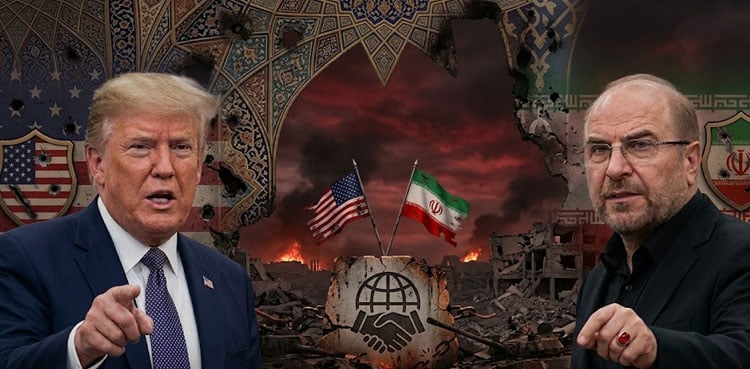
The US and Iran are engaged in peace talks, but a war of words between Trump and Ghalibaf is threatening to derail the process. The talks are being held in Switzerland with Pakistani and Qatari mediators.
The US and Iran are talking about making peace, but they're also saying mean things to each other. This is making it hard for them to agree on anything. It's like when you're trying to make a deal with someone, but you're also arguing with them.
Analysis
The War of Words Escalates
The exchange of threats between Trump and Ghalibaf is a significant escalation of tensions between the US and Iran. Trump's threat to strike Iran over its support for Hezbollah is a clear violation of the memorandum of understanding signed by the two countries earlier this month. The memorandum states that the two countries undertake to refrain from the threat or use of force against each other.
The Iranian government has responded to Trump's threat by warning the US against making threats. Ghalibaf's statement that the Iranian armed forces are ready to respond to US threats is a clear indication that Iran is prepared to defend itself if necessary.
The Peace Talks in Jeopardy
The war of words between Trump and Ghalibaf is threatening to derail the US-Iran peace talks. The talks, which are being held in Switzerland with Pakistani and Qatari mediators, are aimed at resolving the conflict between the two countries. However, the exchange of threats between Trump and Ghalibaf has created a significant obstacle to a peaceful resolution.
The suspension of the talks due to Trump's threats is a clear indication that the peace process is in jeopardy. The US and Iran must find a way to resolve their differences and get the peace talks back on track. The alternative is a continuation of the conflict, which could have significant consequences for the Middle East.
The Regional Implications
The conflict between the US and Iran has significant implications for the Middle East. The war of words between Trump and Ghalibaf is not only threatening to derail the peace talks but also creating tensions in the region. The conflict between Israel and Hezbollah, which is backed by Iran, is a clear example of the regional implications of the US-Iran conflict.
The US and Iran must find a way to resolve their differences and reduce tensions in the region. The peace talks are a crucial step towards achieving this goal. However, the war of words between Trump and Ghalibaf is a significant obstacle to a peaceful resolution. The US and Iran must find a way to overcome this obstacle and get the peace talks back on track.
Key points
- US-Iran peace talks are being held in Switzerland
- Trump threatened to strike Iran over its support for Hezbollah
- Ghalibaf warned the US against making threats
- The peace talks are in jeopardy due to the war of words between Trump and Ghalibaf
If the US and Iran can find a way to resolve their differences and get the peace talks back on track, it could lead to a significant reduction in tensions in the Middle East. This could have a positive impact on the region and create opportunities for economic growth and development.
If the war of words between Trump and Ghalibaf continues, it could lead to a breakdown in the peace talks and a continuation of the conflict. This could have significant consequences for the Middle East, including increased tensions and violence.