VW workers protest in Germany over proposed job cuts and factory closures
Volkswagen workers in Germany protested against proposed job cuts and factory closures, with the company's supervisory board set to review the plans. The protests targeted factories producing cars for Volkswagen and other brands, with the union calling for straight answer…
Intelligence analysis by Llama
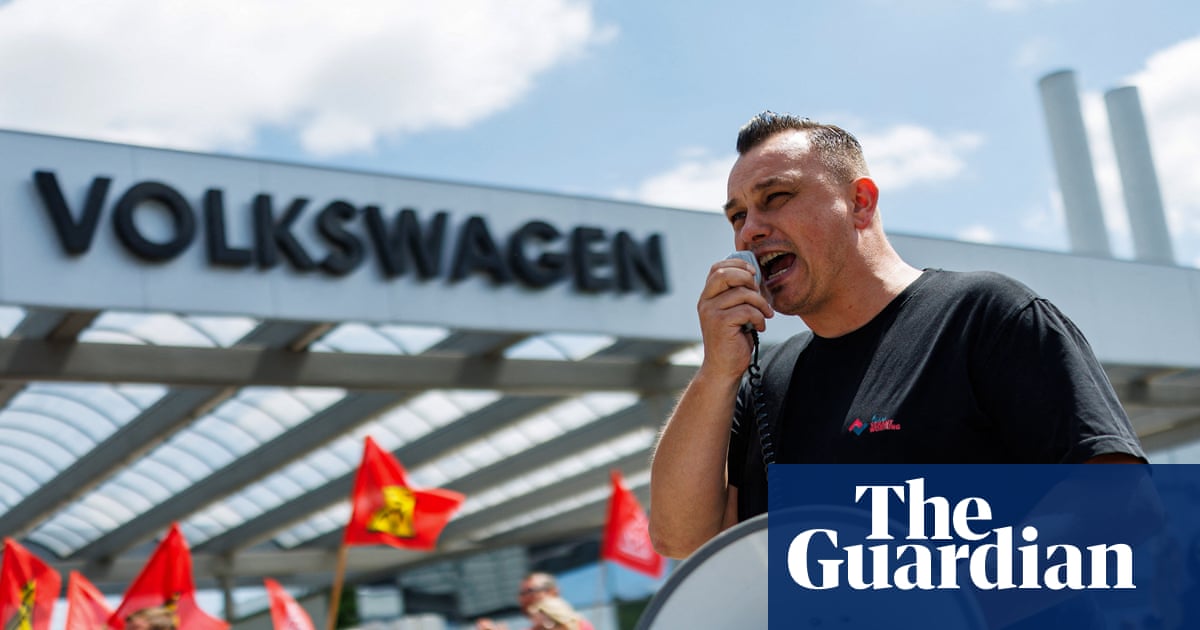
Volkswagen workers in Germany protested against proposed job cuts and factory closures, with the company's supervisory board set to review the plans. The protests targeted factories producing cars for Volkswagen and other brands, with the union calling for straight answers from the company about its plans.
Volkswagen, a big car company in Germany, is planning to cut up to 100,000 jobs and close some factories. This has made many workers and their unions very worried about their jobs and the future of the company. They are protesting and asking the company to explain its plans.
Analysis
A $60B Vote of Confidence
Volkswagen's proposal to slash up to 100,000 jobs and close factories has been met with significant resistance from workers and unions. The protests at 18 sites across Germany demonstrate the level of concern among employees, who are worried about the future of the company and their own job security. The union has called for straight answers from the company about its plans, and the supervisory board is set to review the proposals today.
The company's radical transformation plan aims to simplify its structure and address the challenges posed by growing Chinese competition and the shift to electric cars. However, the proposed job cuts and factory closures could have significant implications for the German economy, with the car industry employing over 3 million people directly and indirectly. The board meeting is being seen as a major test for the future of the German economy.
Why Cursor?
The company's decision to review its sprawling structure and potentially carve out or spin off its core brand division and components technology business is a significant move. This could simplify the company's structure and make it more competitive in the market. However, it also raises concerns about the impact on employees and the local communities that rely on the company.
The Road Ahead
The next few weeks will be crucial in determining the fate of Volkswagen's transformation plan. If the proposals are accepted by the board, months of talks with unions will follow. The outcome of these talks will have significant implications for the company and the German economy. The protests demonstrate the level of concern among employees, and the company will need to address these concerns in order to move forward with its plans.
Key points
- Volkswagen workers in Germany protested against proposed job cuts and factory closures
- The company's supervisory board is set to review the plans
- The protests targeted factories producing cars for Volkswagen and other brands
- The union has called for straight answers from the company about its plans
- The proposed job cuts and factory closures could have significant implications for the German economy
If the transformation plan is successful, Volkswagen could become a more competitive and sustainable company, with a simplified structure and a focus on electric cars. This could lead to new job opportunities and investments in the German economy.
If the transformation plan is not successful, Volkswagen could face significant challenges, including job losses and factory closures. This could have a negative impact on the German economy and the local communities that rely on the company.