Wall Street gets new crypto rival after Texas bank completes regulatory pivot
United Texas Bank won OCC approval to become a national bank, giving it direct Federal Reserve access and a broader role in crypto payments.
Intelligence analysis by GPT-5.4 Mini
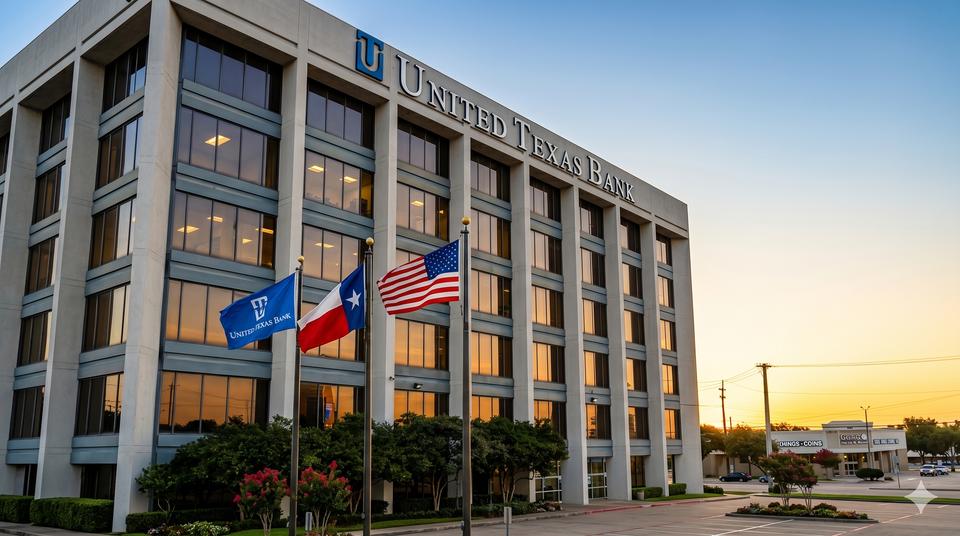
A 40-year-old Texas bank says its new national charter turns it into a crypto-friendly bridge to U.S. banking, with federal access, compliance tools, and a 24/7 payments push.
A Texas bank changed its official badge so it can play in the big-league banking system. That means it can plug into the country’s main money tracks and try to help crypto companies move dollars more easily.
The bank says many big banks still keep crypto firms at arm’s length. So it wants to be the place those firms can go when they need a bank that will work with them.
It is also building new tools to move money all day and night, like a checkout lane that never closes. The story matters because it shows crypto and regular banking getting closer together.
Analysis
What changed
United Texas Bank says it completed its conversion from a Texas state bank to a nationally chartered bank after approval from the Office of the Comptroller of the Currency on May 15. President and CEO Scott Beck said the conditions tied to that approval were satisfied on May 27, which completes the regulatory pivot described in the story.
The bank presents the move as more than a paperwork change. Beck said the new charter gives UTB the same federal licensure and direct Federal Reserve access as large money-center banks, while preserving FDIC insurance. He framed the bank as a crypto-focused bridge into the U.S. banking system for digital asset firms that often cannot open accounts at bigger banks.
Crypto payments angle
Beck said UTB has already been serving reputable crypto firms for about five years and handles more than $120 billion in transactions for them annually. He also said the bank clears about $10 billion a month in U.S. dollar volume for foreign banks, OTC desks, and major exchanges. Those claims are central to the article’s framing: UTB is not starting from zero, but using a charter change to widen its reach.
The bank is also launching UTB Atomic, described as an AI-driven, 24/7 payments network, alongside UTB Prism Sentinel, a compliance platform for real-time blockchain surveillance. The stated goal is to restore around-the-clock liquidity infrastructure that disappeared after Silvergate and Signature Bank failed. The article presents this as a response to settlement bottlenecks that can hit institutional traders outside normal banking hours.
Why this is a policy story
The piece places UTB within a broader competition between traditional finance and crypto-native infrastructure. It also references Minnesota’s recent law allowing local banks and credit unions to offer crypto custody, suggesting state and federal institutions are still racing to define who gets to serve digital asset customers. The main significance is that a long-standing bank is trying to use federal banking rails, not avoid them, to compete in crypto finance.
Key points
- United Texas Bank says it completed an OCC-approved move from a Texas state charter to a national bank charter.
- Scott Beck said the change gives the bank direct Federal Reserve access and the same federal licensure as major banks.
- The bank says it already serves crypto firms and clears billions of dollars in monthly U.S. dollar volume.
- UTB is launching UTB Atomic and UTB Prism Sentinel to support 24/7 payments and compliance monitoring.
- The article frames the move as part of a wider contest to serve crypto businesses through regulated banking rails.