What does Beijing’s response to Tokyo-Manila boundary talks mean for Taiwan?
China’s coastguard sent its first independent patrol east of Taiwan after Japan-Philippines maritime talks, widening its reach around the island.
Intelligence analysis by GPT-5.4 Mini
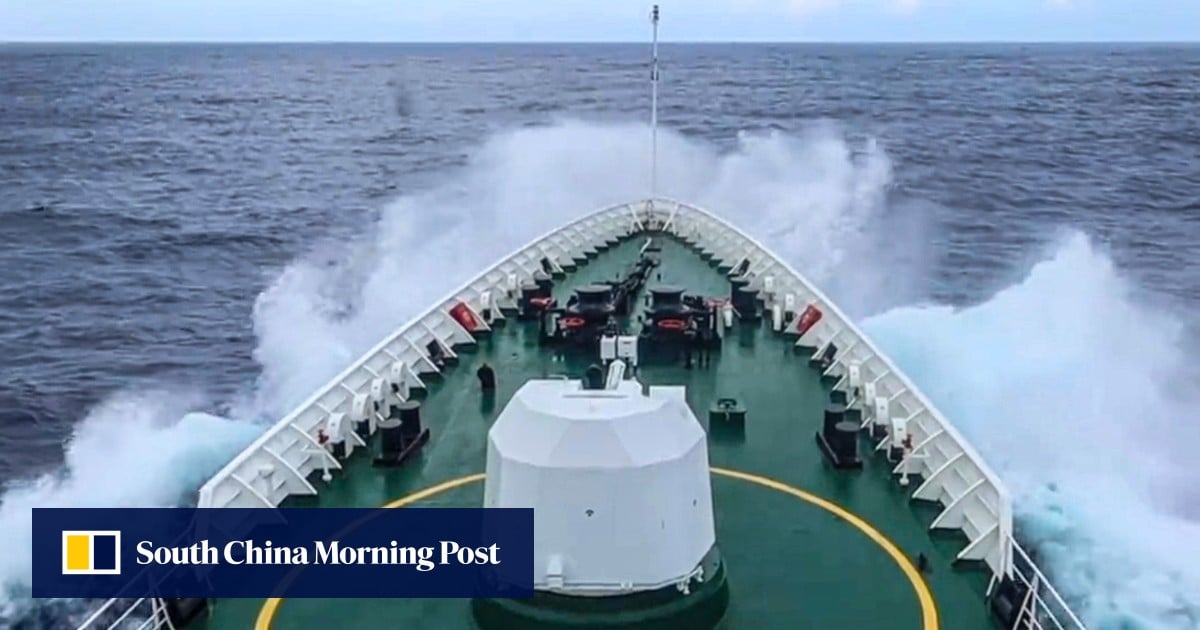
Beijing framed a new coastguard patrol east of Taiwan as a response to Japan and the Philippines, and state media cast it as evidence of stronger control around the island. The move also reflects the coastguard’s growing role alongside the PLA.
China sent its coastguard to sail in a new area near Taiwan, like a guard walking into a new part of a neighborhood. The article says Beijing is showing it can watch and control more of the sea around Taiwan.
Analysis
What happened
China’s coastguard carried out its first independent law enforcement patrol east of Taiwan on Monday, according to the article, and the move was described as a response to maritime border talks between Japan and the Philippines. The patrol is notable because it goes beyond the coastguard’s traditional focus and expands where it is operating around Taiwan.
What the article says this signals
Since its launch in 2021, the China Coast Guard has routinely patrolled the South China Sea, East China Sea and Yellow Sea. In recent years it has also joined People’s Liberation Army drills that encircle Taiwan. A Tuesday article by Yuyuan Tantian, a CCTV-affiliated account, said the patrol showed “not only an expansion of [CCG’s] sailing path, but also enhanced governing and jurisdictional capabilities,” and cited maritime expert Yang Xiao in saying that routine law enforcement in multiple regions around Taiwan suggested a complete sea-governance system had been completed.
Taiwan angle
The article places the patrol inside Beijing’s long-standing position that Taiwan is part of China and that reunification could be forced if necessary. It also notes the broader strategic backdrop: most countries, including the US, Japan and the Philippines, do not recognise Taiwan as an independent state, while Washington opposes any attempt to take the island by force and supplies it with weapons.
The key takeaway is not a single patrol, but the normalization of coastguard presence around Taiwan. That makes the coastguard look less like a support force and more like a tool for asserting Chinese jurisdiction in contested waters.
Key points
- China’s coastguard made its first independent patrol east of Taiwan on Monday.
- The patrol was described as a response to Japan-Philippines maritime boundary talks.
- State media said the move showed expanded governing and jurisdictional capabilities around Taiwan.
- The coastguard has increasingly operated alongside the PLA in drills around the island.
If this is part of a managed signal rather than a direct escalation, Beijing may be trying to assert its claims without immediate military confrontation. The coastguard’s expanded role could also give China more ways to pressure rivals while staying below the level of open conflict.
The patrol could deepen tensions around Taiwan and make nearby waters more crowded and risky. If Japan, the Philippines, or the US read it as coercion, the move could harden regional pushback and raise the chance of more frequent maritime stand-offs.