What does North Korea get from its blossoming ties with Russia?
Kim Jong-un’s Russia Day message signals closer North Korea-Russia military ties, even as Pyongyang also seeks to warm relations with China.
Intelligence analysis by GPT-5.4 Mini
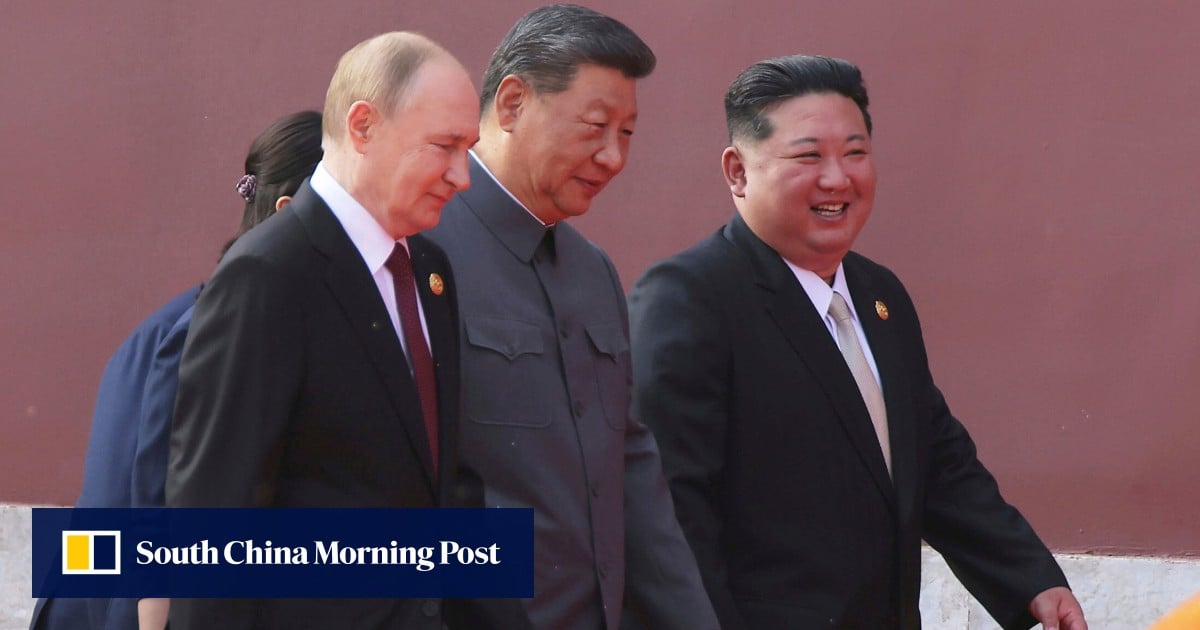
North Korea is signaling that its relationship with Russia is moving beyond simple deals and toward a firmer alliance. The timing, just after Xi Jinping’s visit to Pyongyang, suggests Kim Jong-un is balancing both Moscow and Beijing.
North Korea is acting like a kid trying to stay friends with two powerful classmates at once. It is giving Russia warm support while also trying to keep China close, so it can get more help and not depend on only one friend.
Analysis
A more durable alignment
Kim Jong-un used Russia Day to send Vladimir Putin a message of strong support, saying North Korea would “always stand together with the Russian Federation,” according to KCNA. He described the relationship as moving into “sincere and devoted” trust and alliance, language that suggests something more stable than a temporary exchange of favors.
The article says observers see this as strategic hedging. Pyongyang is not choosing Moscow alone; it is also trying to revive its traditional “blood alliance” with China. That matters because Xi Jinping had just visited Pyongyang before the Russia Day message was sent, highlighting how North Korea is keeping both relationships active.
According to the piece, Kim linked the warming ties to the two countries honoring their obligations under the Comprehensive Strategic Partnership Treaty signed at their June 2024 summit in Pyongyang. The article frames this treaty as the legal and political basis for the relationship’s upgrade.
The central takeaway is that North Korea appears to be treating Russia as more than a transactional partner. At the same time, it is careful not to burn its other strategic bridge with China. The result is a three-way balancing act, with Pyongyang trying to extract security and diplomatic value from both neighbors while keeping its options open.
Key points
- Kim’s Russia Day message pledged unwavering support for Moscow.
- The article says the ties may be evolving from transactional dealings into a military alliance.
- Observers view the move as strategic hedging, not a full break with China.
- Xi Jinping’s recent visit to Pyongyang adds to the sense that North Korea is balancing both powers.
- The 2024 Comprehensive Strategic Partnership Treaty is presented as the basis for the closer ties.
If the relationship deepens in the way Kim describes, North Korea could gain a steadier strategic partner in Russia and more room to maneuver diplomatically. The article also suggests Pyongyang may be able to keep China engaged at the same time, which could reduce its isolation.
A tighter military alignment with Russia could make North Korea more dependent on outside powers and sharpen regional tensions. The balancing act with China may also become harder if Beijing sees Pyongyang drifting too far toward Moscow.