What if the first embodied AI you meet is a fighting robot?
Qianxing Intelligence is deploying embodied AI robots in entertainment venues, allowing people to control humanoid fighting mechs in real-time battles, aiming to make embodied intelligence tangible.
Intelligence analysis by Gemini 2.5 Flash
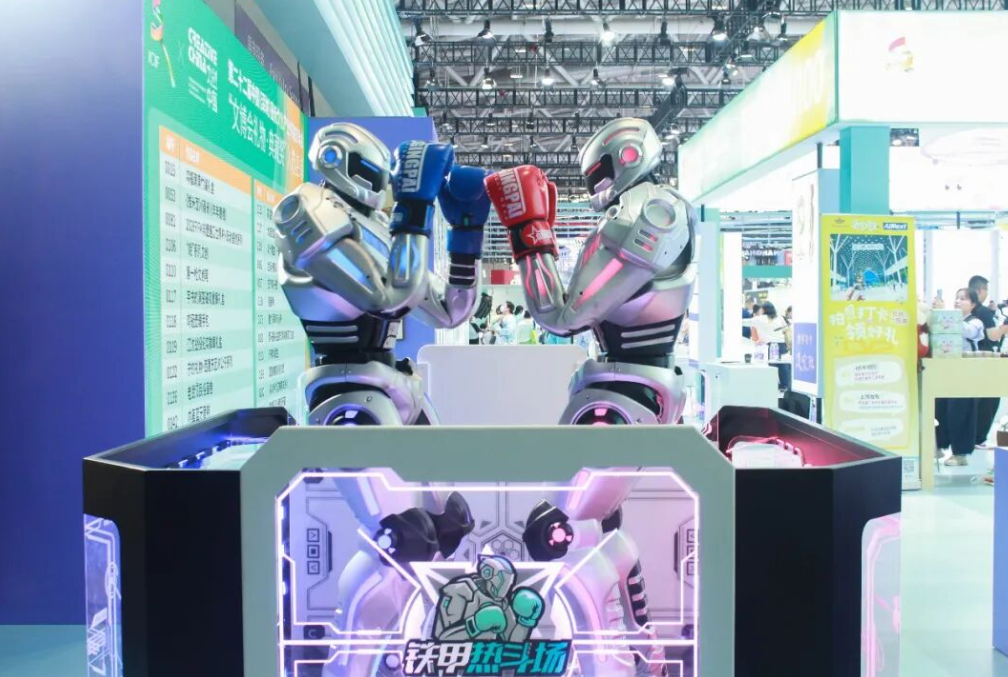
Instead of focusing on industrial applications, Qianxing Intelligence is bringing embodied AI to the public through its Iron Armor Battle Arena, where players physically control robots in arcade-style combat. This approach prioritizes direct user experience and real-time responsiveness to introduce embodied intelligence into everyday life.
Imagine playing a video game where your character isn't on a screen, but a real robot in front of you! This company, Qianxing Intelligence, lets you put on special controllers and move your arms and body, and a big fighting robot copies your moves instantly. It's like you're actually fighting with a robot, punching and dodging, making it feel like the robot is part of you. They want to make robots fun and real for everyone, not just for factories.
Analysis
Qianxing Intelligence is pioneering a unique strategy for introducing embodied AI to the general public, moving beyond traditional industrial or laboratory settings. By focusing on entertainment, specifically mech combat, the company aims to make the concept of physical AI interaction accessible and engaging. This approach challenges the conventional view of embodied intelligence, which often conjures images of factory automation or complex research projects. The success of Iron Armor Battle Arena hinges on delivering a seamless and immersive experience, where the physical robot acts as a direct extension of the player's movements, emphasizing low latency and convincing force feedback.
Qianxing Intelligence
Qianxing Intelligence has strategically designed its flagship product, Iron Armor Battle Arena, not just as a technological marvel but as a viable business model for entertainment venues. The company's two-track approach involves revenue-sharing or rental agreements with arcade chains, shopping malls, and theme parks, alongside direct sales of complete systems to overseas operators. This model is bolstered by ongoing revenue streams from consumables, content updates, and customizable IP skins, transforming the initial hardware sale into a platform for continuous engagement and monetization. The modular design of the mechs, allowing for easy swapping of exterior shells and customizable voice interactions, further enhances their appeal for branding and themed events, making the robots integral to a venue's intellectual property.
Iron Armor Battle Arena
The Iron Armor Battle Arena represents a significant step in democratizing embodied intelligence by making it a playable reality. The system's core innovation lies in its millisecond-level synchronization, ensuring that player movements are translated into robot actions with minimal delay, crucial for an authentic fighting experience. The short, intense battle durations (one to two minutes) are optimized for high turnover in commercial settings, contributing to a reported replay rate of 40% to 50%. Beyond the immediate arcade experience, Qianxing Intelligence envisions a broader ecosystem, including cross-venue rankings, mech leagues, and online-offline competitions. This potential evolution from a standalone attraction to a competitive and social platform could fundamentally alter how people perceive and interact with physical robots, integrating embodied AI into the fabric of daily entertainment and social interaction.
40% to 50%
The reported replay rate of 40% to 50% for the Iron Armor Battle Arena is a critical metric for Qianxing Intelligence, indicating strong user engagement and commercial viability. This high replayability suggests that the immersive experience and responsive control system resonate well with players, encouraging them to return for more battles. For venue operators, this translates into consistent revenue generation and efficient utilization of the machines. The company's focus on practical business needs, such as quick match durations and modular designs for branding, directly supports this high turnover and repeat customer base. This commercial success in entertainment venues could serve as a powerful proof point for the broader application and acceptance of embodied AI technologies in consumer-facing roles, demonstrating that direct, physical interaction with AI can be both fun and profitable.
Key points
- Qianxing Intelligence is deploying embodied AI robots in entertainment venues for mech combat.
- Players use motion-sensing controllers for real-time control of humanoid boxing robots.
- The system boasts millisecond-level synchronization, making the robot feel like an extension of the player.
- The business model includes revenue-sharing with venues and sales to overseas markets, supported by content updates and customizable IP skins.
- The company aims to evolve the Iron Armor Battle Arena into a broader competitive and social platform for physical robots.
This development could significantly accelerate public acceptance and understanding of embodied AI by making it an engaging, interactive experience rather than an abstract concept. It opens new avenues for entertainment and social interaction, potentially fostering a generation more comfortable and skilled in controlling advanced robotics.